The Palaeoenvironment and Anthropogenic Transition of the Sahara
Geographical Extent and Climatological Shifts: spanning more than 3,500,000 square miles (9,000,000 square kilometers), the Sahara Desert encompasses approximately one-tenth of the African continent. However, empirical geological and archaeological investigations demonstrate that the region's contemporary arid state represents a relatively recent climatic deviation. Following the termination of the Last Glacial Maximum (circa 10,000 BCE), the region underwent substantial palaeoclimatic amelioration. This period, often termed the African Humid Period, was characterized by enhanced monsoon circulation, higher precipitation regimes, and an expansive savannah ecology.
The Onset of Aridification: the trajectory of climatic transition shifted circa 4,200 BCE, driven by progressive shifts in insolation and seasonal precipitation patterns that initiated widespread aridification and desertification. Despite the subsequent establishment of hyper-arid conditions, the landscape retained a rich repository of archaeological proxies. Faunal remains, botanical macro-fossils, and stratified habitation sites substantiate the existence of a robust Holocene ecosystem that facilitated early human subsistence strategies, including animal domestication and incipient pastoralism.
Epistemological Value of Rock Art: in the absence of extensive written records, the surviving corpus of rock art - comprising both painted motifs and engraved petroglyphs - functions as an invaluable primary archive for reconstructing the lifeways of early North African populations. These iconography-based records document the local faunal biodiversity and offer critical insights into the socio-cultural behaviours, cognitive frameworks, and adaptive responses of Holocene communities inhabiting the changing Saharan landscape.
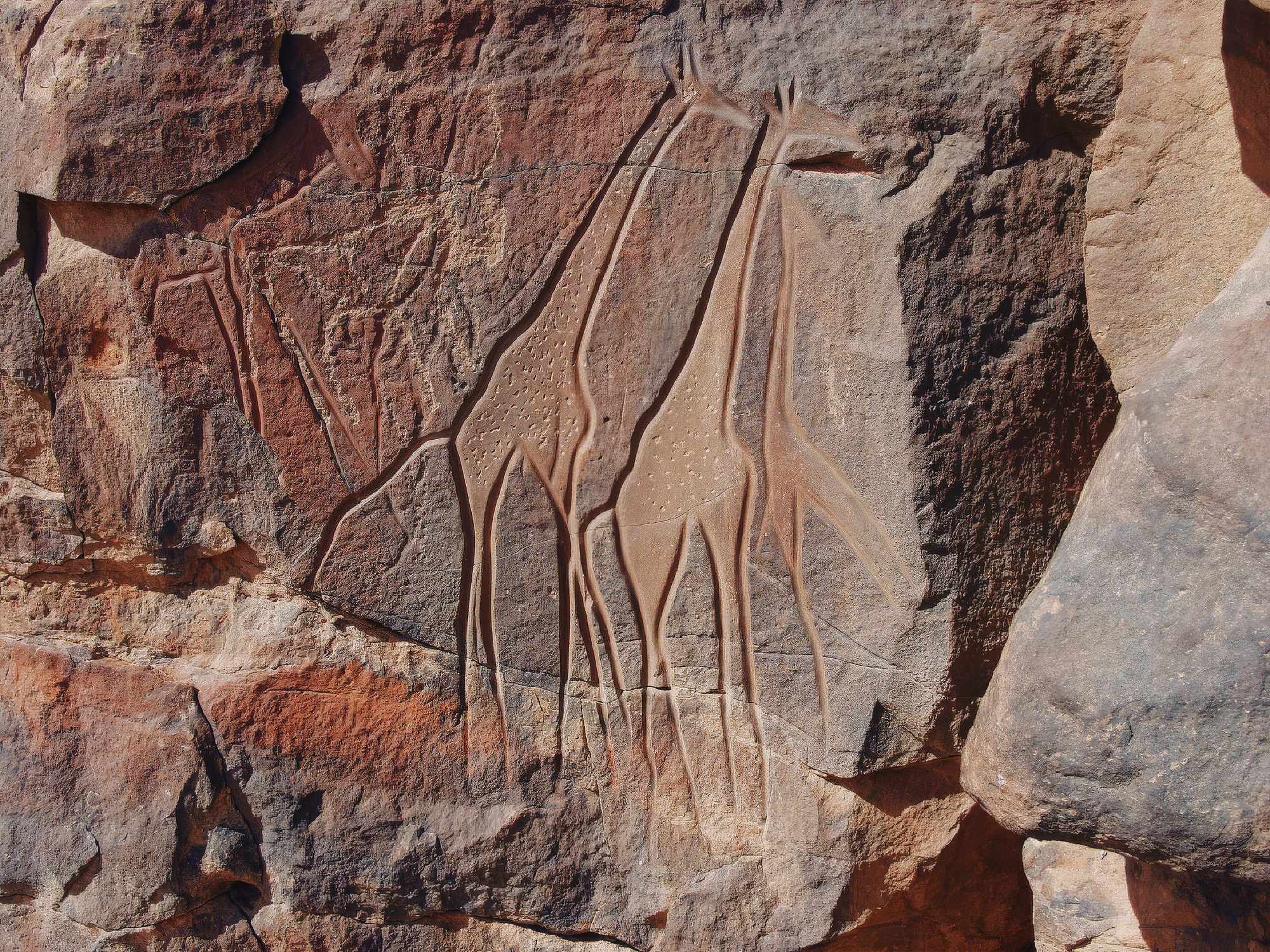
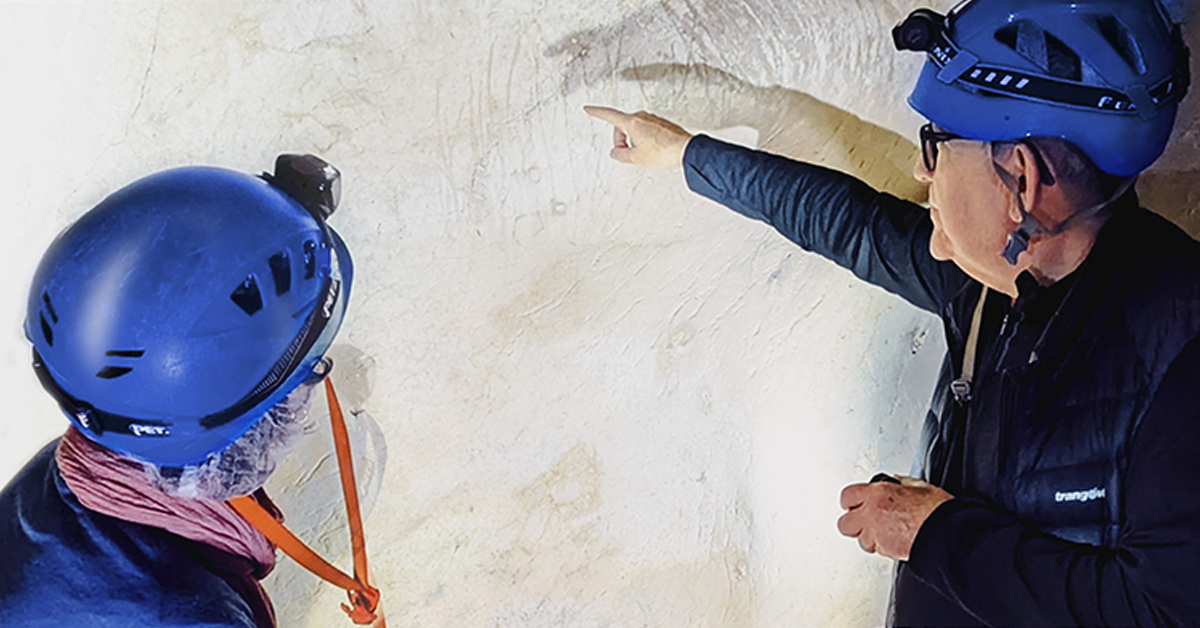
The extensive plateau and sandstone escarpment of Messak Settafet in southwest Libya, runs from the northeast to the southwest through the province of Fezzan and represents the northern and western edges of the Murzuq sedimentary basin. It sits at an elevation of up to 300 metres and is home to an abundance of rock art. The region is globally renowned as one of the world's most significant prehistoric archaeological landscapes, famously described by researchers as a vast, ancient 'carpet of stone tools'. The stone of the escarpment served as high-quality raw material for hominins to fracture into tools during the Pleistocene epoch.
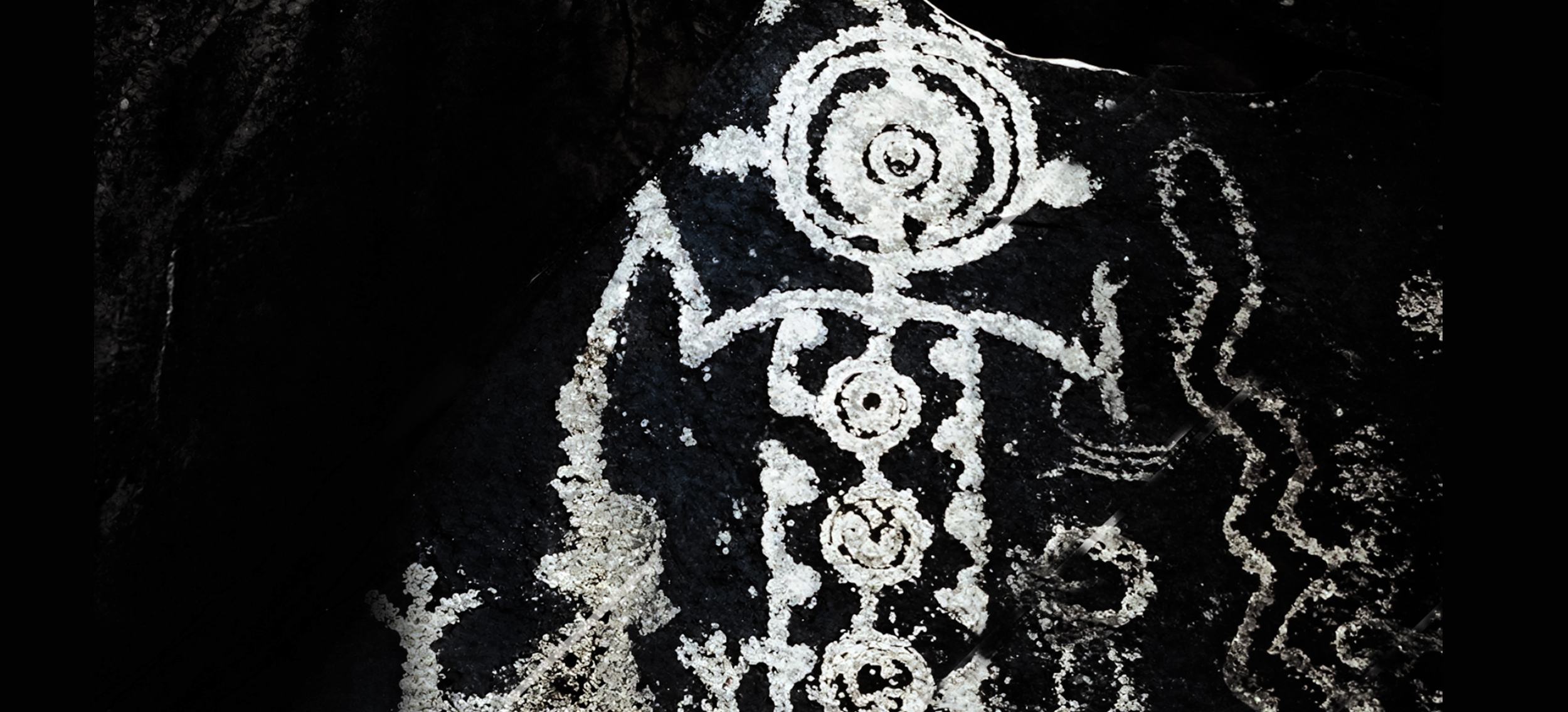
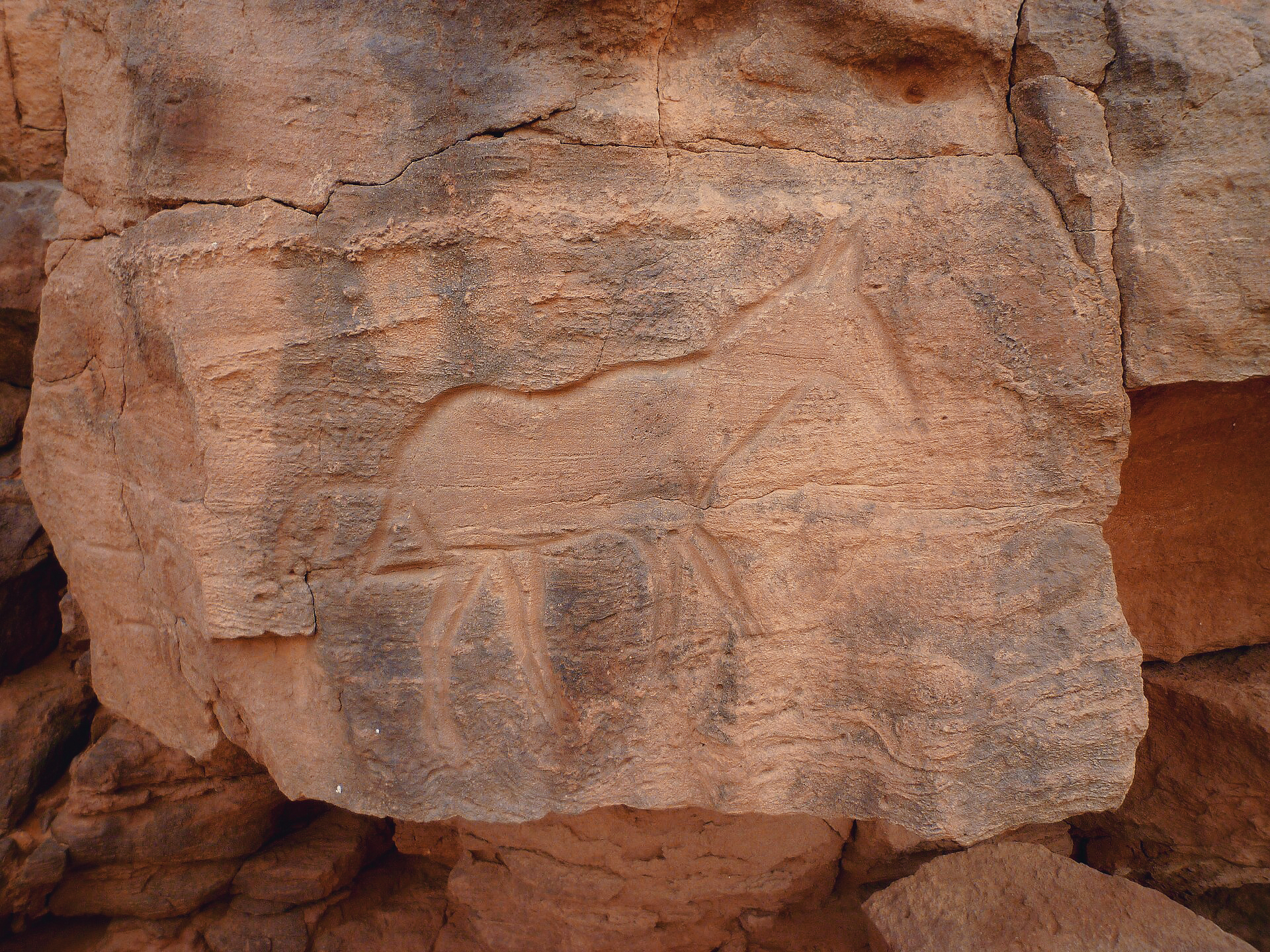
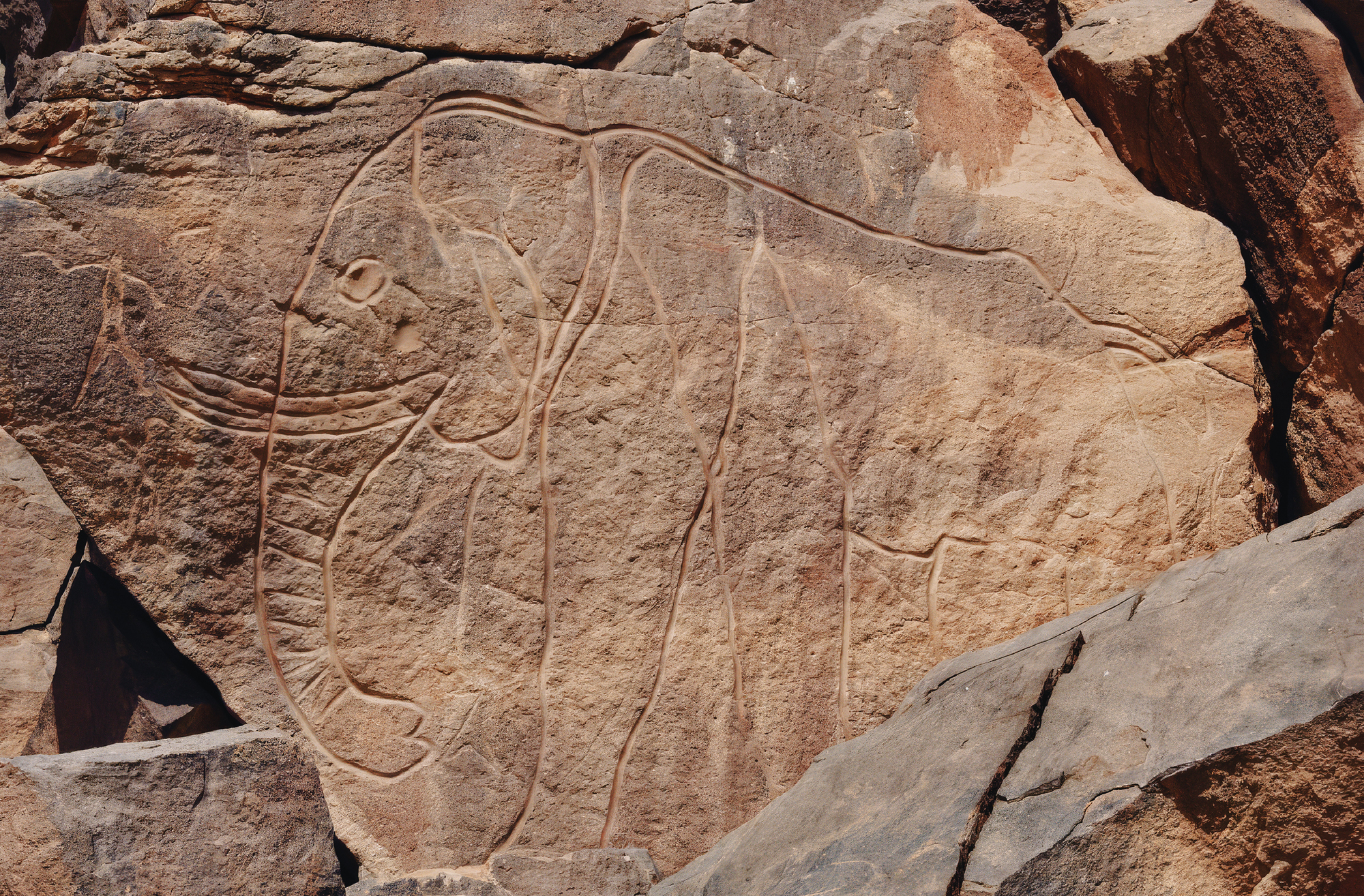
The rock art is some of the oldest in the Sahara with tens of thousands of depictions of animals some of which feature animals that indicate the greener savannah of the past such as Hippopotami and Crocodiles. As well as these animals we find depictions of Giraffe, Elephants and Ostriches.
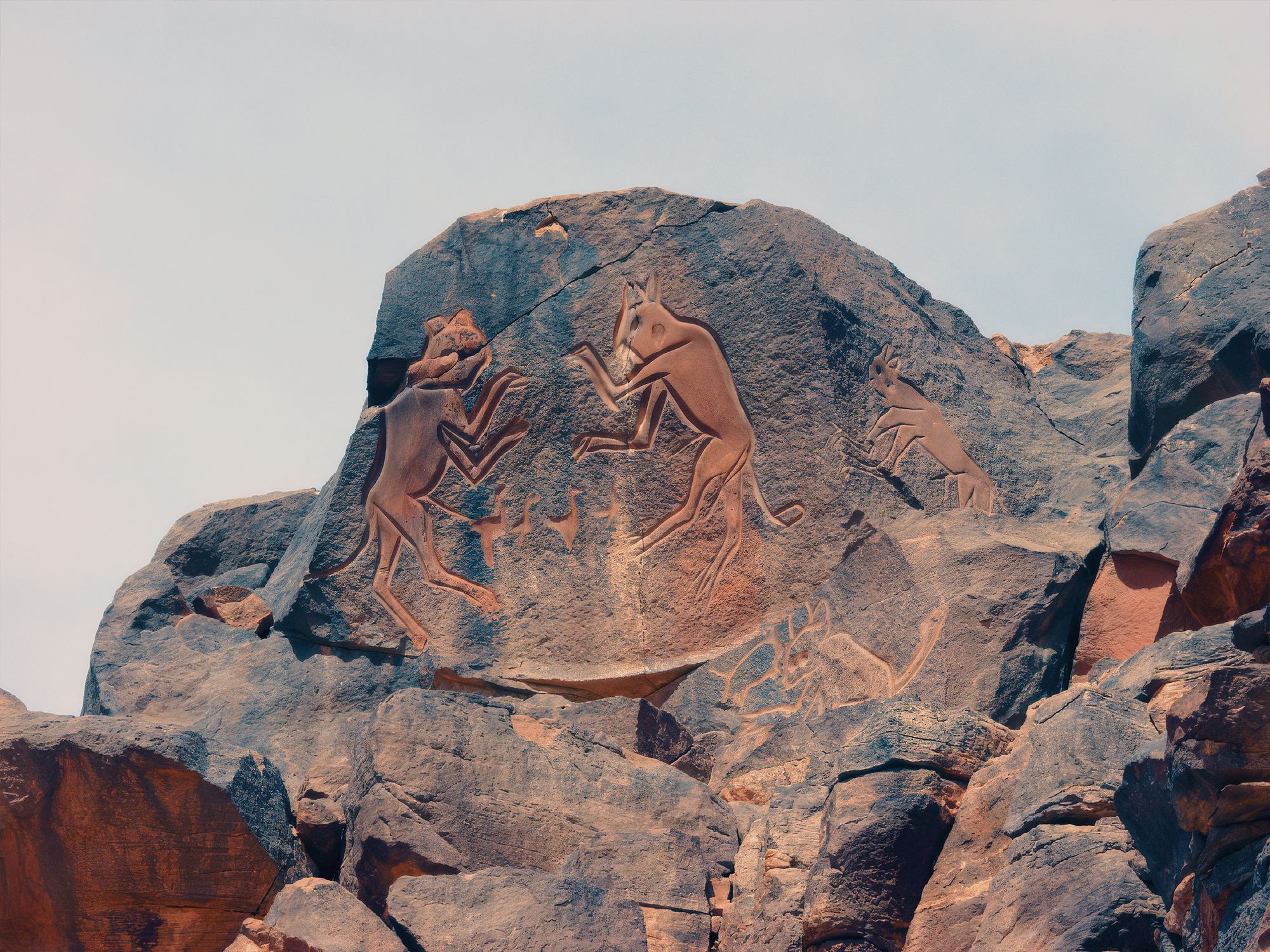
(Peter Robinson, Bradshaw Foundation 2026)
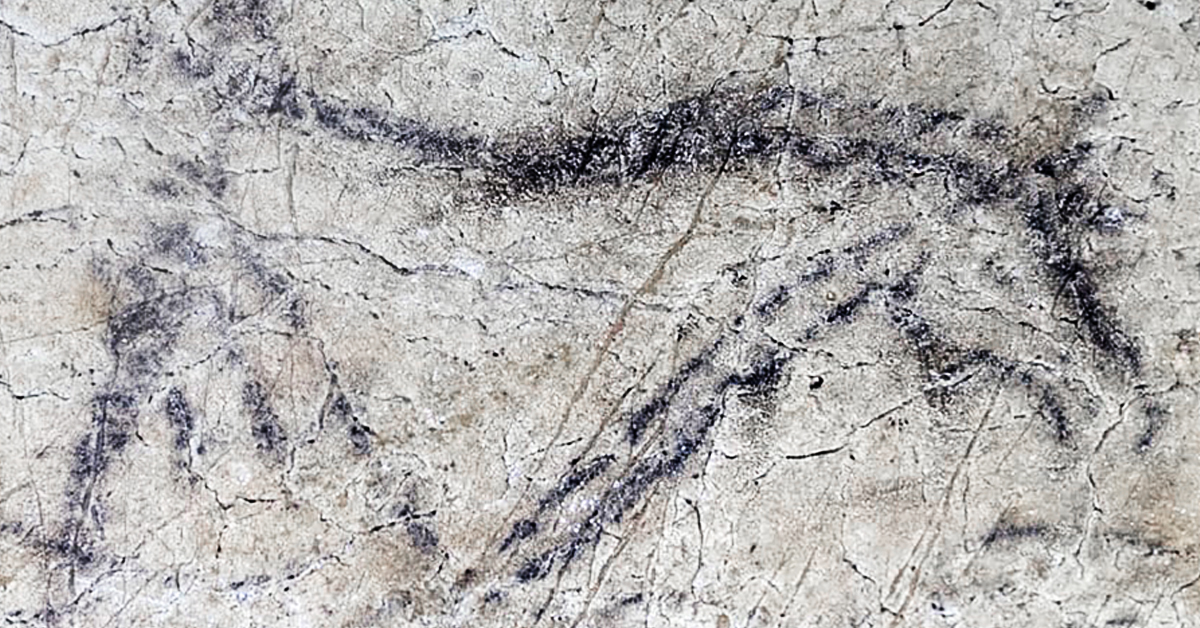
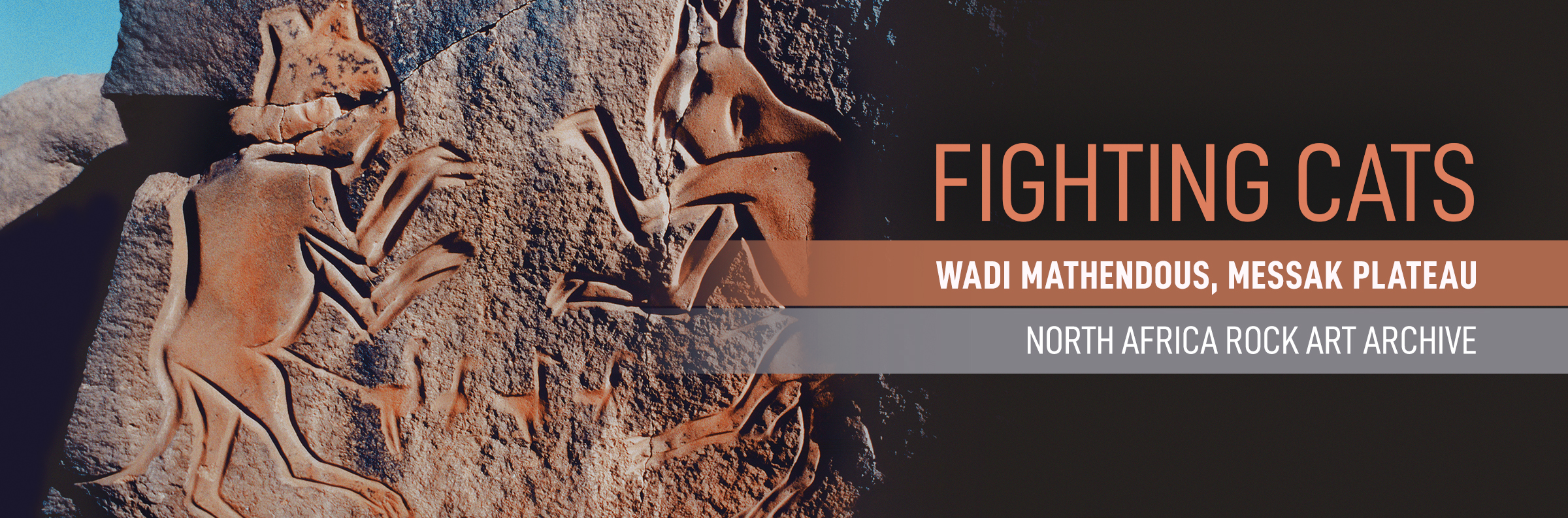
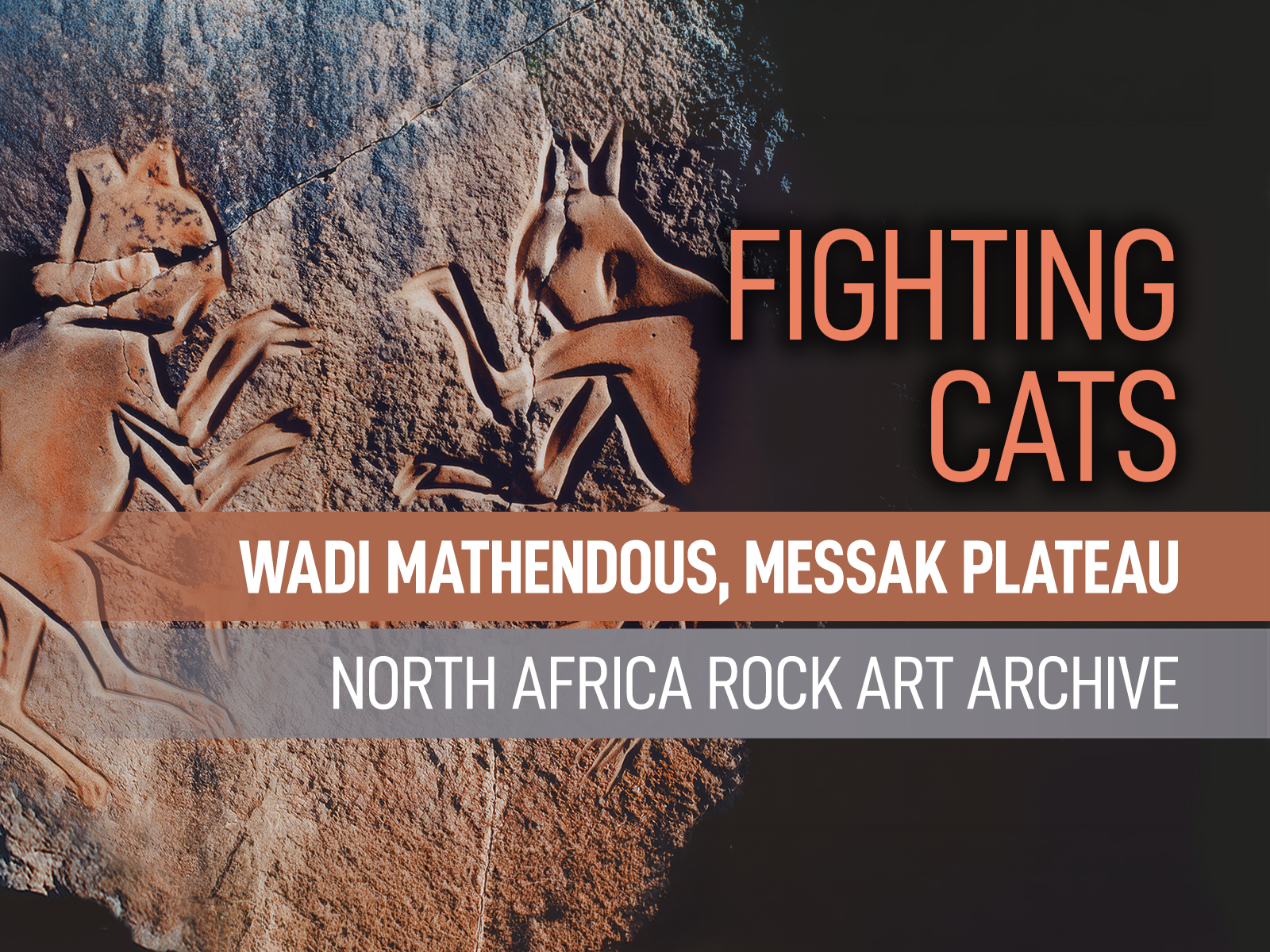
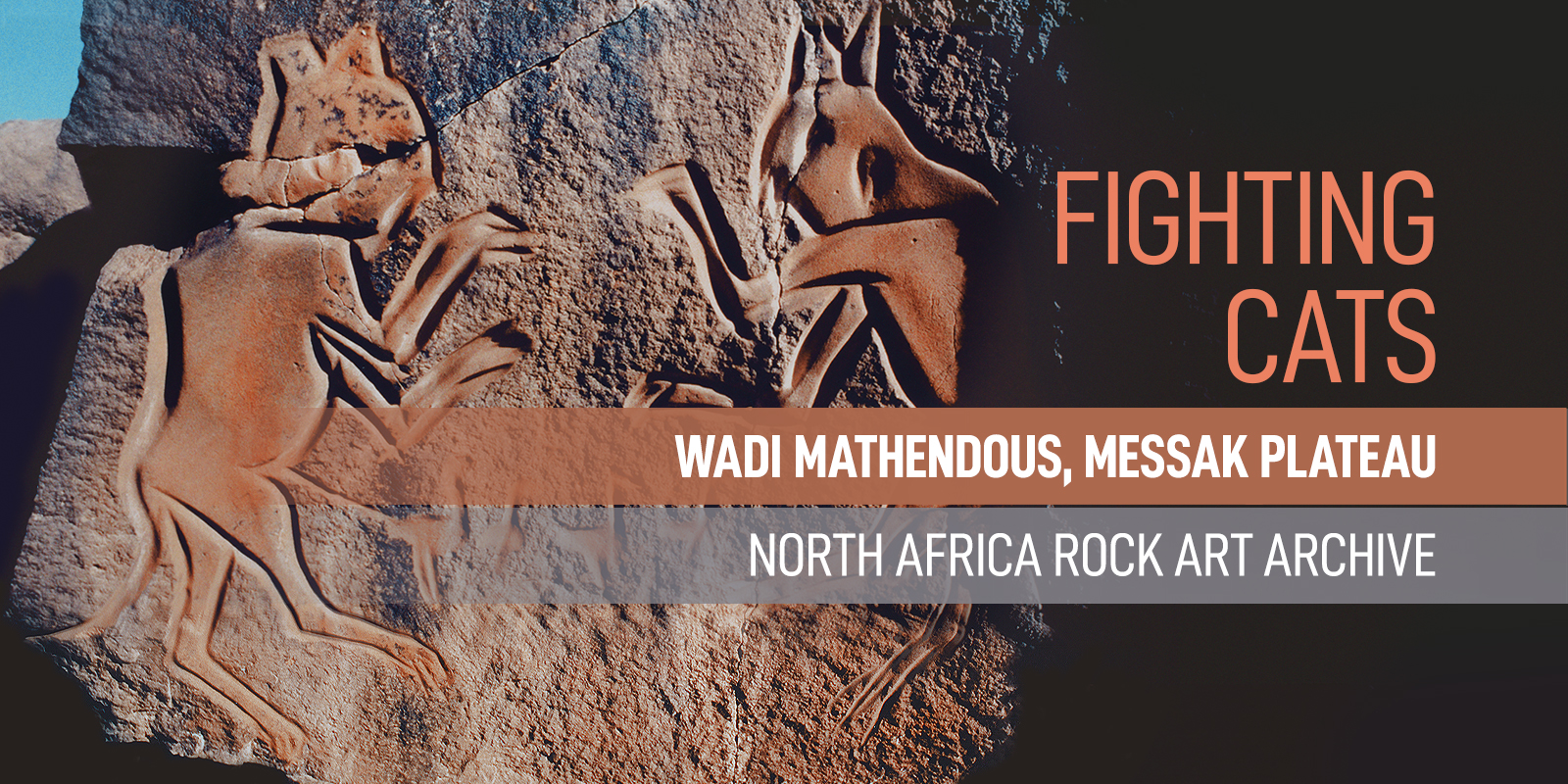
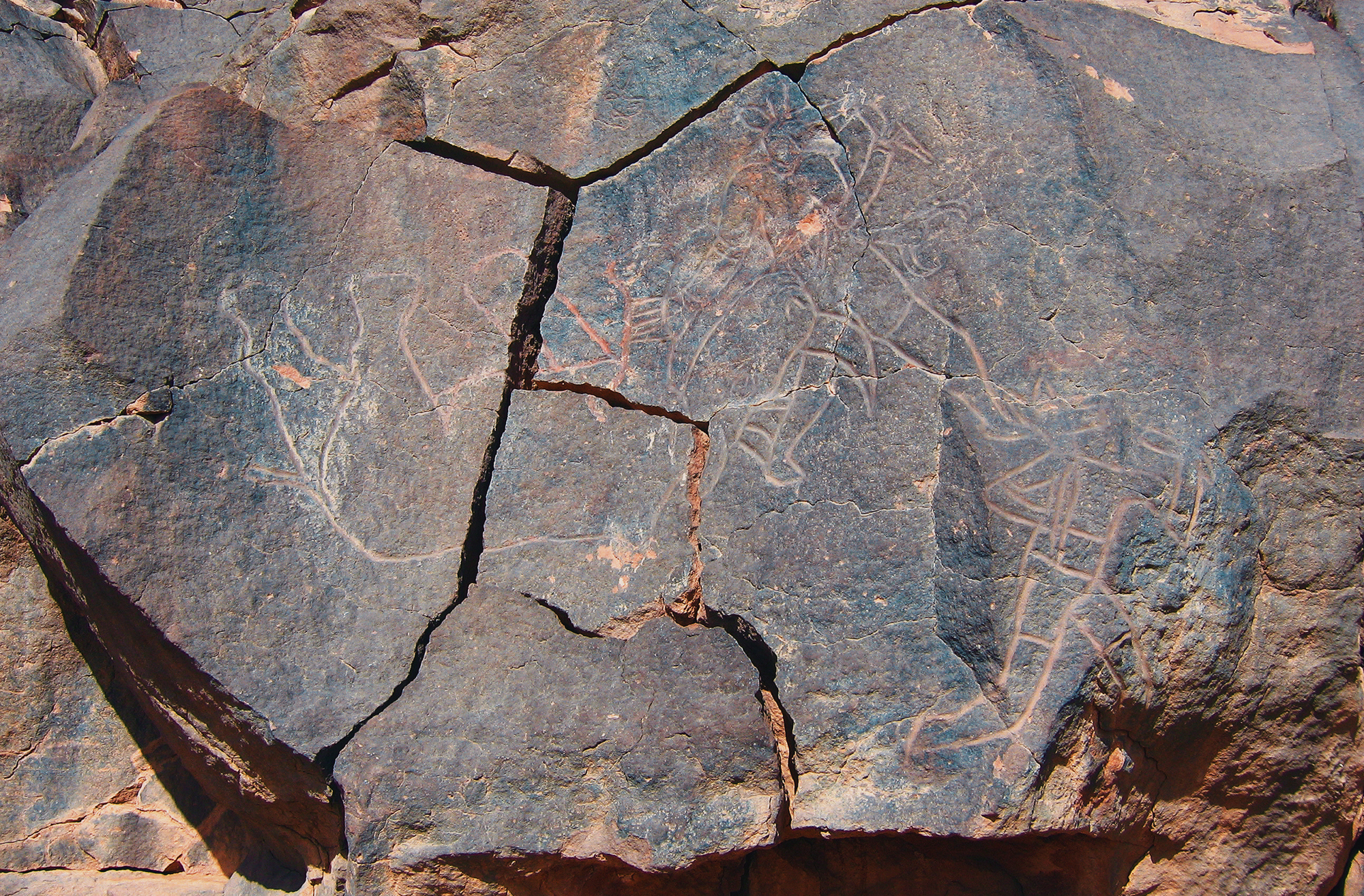
The 'Fighting Cats' is a striking prehistoric petroglyph located in the Messak Settafet region of southwestern Libya, overlooking the Wadi Mathendous.
The rock art is thought to have been carved roughly 6,000 years ago, perhaps earlier. The sites chosen were part of a dense and extensive monumental landscape, appearing to serve the spiritual needs of hundreds of Neolithic people (Savino di Lernia & Marina Gallinaro (2010) Antiquity 84(326): 954-975).
The carving, distinguished by a dynamic and theatrical narrative, depicts two long-tailed feline figures confronting each other, balanced on their hindquarters as if engaged in a fight. It showcases a rare focus on animal behaviour, tension, and symbolic interaction rather than a simple hunting record.
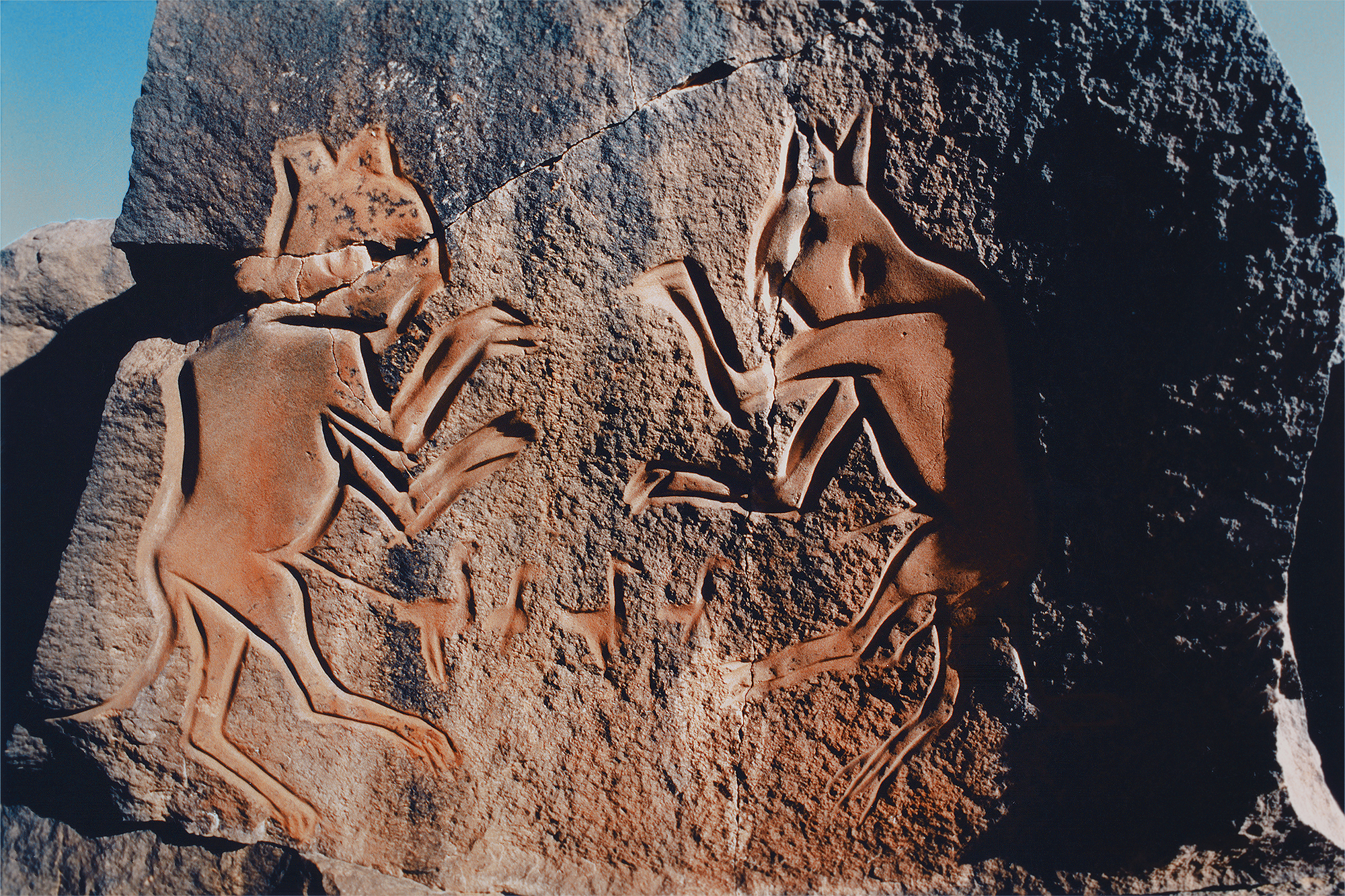
The engraving is situated on a rocky outcrop looking down over the valley of Wadi Mathendous, a location that gives the figures a commanding presence. Wadi Mathendous is renowned for its rich concentration of Saharan rock art; many engravings in this region - including the felines, life-sized elephants, rhinoceros, and giant giraffes - are rendered on a massive, often life-sized scale that matches or exceeds the physical presence of the animals themselves.
The stylistic uniqueness has been attributed to the deeply carved and polished outlines, unlike the standard shallow scratches or pecked outlines found in many other petroglyph traditions. The artists used specialized techniques to bring the animals to life, such as carving precise cupules (dimples) into the stone to represent eyes, and achieving an uncanny sense of volume and movement.
The 'Green Sahara' Fauna: researchers believe the subject matter reflects a completely vanished ecosystem. Depicting apex predators, massive herbivores, and aquatic life (such as crocodiles and hippos) in what is now hyper-arid desert provides a stunning window into the Holocene African Wet Phase (roughly 10,000 to 6,000 years ago).
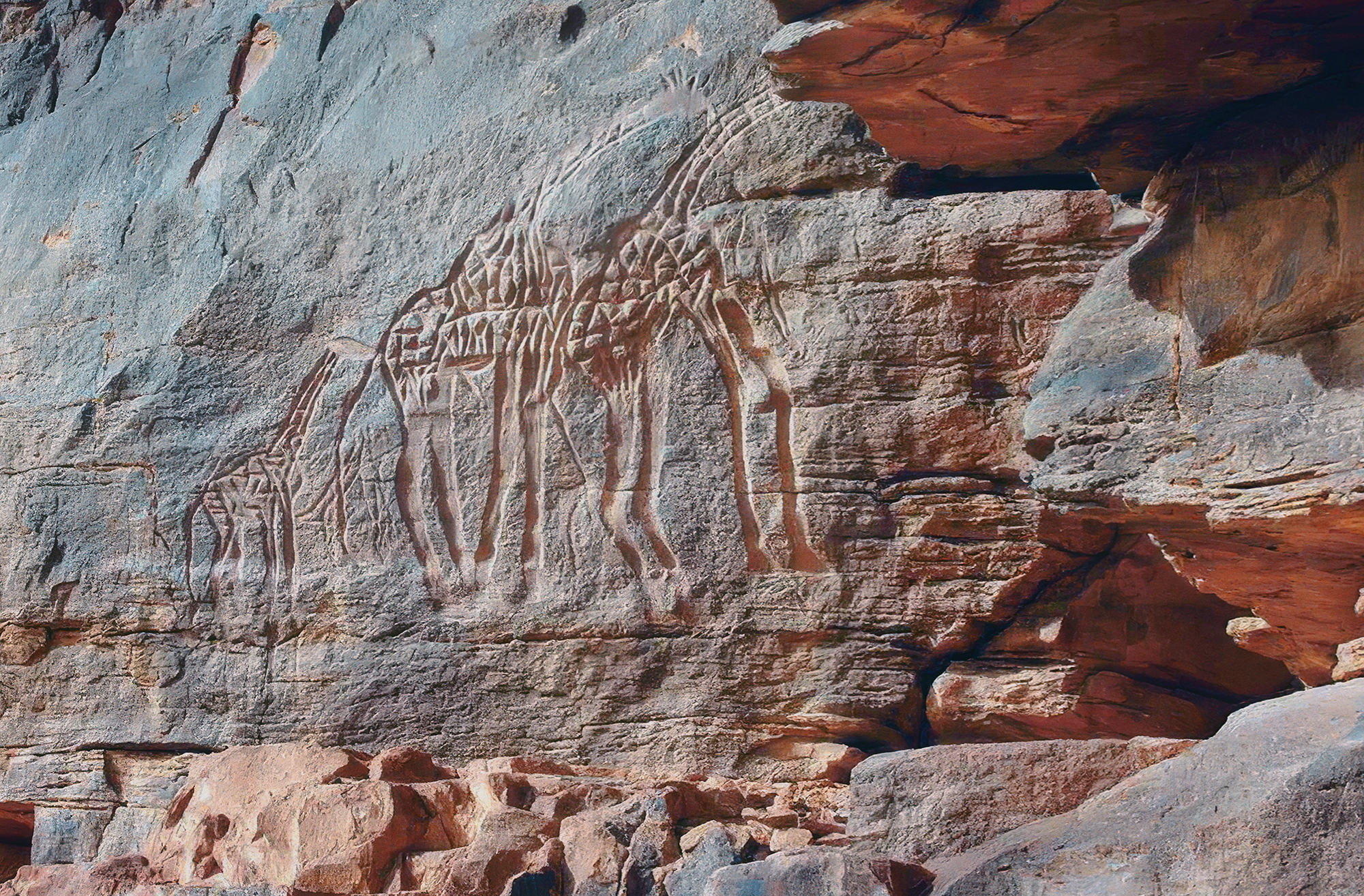
at Messak Plateau
by man with boomerang
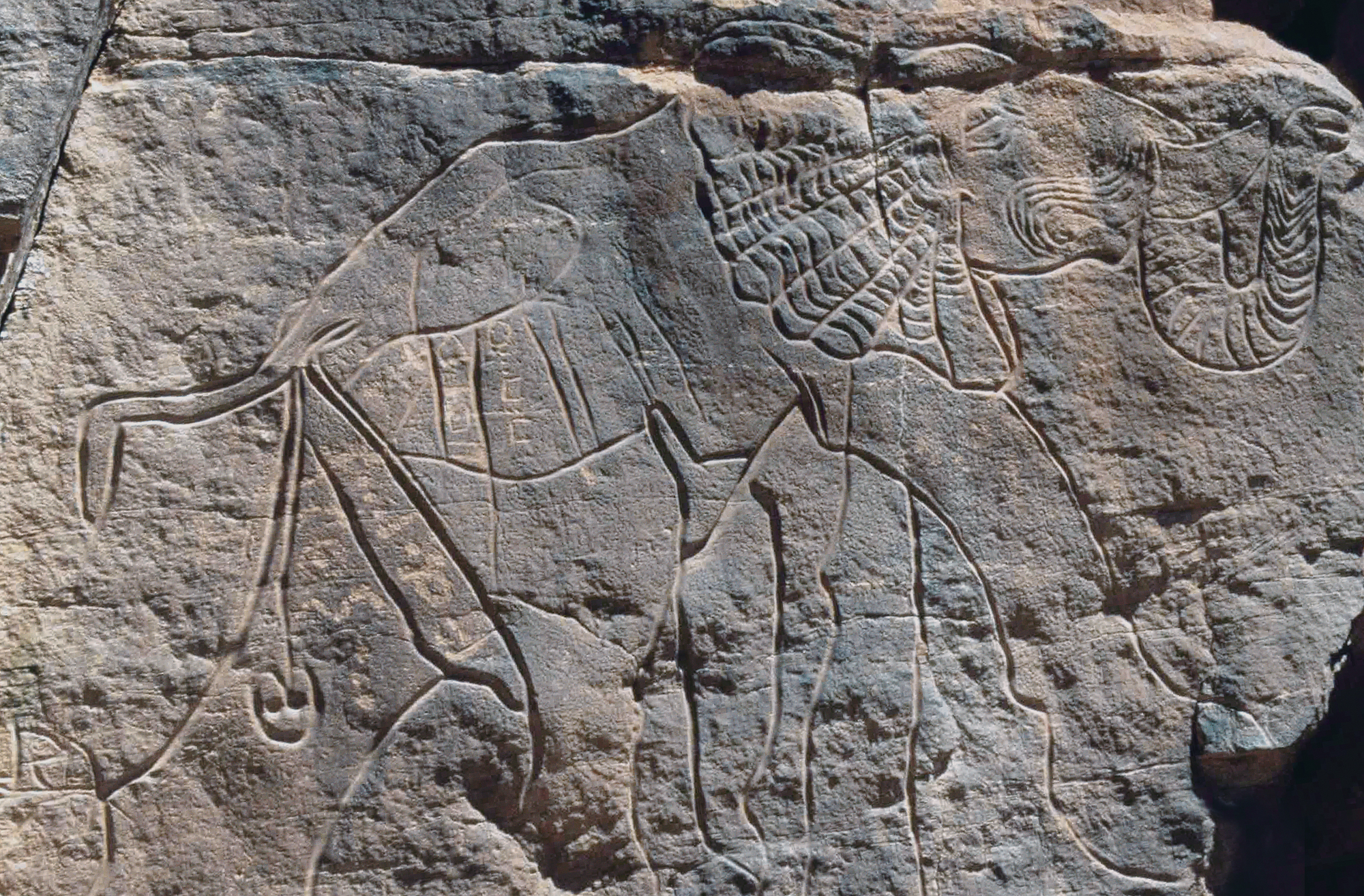
at Messak Plateau
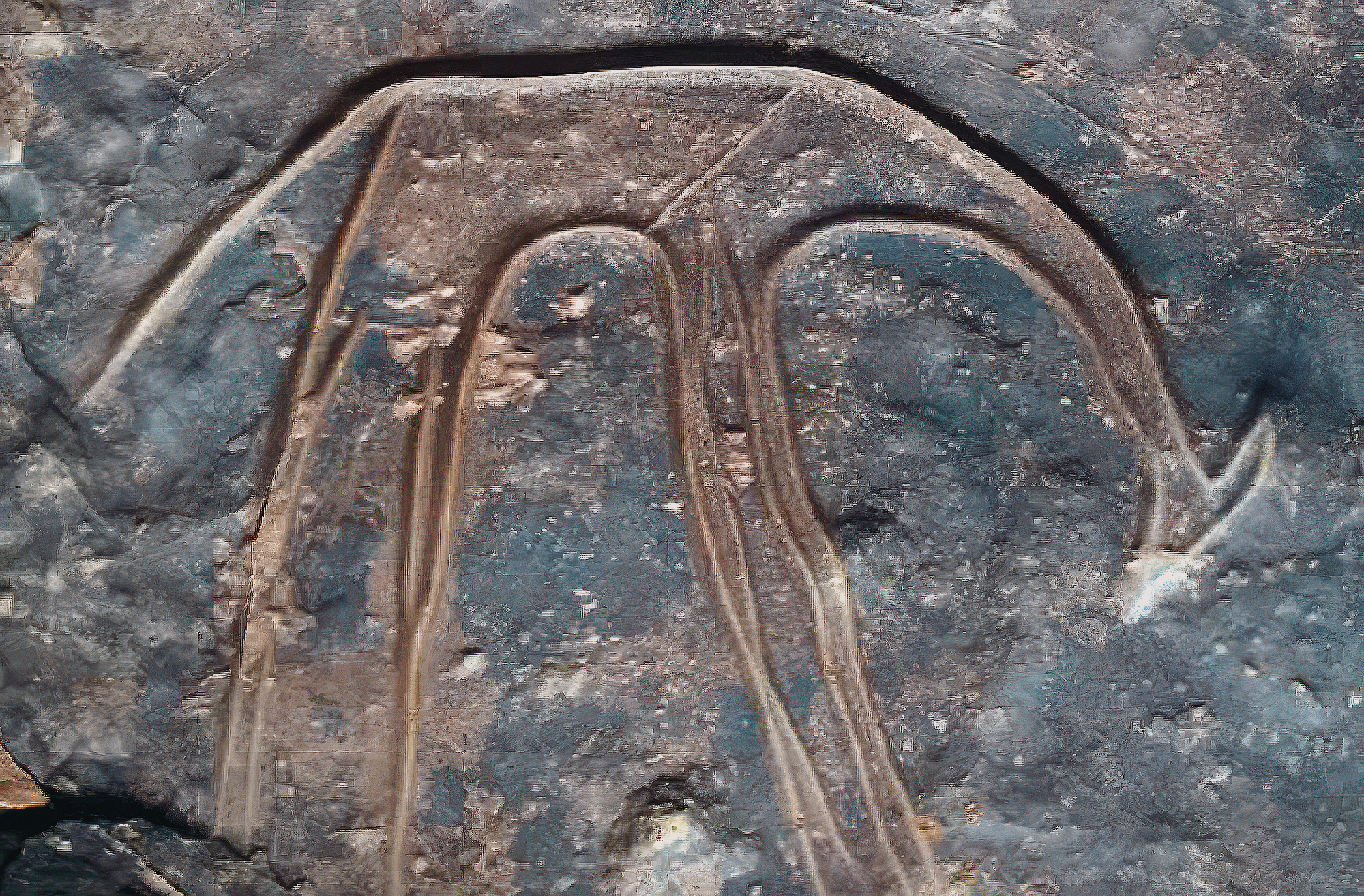
silicified surface
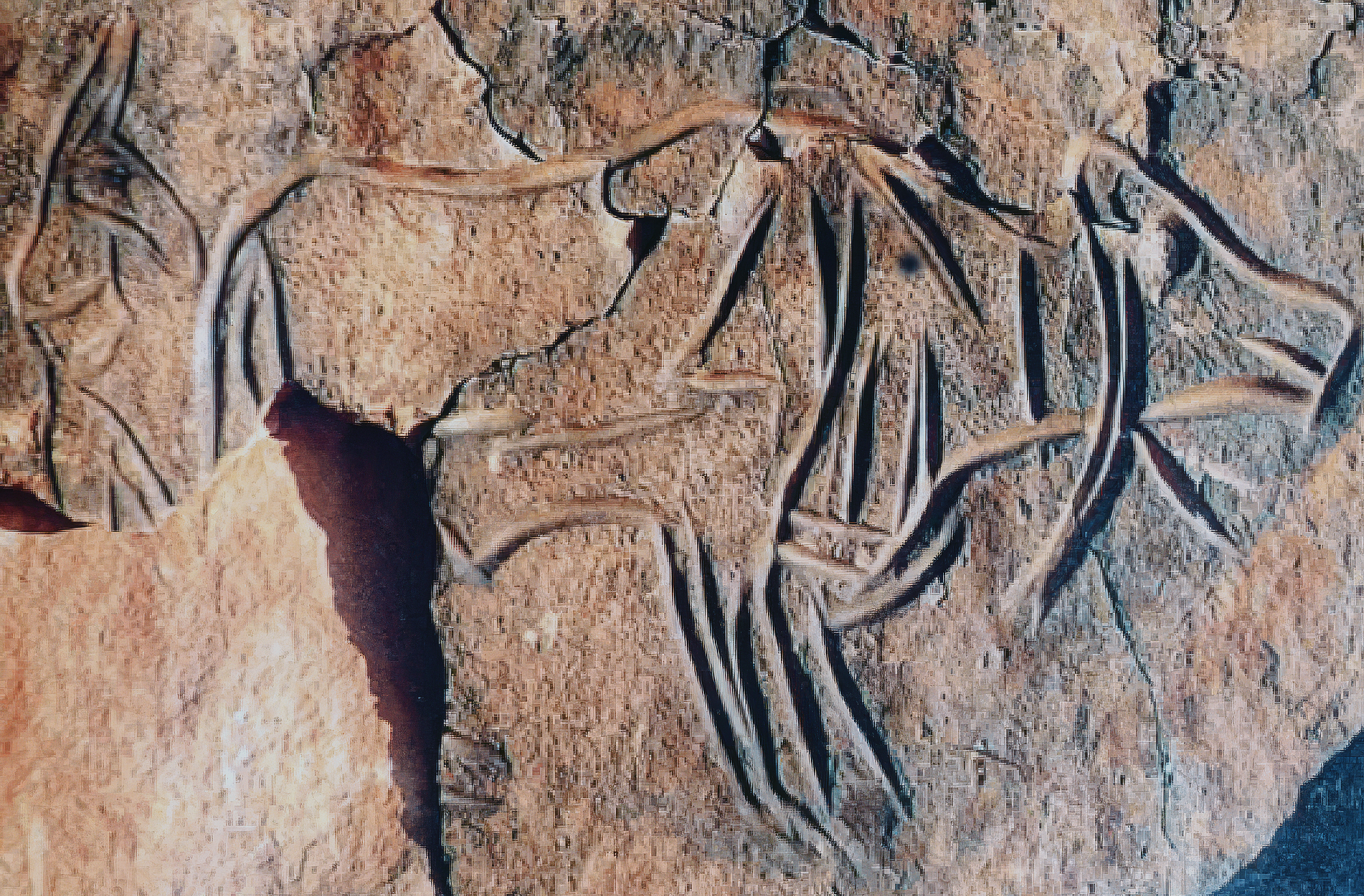
of engravings
Messak Plateau