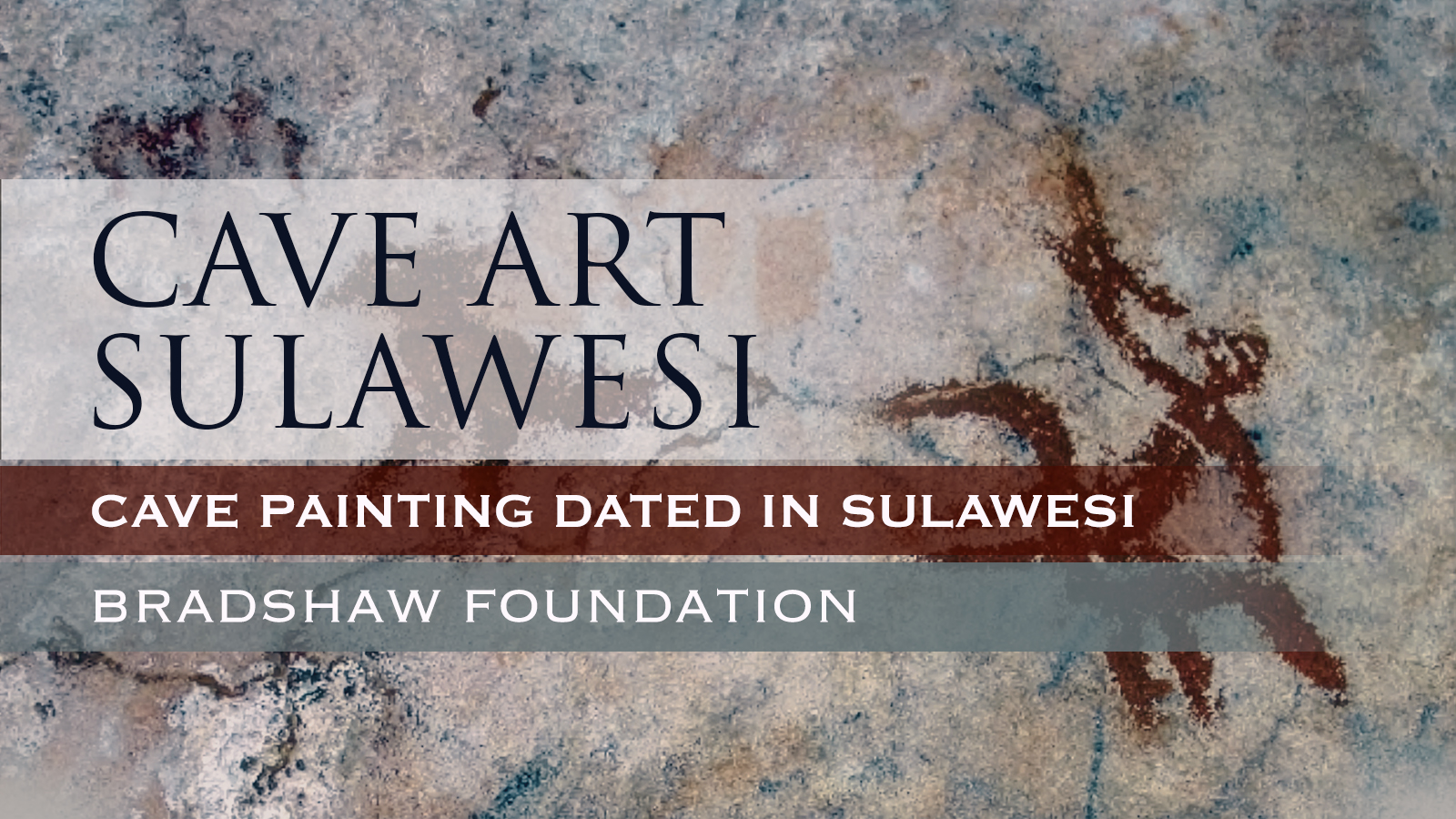
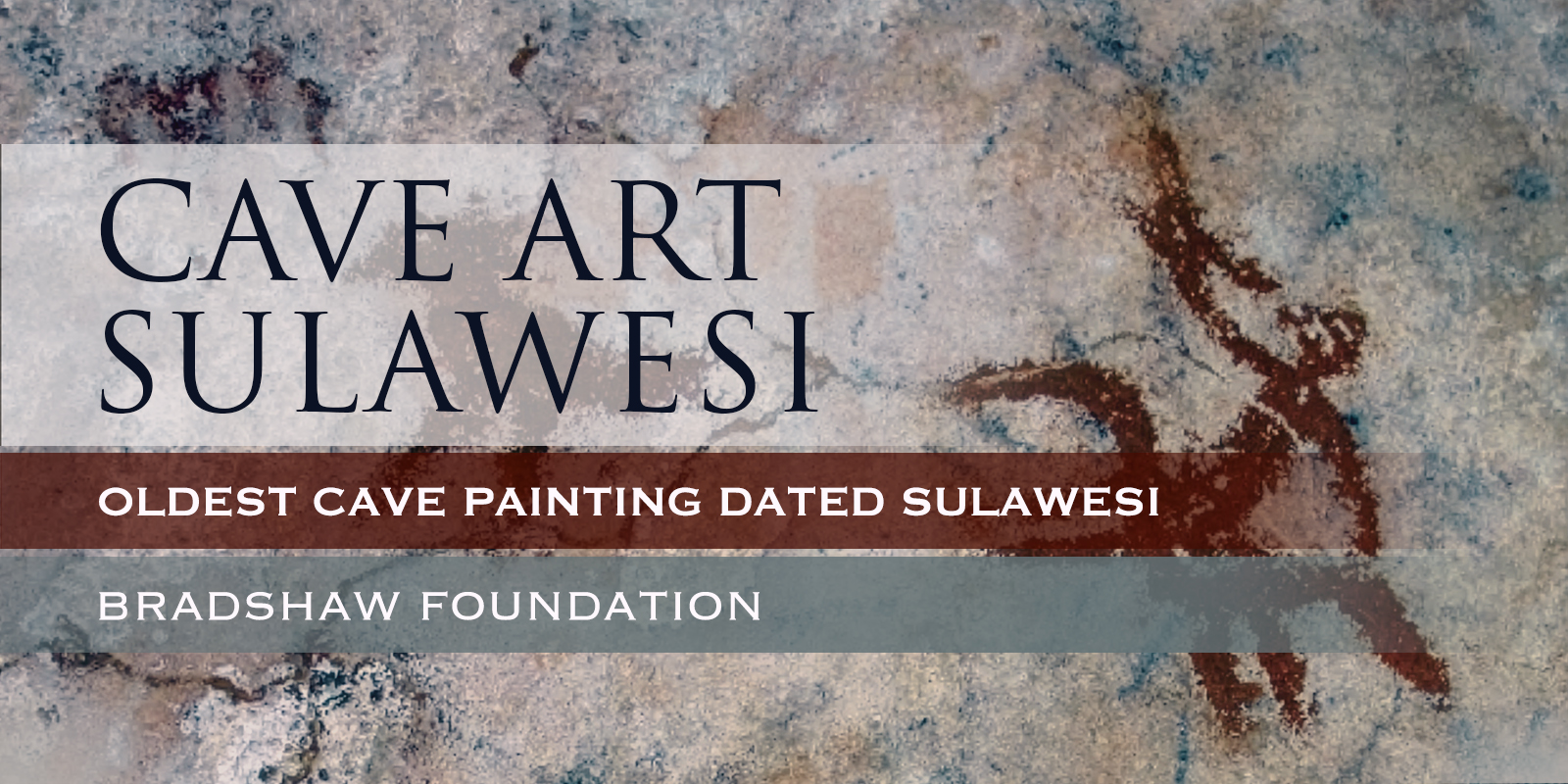
An article by the Science Correspondent Pallab Ghosh published on the BBC (21.01.26) - 'Oldest cave painting of red claw hand could rewrite human creativity timeline' - reports on a hand print that could be world's oldest cave art yet rediscovered, dated to at least 67,800 years ago.
Researchers are stating that a stencilled outline of a hand found on the Indonesian island of Sulawesi is the world's oldest known cave painting; it shows a red outline of a hand whose fingers were reworked to create a claw-like motif. Dated to at least 67,800 years ago, they believe this indicates an early leap in symbolic imagination. The find also strengthens the argument that our species - Homo sapiens - had reached the wider Australia–New Guinea landmass, known as Sahul, by around 15,000 years earlier than some researchers argue.
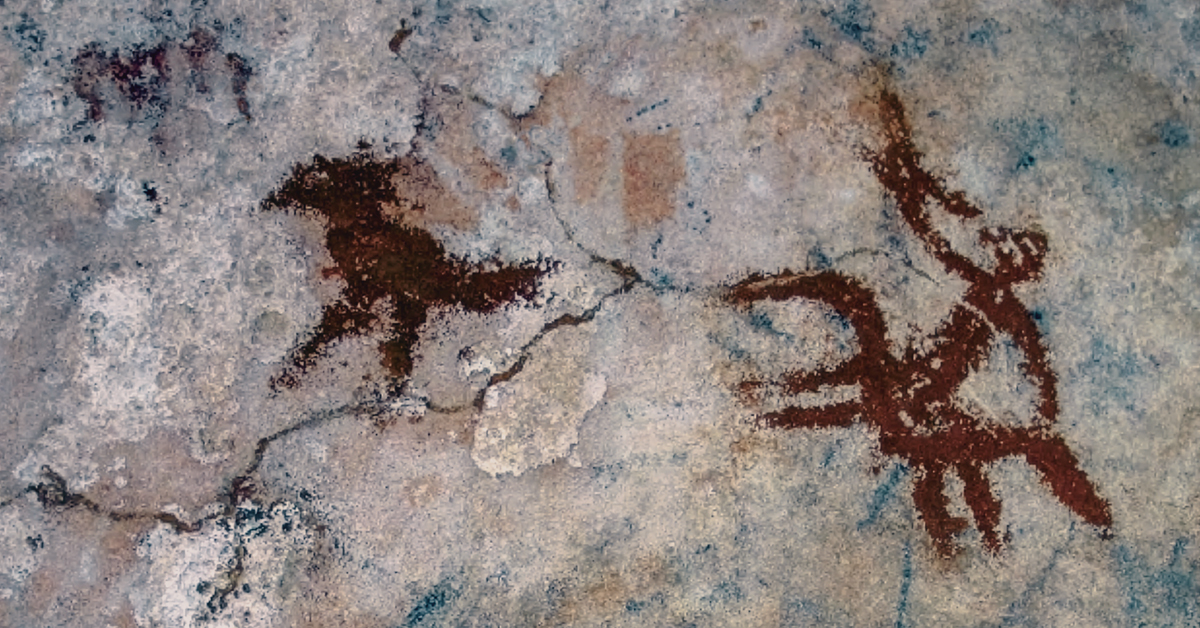
Over the past decade, a series of discoveries on Sulawesi has overturned the old idea that art and abstract thinking in our species burst suddenly into life in Ice Age Europe and spread from there. In 2014, hand stencils and animal figures dating back at least 40,000 years were found in Sulawesi, followed by a hunting scene that is at least 44,000 year old, and then a narrative pig and human painting dated to at least 51,200 years ago.
Each step pushed sophisticated image making further back in time, according to Professor Maxime Aubert of Griffiths University. He states "We started with minimum ages of at least 40,000 years, the same time as in Europe, but by getting closer to the pigment we've pushed the rock art in Sulawesi back by at least another 28,000 years".
Professor Adam Brumm of Griffiths University in Australia, who co-led the project, reported to the BBC that the latest discovery, published in the journal Nature (see below), adds to the emerging view that there was no awakening for humanity in Europe. Instead, creativity was innate to our species, the evidence for which stretches back to Africa, where we evolved.
He goes on to state that "When I went to university in the mid to late 90s, that's what we were taught – the creative explosion in humans occurred in a small part of Europe. But now we're seeing traits of modern human behaviour, including narrative art in Indonesia, which makes that Eurocentric argument very hard to sustain". The oldest Spanish cave art is a red hand stencil in Maltravieso cave in Western Spain, dated to be at least 66,700 years old - though this is controversial and some experts don't think it to be that old.
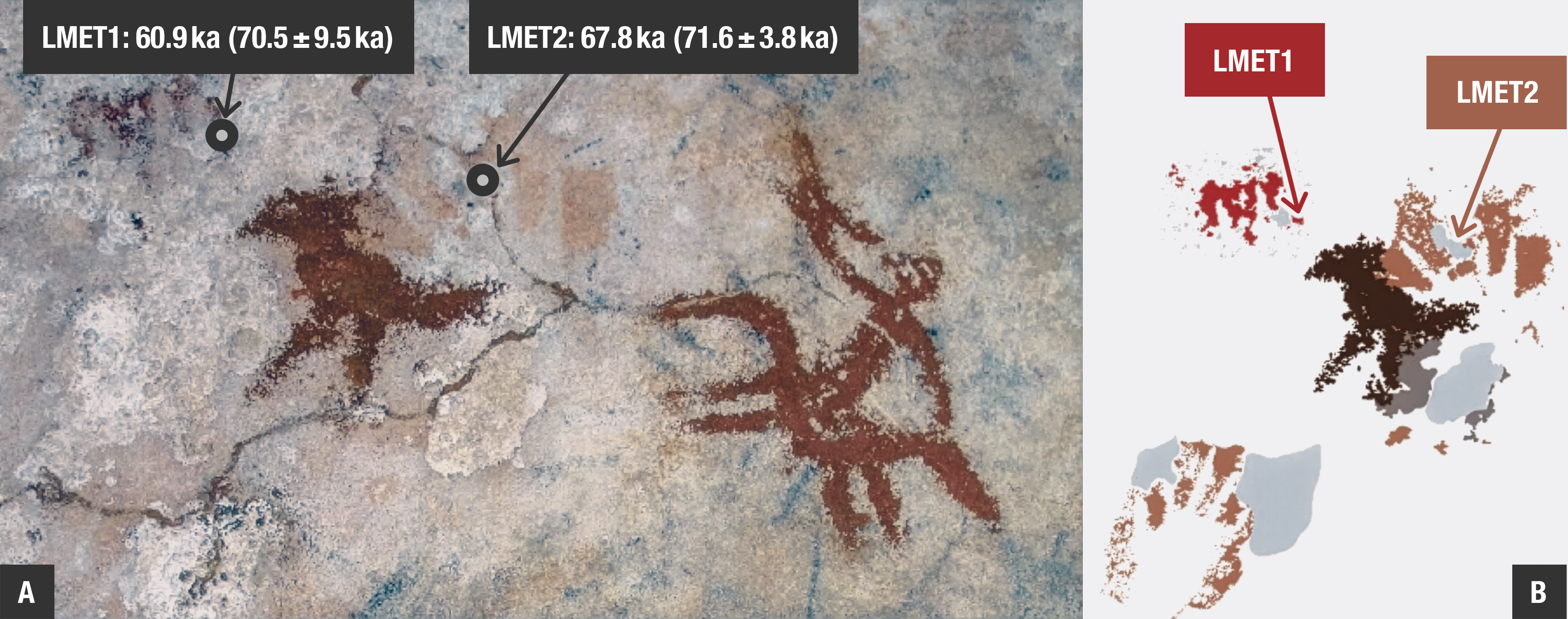
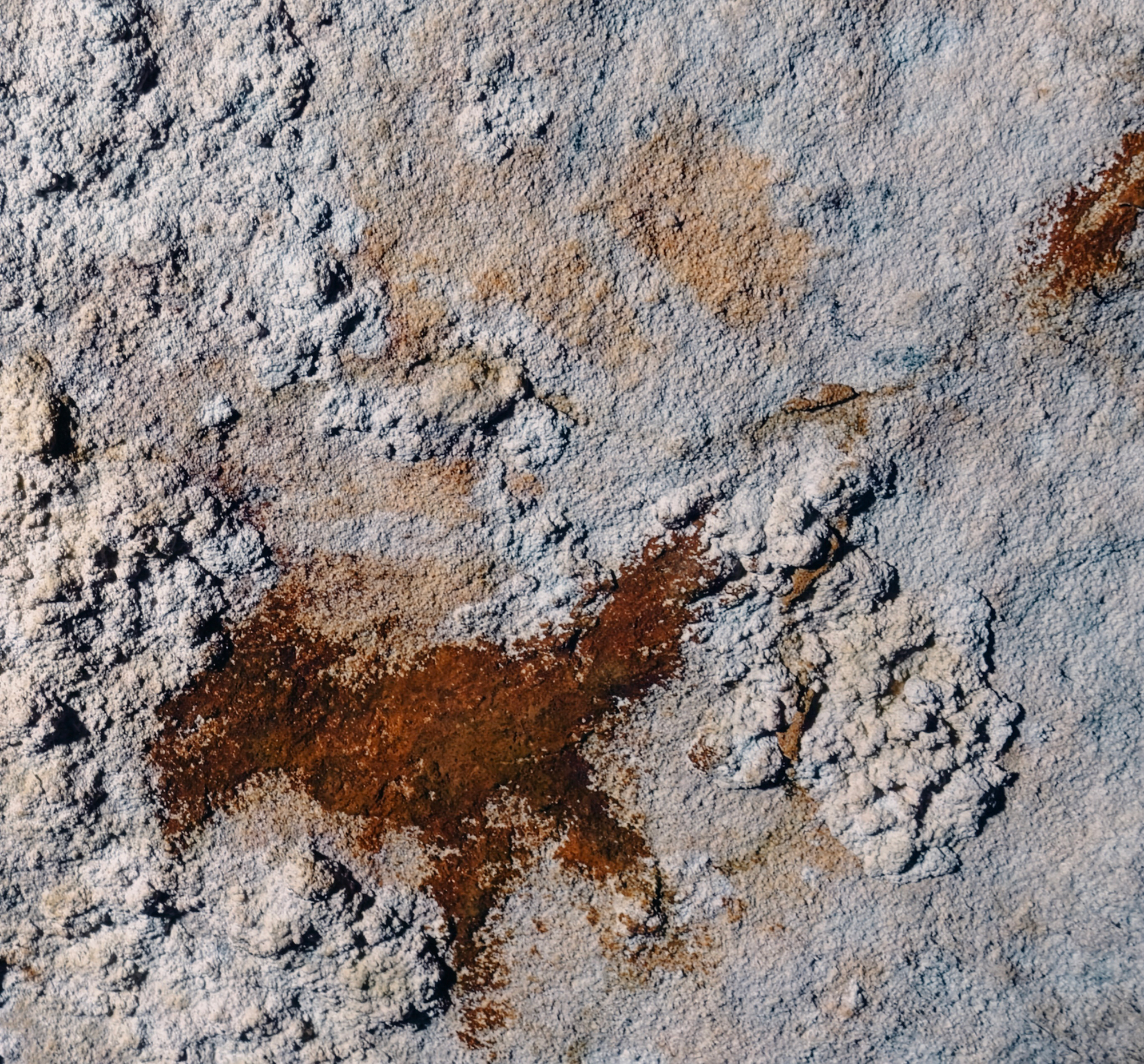
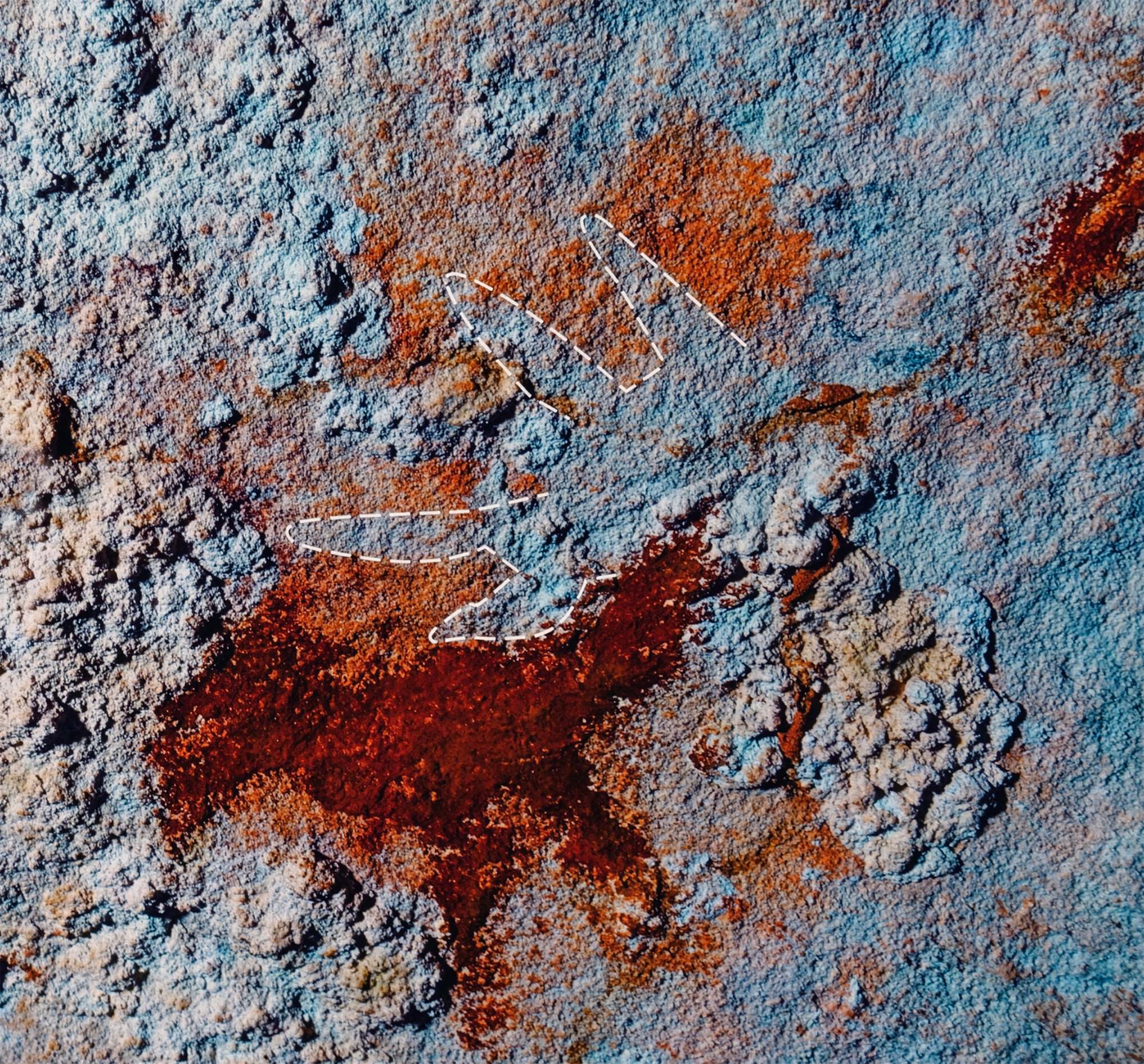
a,b, Samples LMET1 and LMET2 collected from over distinct hand stencils: photograph of the rock art panel with the two hand stencils (a) and digital tracing (b).
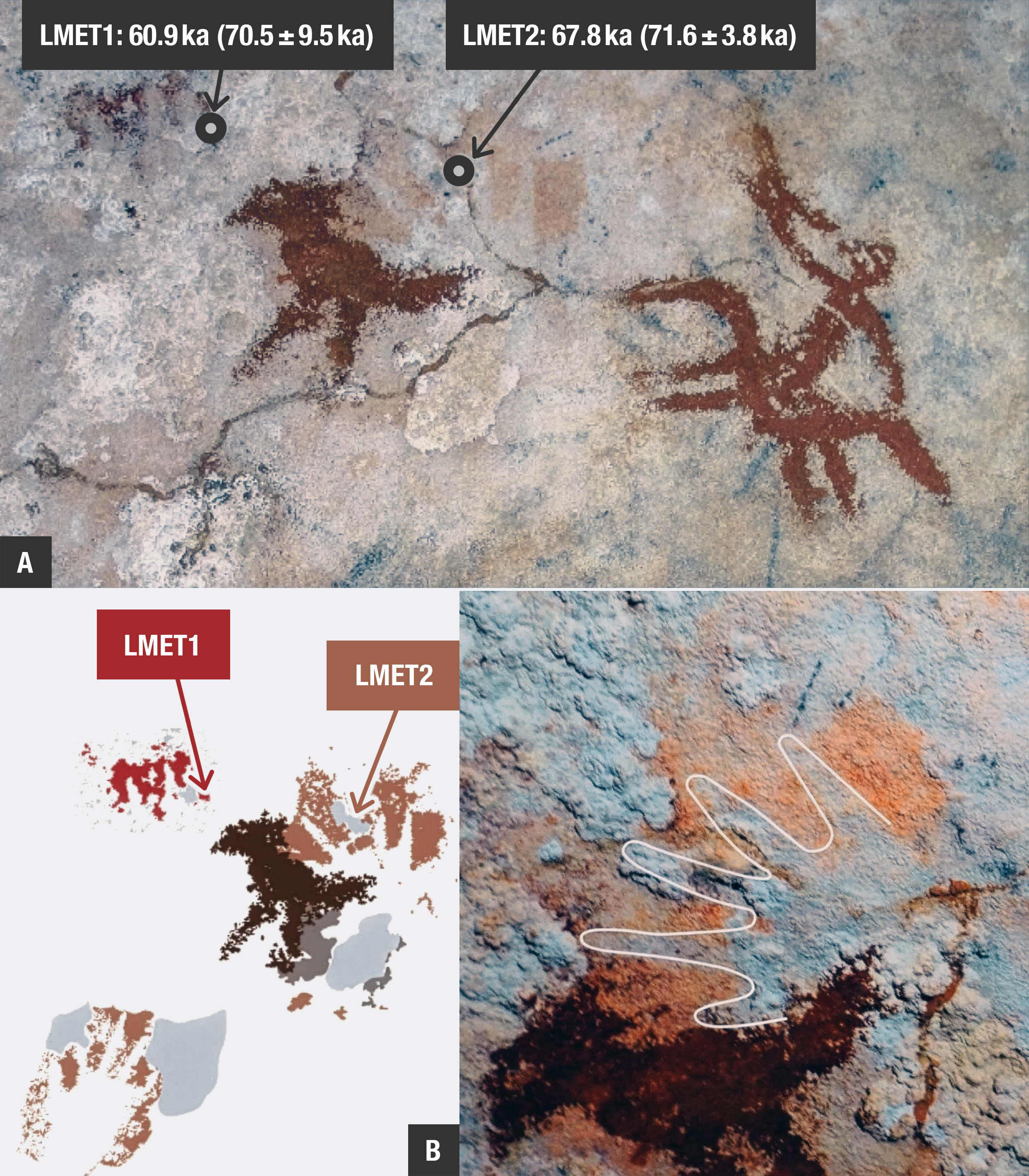
a,b, Samples LMET1 and LMET2 collected from over distinct hand stencils: photograph of the rock art panel with the two hand stencils (a) and digital tracing (b).
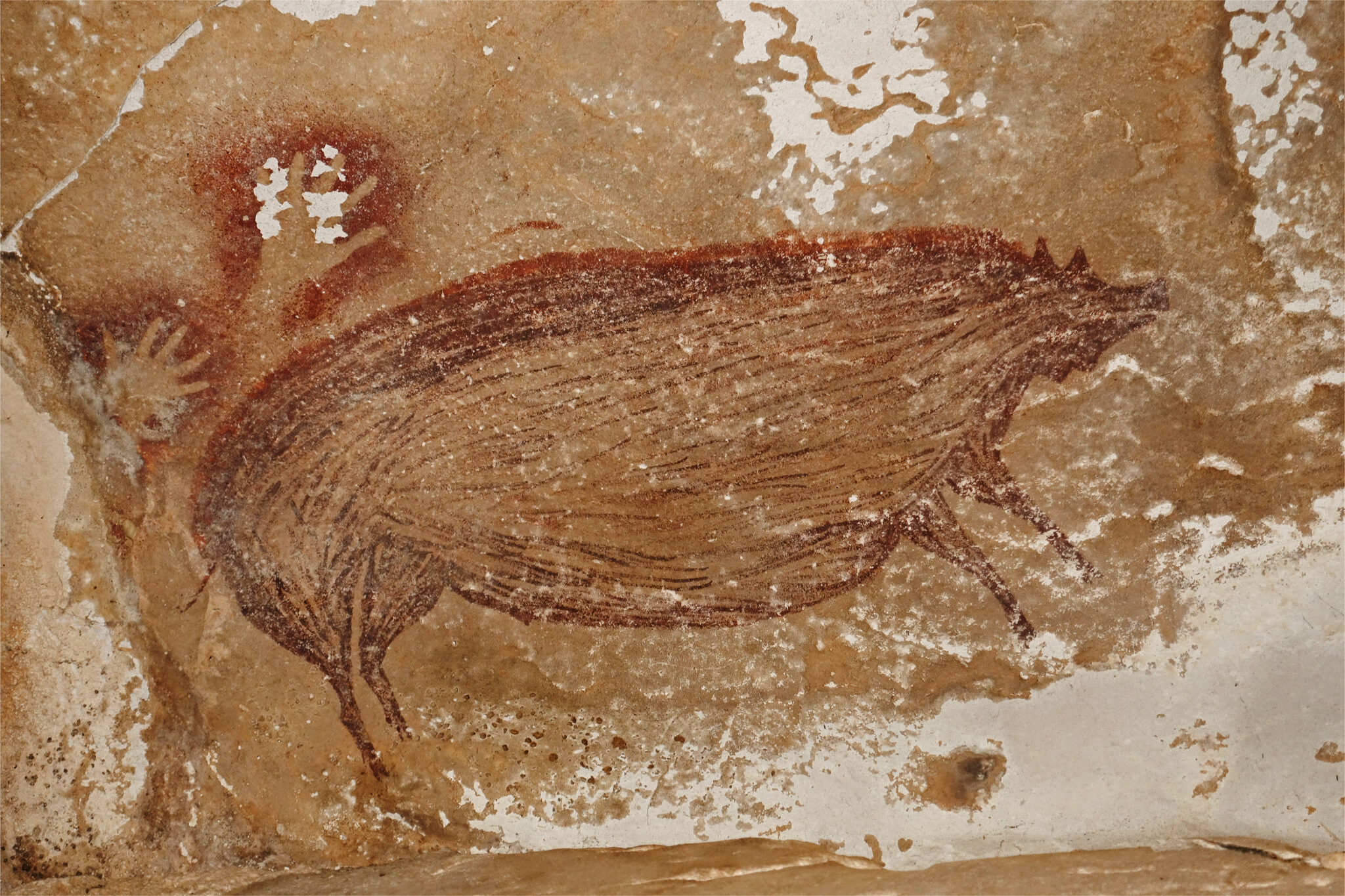
Discovered by archaeologists, the finding, described in the journal Science Advances, provides the earliest evidence of human settlement of the region. Co-author Maxime Aubert of Australia’s Griffith University explains it was found on the island of Sulawesi in 2017 by doctoral student Basran Burhan, as part of the surveys the team was carrying out with Indonesian authorities.
The Leang Tedongnge cave is located in a remote valley enclosed by sheer limestone cliffs, about an hour’s walk from the nearest road. It is only accessible during the dry season because of flooding during the wet season. Members of the isolated Bugis community told the team it had never before been seen by westerners.
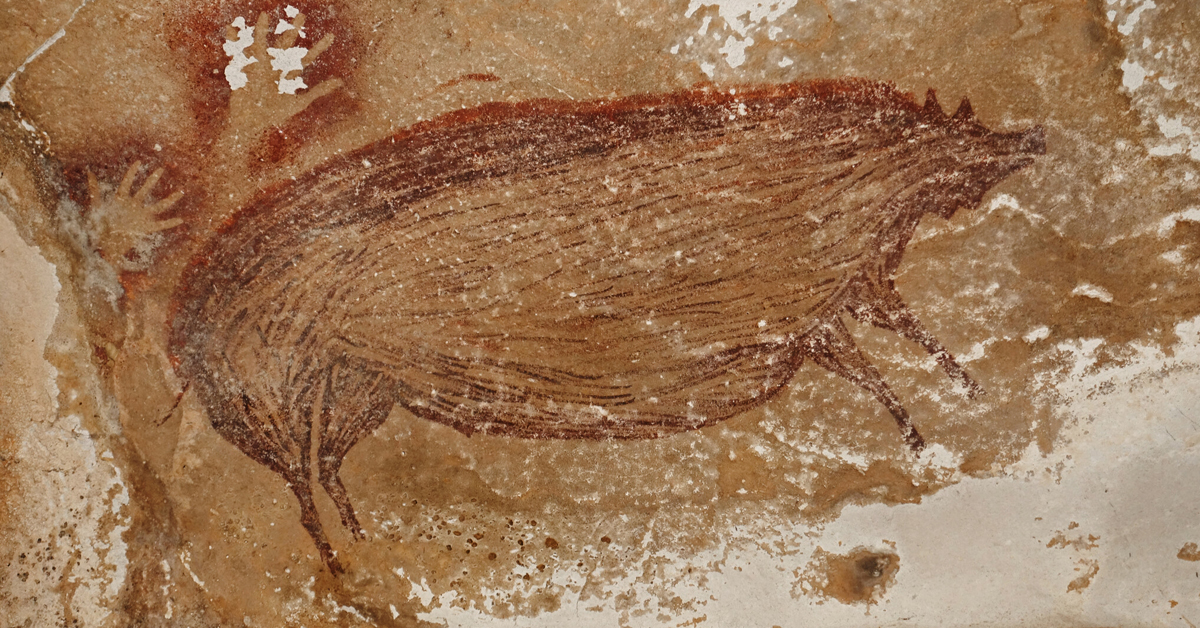
Measuring 136cm by 54cm (53in by 21in), the Sulawesi warty pig was painted using dark red ochre pigment and has a short crest of upright hair, as well as a pair of horn-like facial warts characteristic of adult males of the species. There are two hand prints above the pig’s hindquarters, and it appears to be facing two other pigs that are only partially preserved, as part of a narrative scene. Co-author Adam Brumm explains that “The pig appears to be observing a fight or social interaction between two other warty pigs.”
Humans have hunted Sulawesi warty pigs for tens of thousands of years, and they are a key feature of the region’s prehistoric artwork, particularly during the ice age. Aubert, a dating specialist, identified a calcite deposit that had formed on top of the painting, then used uranium-series isotope dating to confidently say the deposit was 45,500 years old: "This makes the painting at least that age, but it could be much older because the dating that we’re using only dates the calcite on top of it. The people who made it were fully modern, they were just like us, they had all of the capacity and the tools to do any painting that they liked.”
The previously oldest dated rock art painting was found by the same team in Sulawesi. It depicted a group of part-human, part-animal figures hunting mammals, and was found to be at least 43,900 years old. Cave paintings such as these also help fill in gaps about our understanding of early human migrations. It is known that people reached Australia 65,000 years ago, but they would probably have had to cross the islands of Indonesia, known as “Wallacea”.
This site now represents the oldest evidence of humans in Wallacea, but it is hoped further research will help show people were in the region much earlier, which would resolve the Australia settlement puzzle. The team believes the artwork was made by Homo sapiens, as opposed to now extinct human species like Denisovans, but cannot say this for certain. To make handprints, the artists would have had to place their hands on a surface then spit pigment over it, and the team are hoping to try to extract DNA samples from residual saliva.
→ https://www.nature.com/articles/s41586-025-09968-y
Authors:
Adhi Agus Oktaviana, Renaud Joannes-Boyau, Budianto Hakim, Basran Burhan, Ratno Sardi, Shinatria Adhityatama, Andrea Jalandoni, Hamrullah, Iwan Sumantri, M. Tang, Rustan Lebe, Iswadi, Imran Ilyas, Abdullah Abbas, Andi Jusdi, Dewangga Eka Mahardian, Fadhlan S. Intan, Sofwan Noerwidi, Marlon N. R. Ririmasse, Irfan Mahmud, Akin Duli, Laode M. Aksa, M. Nur, Nasrullah Aziz, Maxime Aubert.
Abstract:
The Indonesian archipelago is host to some of the earliest known rock art in the world1,2,3,4,5. Previously, secure Pleistocene dates were reported for figurative cave art and stencils of human hands in two areas in Indonesia—the Maros-Pangkep karsts in the southwestern peninsula of the island of Sulawesi1,3,4,5 and the Sangkulirang-Mangkalihat region of eastern Kalimantan, Borneo2. Here we describe a series of early dated rock art motifs from the southeastern portion of Sulawesi. Among this assemblage of Pleistocene (and possibly more recent) motifs, laser-ablation U-series (LA-U-series) dating of calcite overlying a hand stencil from Liang Metanduno on Muna Island yielded a U-series date of 71.6 ± 3.8 thousand years ago (ka), providing a minimum-age constraint of 67.8 ka for the underlying motif. The Muna minimum (67.8 ± 3.8 ka) exceeds the published minimum for rock art in Maros-Pangkep by 16.6 thousand years (kyr) (ref. 5) and is 1.1 kyr greater than the published minimum for a hand stencil from Spain attributed to Neanderthals6, which until now represented the oldest demonstrated minimum-age constraint for cave art worldwide. Moreover, the presence of this extremely old art in Sulawesi suggests that the initial peopling of Sahul about 65 ka7 involved maritime journeys between Borneo and Papua, a region that remains poorly explored from an archaeological perspective.
The latest discovery is from a limestone cave called Liang Metanduno on Muna, a small island off south eastern Sulawesi. It has been spray-painted: an ancient graffiti artist pressed their hand flat against the cave wall, then blew or spat a mouthful of pigment around it so that, when they pulled the hand away, a negative outline was left behind on the rock.
One fragmentary hand stencil there is overlain by thin mineral crusts that, when analysed, was found to have a minimum age of 67,800 years, making it the oldest reliably dated cave art anywhere in the world. Crucially, the artist did more than simply spray pigment around a hand pressed to the wall, the researchers say. After the original stencil was made, the outlines of the fingers were carefully altered – narrowed and elongated to make it look more claw-like; a creative transformation that Brumm argues is "a very us thing to do". He notes that there was no evidence of that experimentation in any of the art produced by our sister species, Neanderthals, in their cave paintings in Spain around 64,000 years ago. Even that is hotly contested because some researchers question the dating method.
Until this latest discovery on Muna, all the paintings in Sulawesi had come from the Maros Pangkep karst in the island's south west. The fact that this much older stencil turns up on the opposite side of Sulawesi, on a separate satellite island, suggests that making images on cave walls was not a local experiment but deeply embedded in the cultures that spread across the region.
Brumm says years of fieldwork by Indonesian colleagues have revealed "hundreds of new rock art sites" across remote areas, with some caves used repeatedly over tens of thousands of years. At Liang Metanduno, other, much younger paintings on the same panel – some produced as late as about 20,000 years ago – show that this single cave was a focus for artistic activity stretching over at least 35,000 years.
Because Sulawesi lies on the northern sea route between mainland Asia and ancient Sahul, the dates have direct implications for assessing when the ancestors of Aboriginal Australians first arrived. For years, the mainstream view – based largely on DNA studies and most archaeological sites – was that Homo sapiens first reached the ancient Australia–New Guinea landmass, Sahul, about 50,000 years ago. But with firm evidence that Homo sapiens were settled on Sulawesi and making complex symbolic art at least 67,800 years ago, it makes it much more likely that controversial archaeological evidence for humans in northern Australia by about 65,000 years is correct, according to Adhi Agus Oktaviana, of the Indonesia's national research and innovation Agency (BRIN).
→ For the full article: click here
- The Rock Art of Sulawesi, Indonesia
- Indonesian govt pledges to protect world’s oldest rock art site in Sulawesi - 25 January 2026
- Oldest cave painting of red claw hand could rewrite human creativity timeline - 23 January 2026
- World’s oldest rock art holds clues to early human migration to Australia - 22 January 2026
- Humanity’s oldest known cave art has been discovered in Sulawesi - 21 January 2026
- New dating for the oldest known rock art in Indonesia - 4 July 2024
- What The Oldest Known Cave Painting Reveals About Early Humans (And What It Doesn't) - 20 April 2021
- 40,000 year old rock art found in Indonesia - 9 October 2014