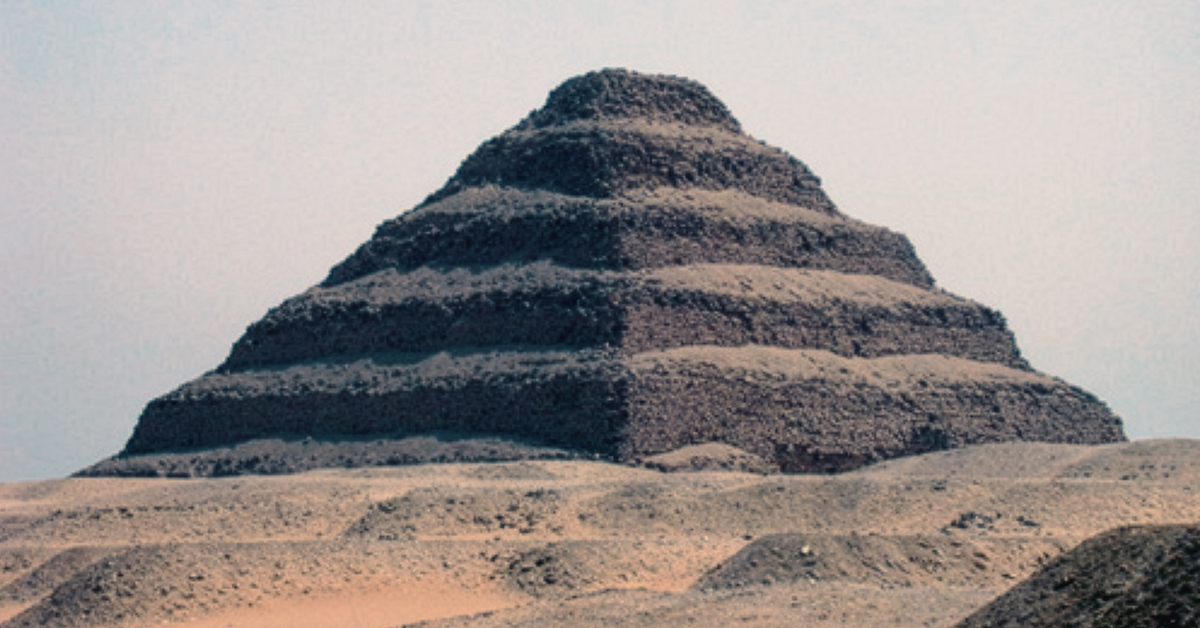

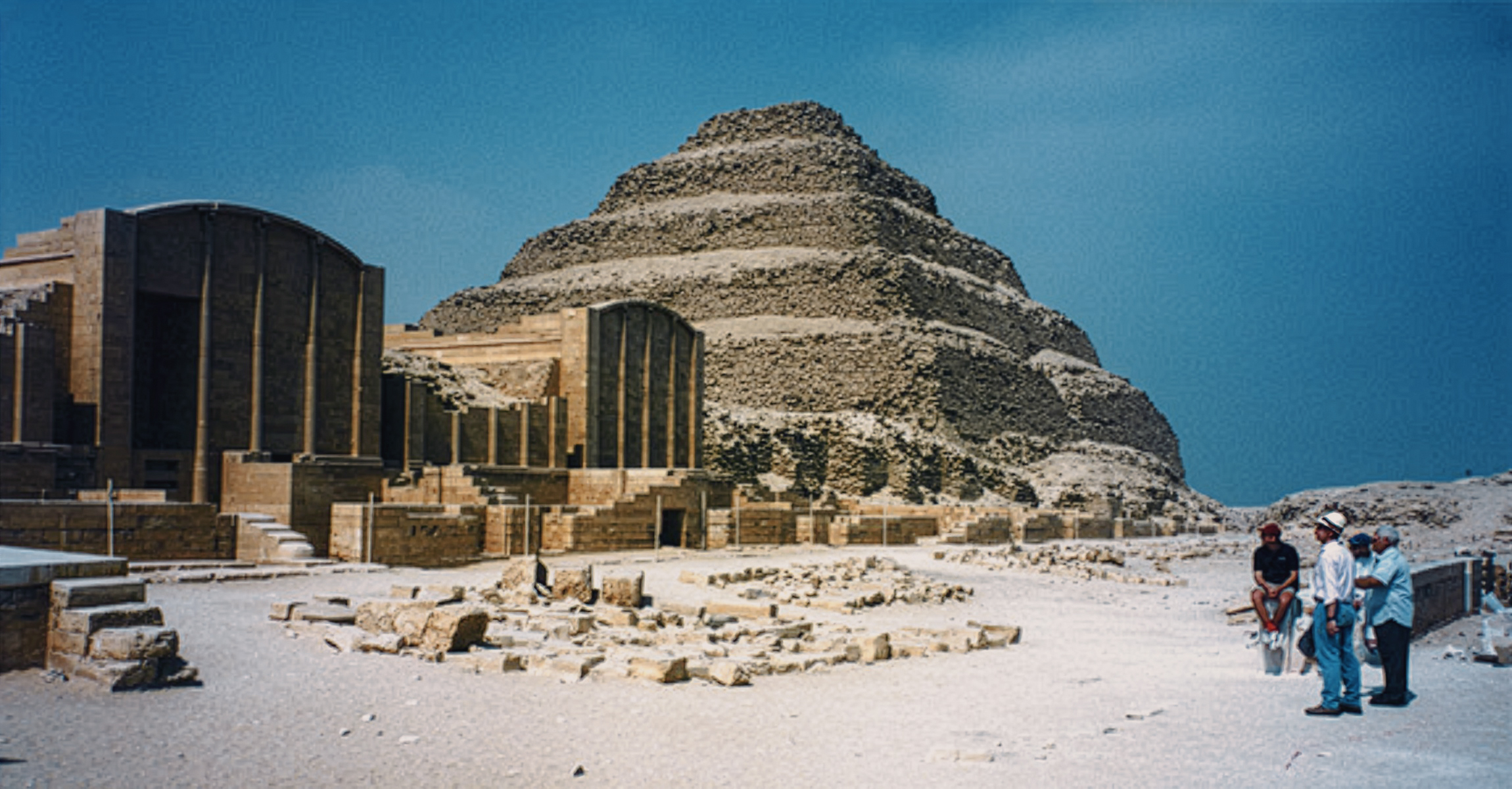
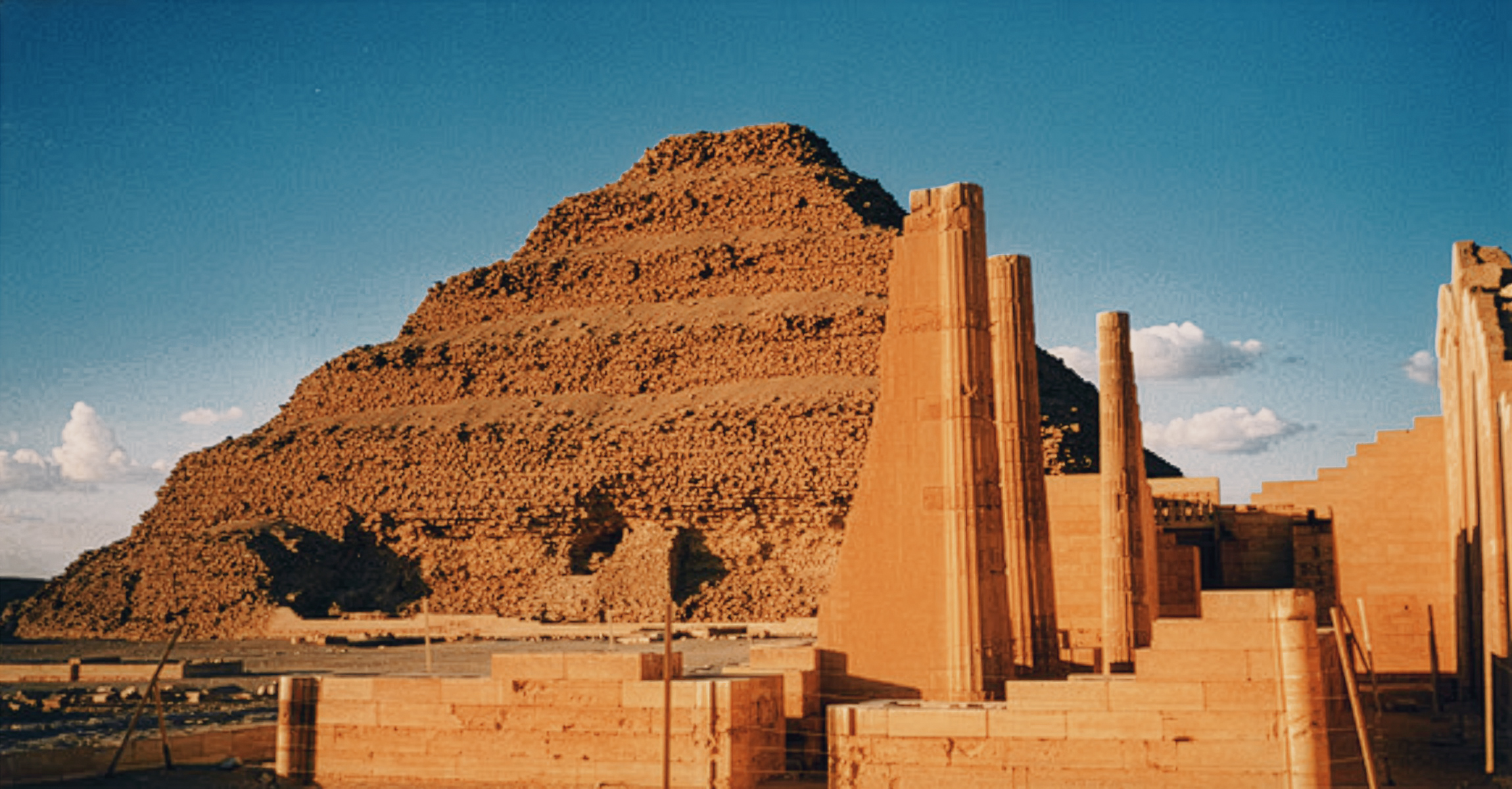
The step pyramid of Saqqara, built in 2,800 BC by Vizier Imhotep, is the first monumental structure to be constructed entirely of carved stone. It comprises the vast funeral complex of Djoser, the second king of the 3rd Dynasty, that served ancient Memphis. Vizier Imhotep himself has been called Doctor, Sage, Architect, Astronomer and High Priest.
On the Pyramid, most of the outer casing is now gone. In some places the core masonry has disappeared as well. It is obvious there were different stages of construction. The eastern side gives the best picture, but it can be seen from the northern and southern side as well. The original structure was an underground burial chamber.
of Saqqara
of Saqqara
Corbel Causeway
Corbel Causeway
of Saqqara
of the pyramid of Unas
This chamber, or mastaba, was rare in that it was square, rather than the conventional rectangular. The royal tomb is 28m underground with a vertical shaft leading to it. The entrance was sealed with a 3 ton piece of granite. The face of the mastaba was a fine tura limestone. Apparently it was intended for this to be the finishing touche to the building. It was then enlarged all around with ten feet of additional limestone and then again with an extension on the eastern side. The extension was twenty-five feet of limestone to make the mastaba rectangular. Again, it was enlarged and a two-tiered structure was made. A series of corridors and a tomb chamber was dug. Some of the chambers are lined with blue tiles.
After the third stage was finished, the process to make it a true step pyramid was begun. Over 200,000 tons of stone was used to make the additional two tiers that went above the existing two-tiered structure. An additional two tiers were added above the existing four to make it into the six-tiered pyramid we see today. A Tura limestone face was added on.
Professor Karol Mysliwiec began his excavations on the west side of the pyramid, despite the scepticism of his peers. But it was here that he unearthed the 4,300-year-old painted funeral chapel of a vizier, the equivalent of a British prime minister.
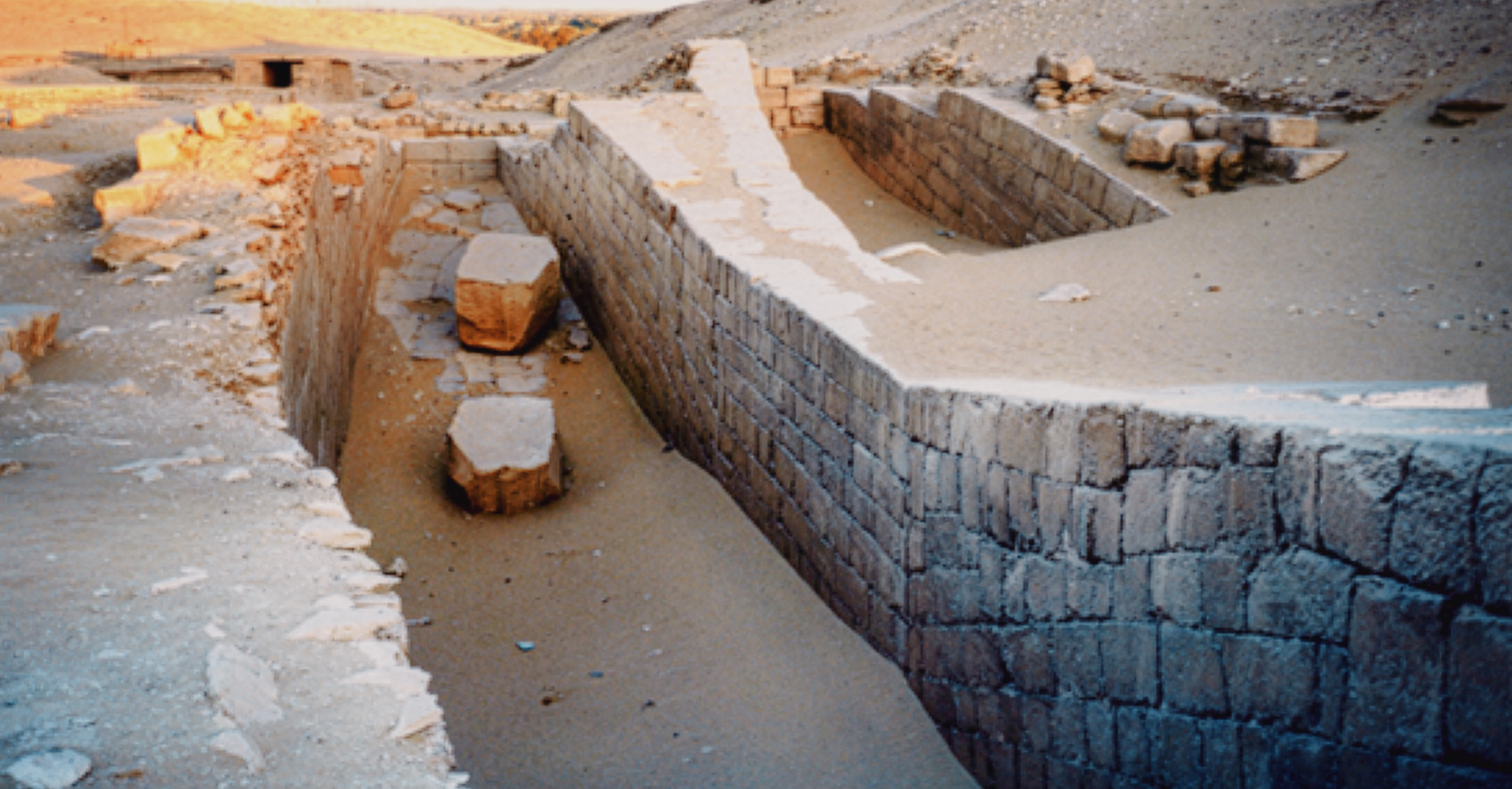
Nabil Swelim had provided some background to the discovery. By studying aerial photographs, Mysliwiec had discovered that an enormous dry moat had once surrounded the whole complex of Saqqara.
Over a period of thousands of years, the moat had filled with sand and disappeared. It was Swelim who had suggested to Mysliwiec that he should dig in the moat on the west side of the pyramid.
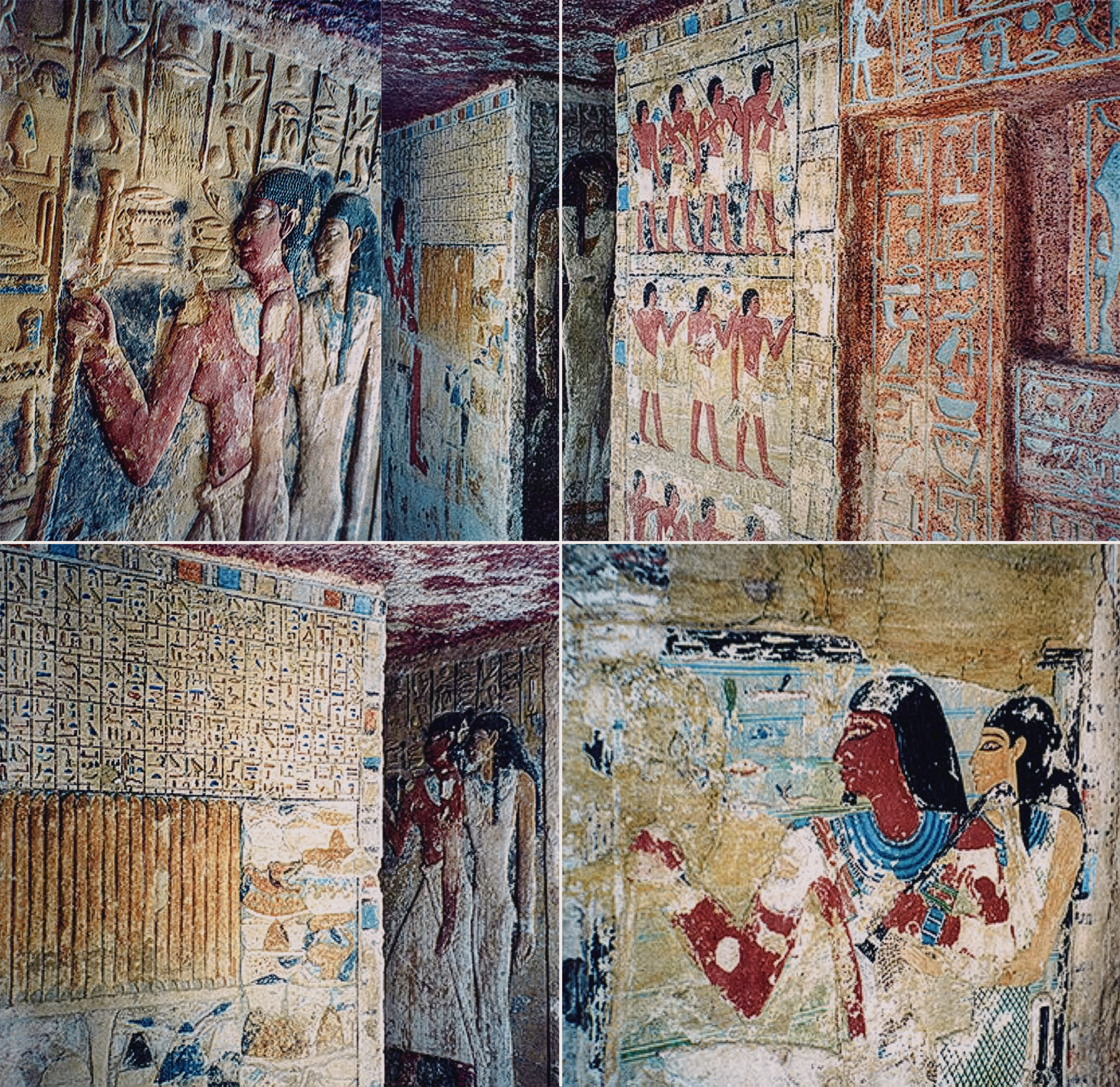
The excavation soon revealed a cluster of burials. Slowly and painstakingly the mummies were removed and taken to the Cairo Museum, to allow deeper excavations to take place. Mysliwiec’s team then encountered an ancient wall, which concealed the entrance to the remarkably well-preserved tomb of Vizier Meref-nebef, 'the one who loves his lord' and commonly known as Fefi.
Who was Fefi? On the entrance doorway of his chapel, he is depicted with his mistress, Meres-ankh, while his five wives get a small space on an inside wall, shown playing harps for their lord and his mistress. Access into the chapel was restricted - only one person was allowed in at a time because of humidity control, and silence was observed to avoid adding moisture to the air. The chapel measures 23 feet in length by 8 feet in width.
The walls are still highly colourful. The scenes are predominantly of farmers gathering crops for Fefi’s afterlife, of flora and fauna, and of Fefi himself with Meres-ankh - ‘she who loves life' - with his wives playing their harps in accompaniment. The scenes are predominantly of farmers gathering crops for Fefi’s afterlife, of flora and fauna, and of Fefi himself with Meres-ankh - ‘she who loves life' - with his wives playing their harps in accompaniment.