Department of Archaeology, Classics & Egyptology, University of Liverpool
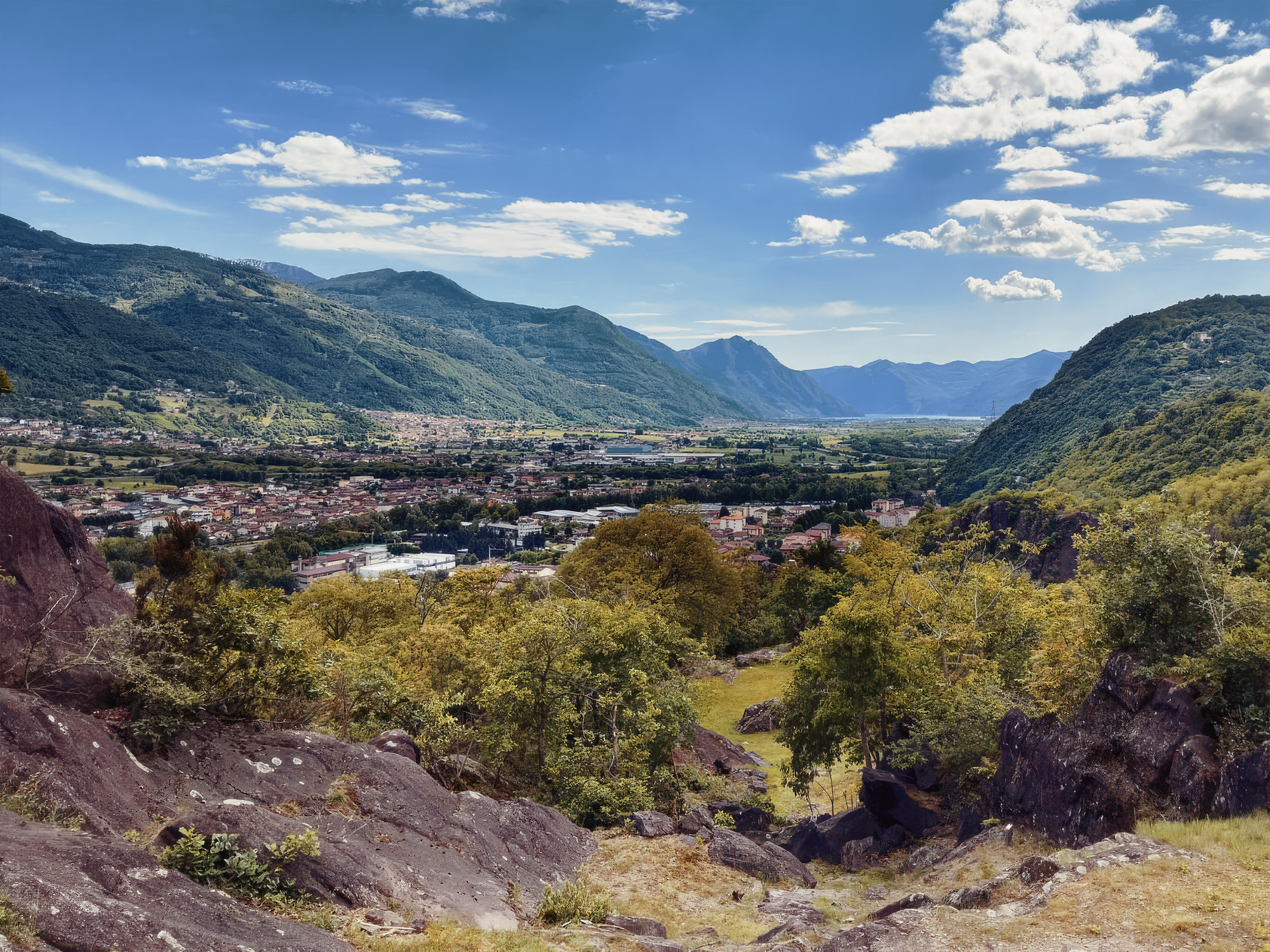
The southern section of the valley as we see it today
I suppose it is not every day that one has the opportunity to examine one of Europe's most remarkable collections of engraved rock art, spanning from the Late Upper Palaeolithic through to the medieval period, truly something for everyone. This extraordinary rock art assemblage is set within a dramatic mountainous landscape surrounding the small town of Capo di Ponte in northern Italy.
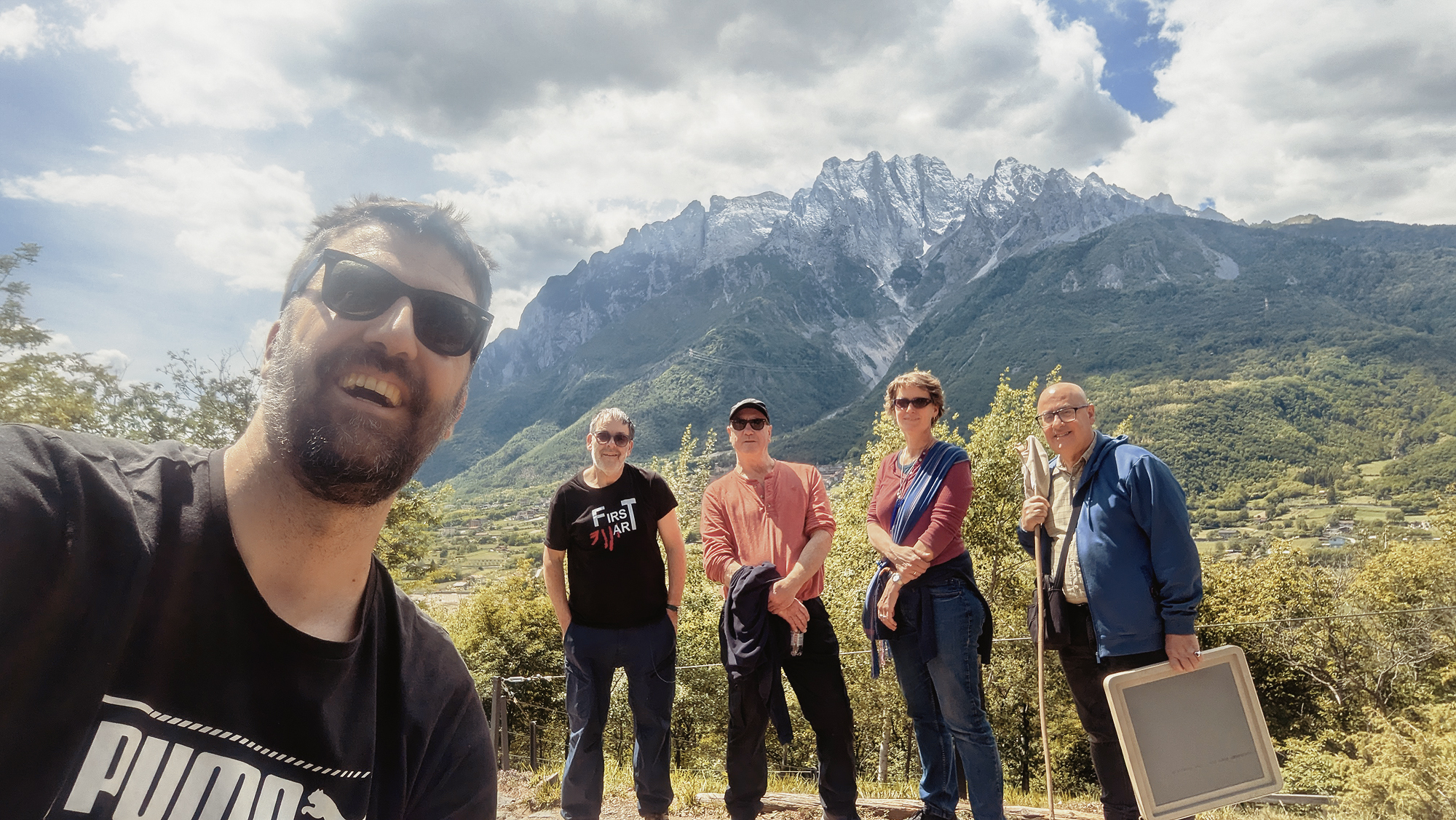
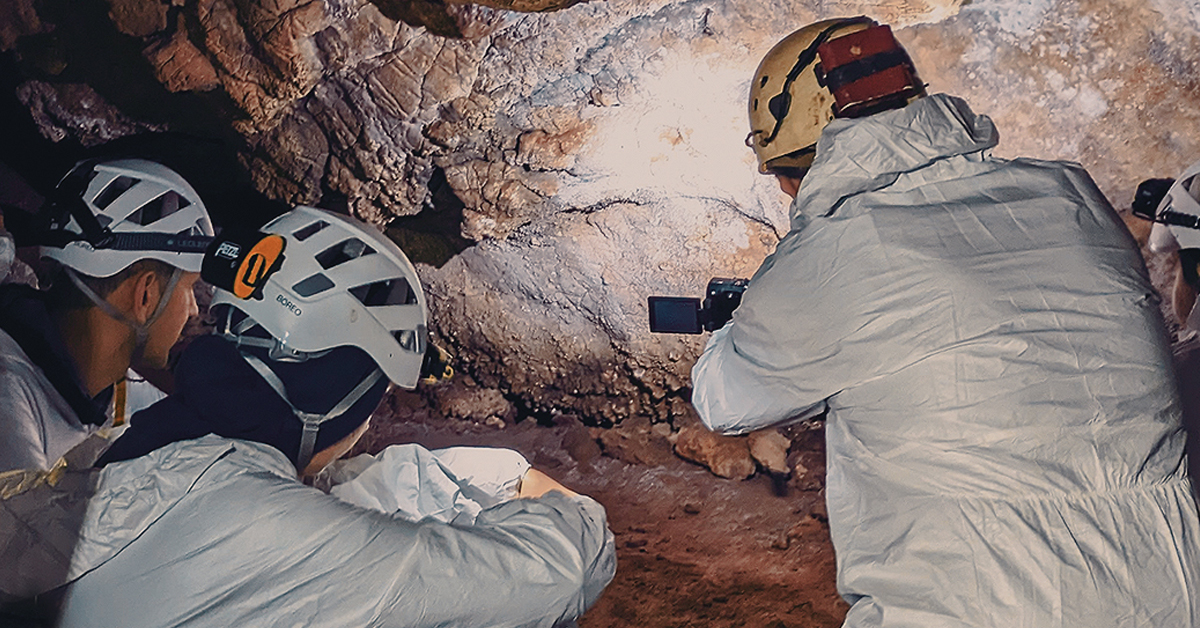
Between 15 and 18 May 2026, members of the Bradshaw Foundation, including Peter Robinson, Lucy Birkbeck and myself were welcomed by renowned rock art specialists Dr Angelo Fossati and Dr Dario Sigari. During our visit, we explored a number of important rock art sites located throughout the valley and along the lower slopes of the two imposing mountain ranges that rise to the east and west of Valcamonica.
The Valcamonica rock art assemblage comprises more than 300,000 engraved figures, of which approximately 97% date from the Bronze Age to the Iron Age. The overwhelming majority of the engravings are figurative, providing a remarkable insight into later prehistoric life in the valley, while a smaller proportion consists of abstract and geometric motifs. As part of the expedition, the Bradshaw Foundation was given an excellent overview of the history of research in the valley, together with demonstrations of the recording methods employed to document each individual figure and motif. In recognition of its outstanding universal value, Valcamonica became Italy's first UNESCO World Heritage Site in 1979. The engravings provide an unparalleled visual archive of changing social, economic and religious practices over a period of more than 12,000 years.
Within this new online section, Angelo and Dario have kindly agreed to contribute a series of short essays exploring the chronological development, cultural significance and distribution of what is undoubtedly Europe's most important concentration of prehistoric rock art.
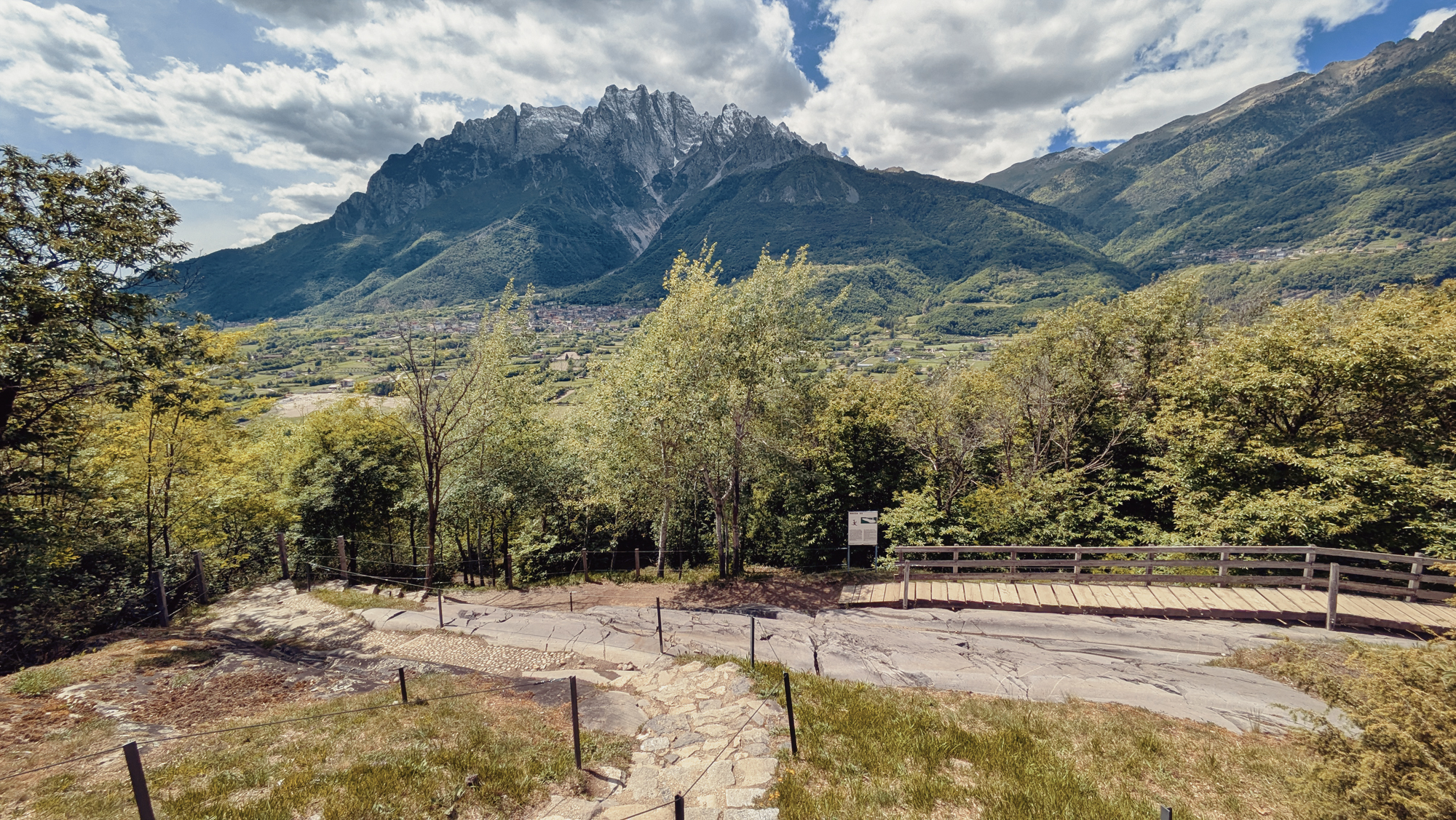
One of the imposing snow-capped mountains with Naquane in the foreground
The Valcamonica Valley is one of the largest longitudinal valleys in the Central Alps, extending for approximately 90 km from Passo del Tonale in the north to Lake Iseo in the south. The current shaping of the valley was principally formed during the Quaternary by repeated glaciations, particularly during the Last Glacial Maximum (LGM), when a major valley glacier carved, gouged-out and shaped the landscape (Figure 1 & Figure 2). As the glaciers retreated between approximately 18,000 and 15,000 years ago, they left behind a classic Alpine glacial landscape comprising polished bedrock, roche moutonnées, moraines, glacial erratics and extensive fluvioglacial deposits (Figure 2, Figure 3) & Figure 4).The River Oglio occupies the valley floor, following the course established by meltwater during deglaciation before eventually draining into Lake Iseo. These glacial processes created many of the smooth sandstone and metamorphic rock surfaces that later became the canvas for prehistoric engravings.
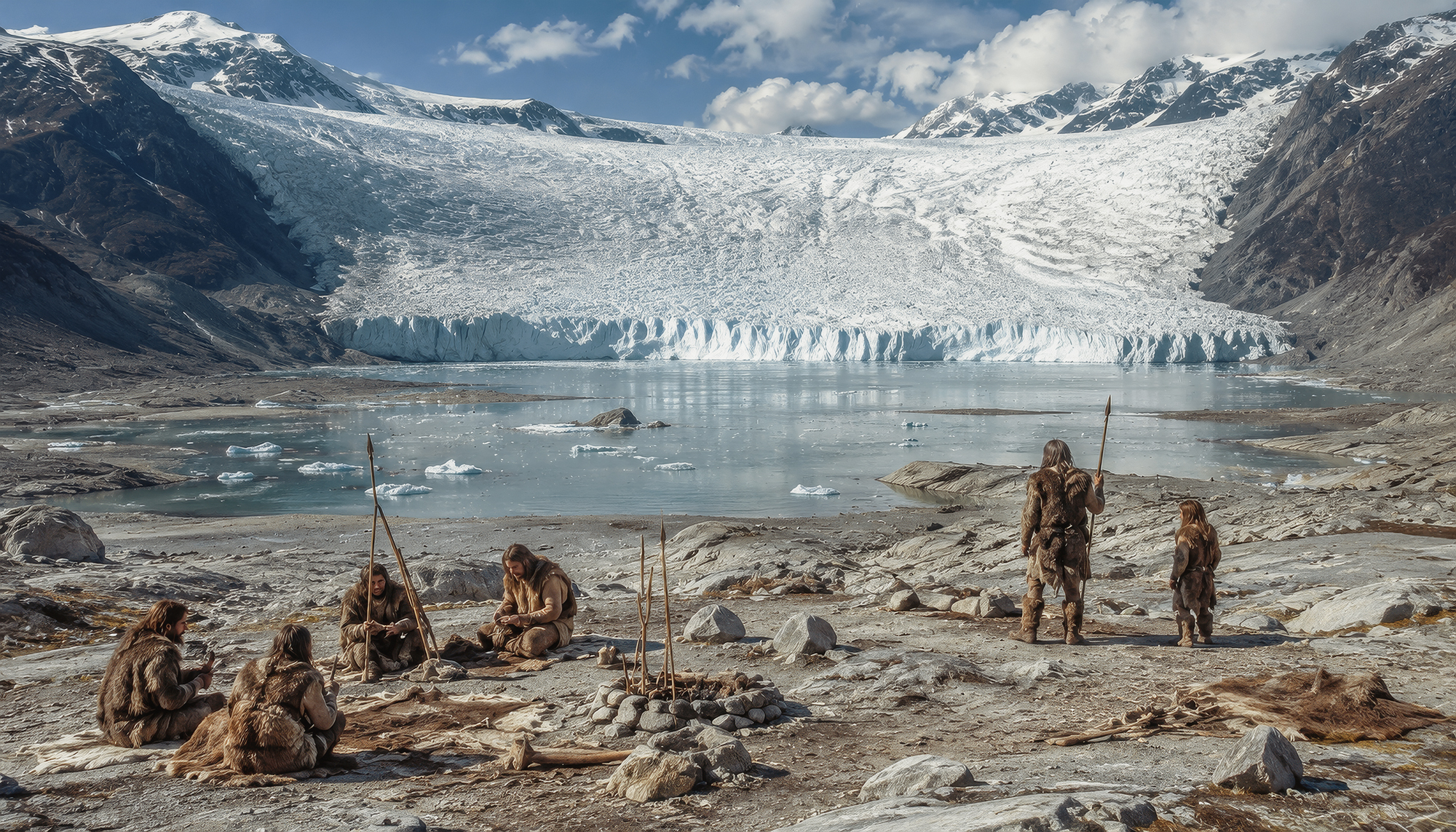
Artist’s impression of the central section of the valley at around 16,000 years ago looking north towards the retreating valley glacier
The geology of Valcamonica is exceptionally varied and reflects a complex Alpine tectonic history. The valley lies within the Southern Alps, close to the important Periadriatic (Insubric) Line, which marks a major geological boundary between the Southern and the Central Alpine regions. Bedrock consists primarily of Permian sandstones (including the Verrucano Lombardo), schists, quartz phyllites, gneisses and granitic intrusions associated with the Adamello Batholith, one of Europe's largest Tertiary plutonic bodies. In the lower and middle valley, many of the engraved rock surfaces occur on fine grained Permian sandstones that were smoothed by glacial abrasion, producing ideal surfaces for pecking and engraving. In the upper valley, schists and metamorphic rocks dominate, while the high peaks of the Adamello Massif are composed largely of tonalite and granodiorite. The diversity of lithologies has influenced not only the valley's geomorphology but also the preservation and distribution of its rock art.
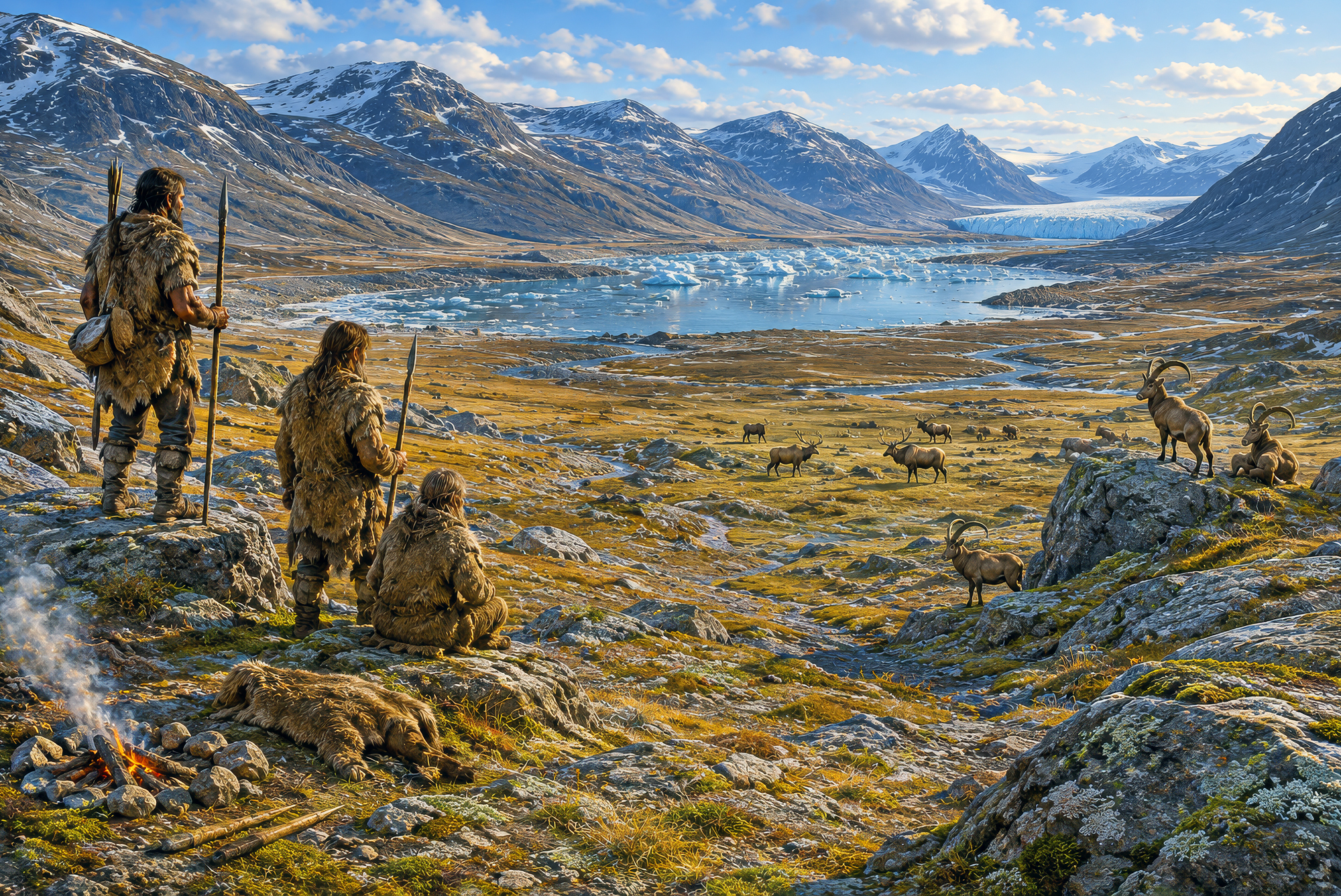
Artist’s impression of the central section of the valley at around 16,000 years ago looking south
The topography of Valcamonica is characterised by steep valley sides, broad glacial terraces and numerous hanging valleys created by differential glacial erosion. Elevations range from approximately 390 m above sea level near Lake Iseo to over 3,500 m at Monte Adamello. The valley can broadly be divided into lower, middle and upper sectors, each displaying distinctive geomorphological characteristics. Numerous tributary valleys descend from both eastern and western slopes, while glacial cirques, alpine lakes and extensive moraine systems dominate the higher elevations. The varied relief has created numerous natural terraces and gently sloping rock outcrops that became focal locations for prehistoric communities. Many of the engraved panels occur on south facing glacially polished surfaces overlooking the valley floor, providing excellent visibility and perhaps contributing to their long-term ritual and social significance.
The vegetation of Valcamonica has undergone profound changes since deglaciation. Following the retreat of the glaciers during the Late Glacial period, pioneer communities of grasses, mosses and lichens first colonised the barren landscape, followed by open stands of pine (Pinus) and larch (Larix). The presence of grasses, lichens and mosses would have been an ideal incentive for foraging megafauna.
During the early Holocene, warming climatic conditions encouraged the spread of mixed deciduous woodland, including birch (Betula), hazel (Corylus), oak (Quercus), elm (Ulmus) and lime (Tilia), while higher elevations supported coniferous forests dominated by spruce (Picea abies), silver fir (Abies alba) and larch. Pollen records, particularly from the nearby Pian di Gembro peat sequence, demonstrate that these vegetational changes closely tracked climatic fluctuations and increasing human activity throughout the Holocene. Progressive forest clearance associated with Neolithic agriculture, Bronze Age pastoralism and later Iron Age settlement created more open landscapes, with meadows and upland grazing becoming increasingly important components of the valley environment.
Today, Valcamonica supports an exceptionally diverse ecological landscape, with vegetation changing markedly according to altitude. The valley floor is characterised by agricultural land, vineyards and chestnut woodland, while mixed deciduous forests dominate the lower slopes. Higher elevations are occupied by extensive conifer forests, alpine meadows and subalpine shrub communities, giving way to exposed rock, permanent snowfields and glaciers within the Adamello Massif. More than 1,300 plant species have been recorded within the valley and surrounding protected areas, reflecting the strong altitudinal gradient and varied geological substrate. This ecological diversity, together with the spectacular glacial topography, has contributed to the designation of large parts of the valley within protected landscapes, including the Adamello Regional Park and the UNESCO Biosphere Reserve.
The history of rock art research in Valcamonica spans more than a century and has transformed what was once regarded as a collection of isolated engravings into one of the world's most intensively studied prehistoric cultural landscapes. Although local people had long been aware of the engraved rocks, scientific investigation began in 1909 when the geographer Walther Laeng recorded the engraved Cemmo Boulders near Capo di Ponte. During the 1930s, further documentation was undertaken by Italian archaeologists and by researchers from the Forschungsinstitut für Kulturmorphologie in Frankfurt, whose detailed drawings and photographs greatly expanded knowledge of the valley's archaeological wealth. These pioneering studies laid the foundations for systematic research, which accelerated rapidly following the Second World War.
No individual has had a greater influence on the study of Valcamonica than Professor Emmanuel Anati, who began working in the valley during the 1950s. In 1964, he founded the Centro Camuno di Studi Preistorici (CCSP) at Capo di Ponte, an institution that rapidly became one of the world's leading centres for rock art research. Through extensive field survey, recording and excavation, Anati developed the first comprehensive chronological framework for the engravings, dividing the art into successive stylistic and cultural phases extending from the Late Upper Palaeolithic to the medieval period. His pioneering publications demonstrated that the engravings represented a continuous visual record of changing social, economic and religious life over approximately 10,000 years. Anati also championed comparative international studies, placing Valcamonica within a broader global context and helping to establish rock art as a recognised archaeological discipline.
Since the 1980s, a new generation of researchers has refined and expanded Anati's chronological framework using improved archaeological methods and advances in digital recording. Among the most influential has been Dr Angelo Fossati, whose work has combined meticulous field recording with detailed studies of iconography, chronology and prehistoric religion. Fossati has made particularly important contributions to understanding Copper Age and Iron Age imagery, the development of warrior iconography, ritual landscapes and the symbolic meaning of engraved weapons and anthropomorphic figures.
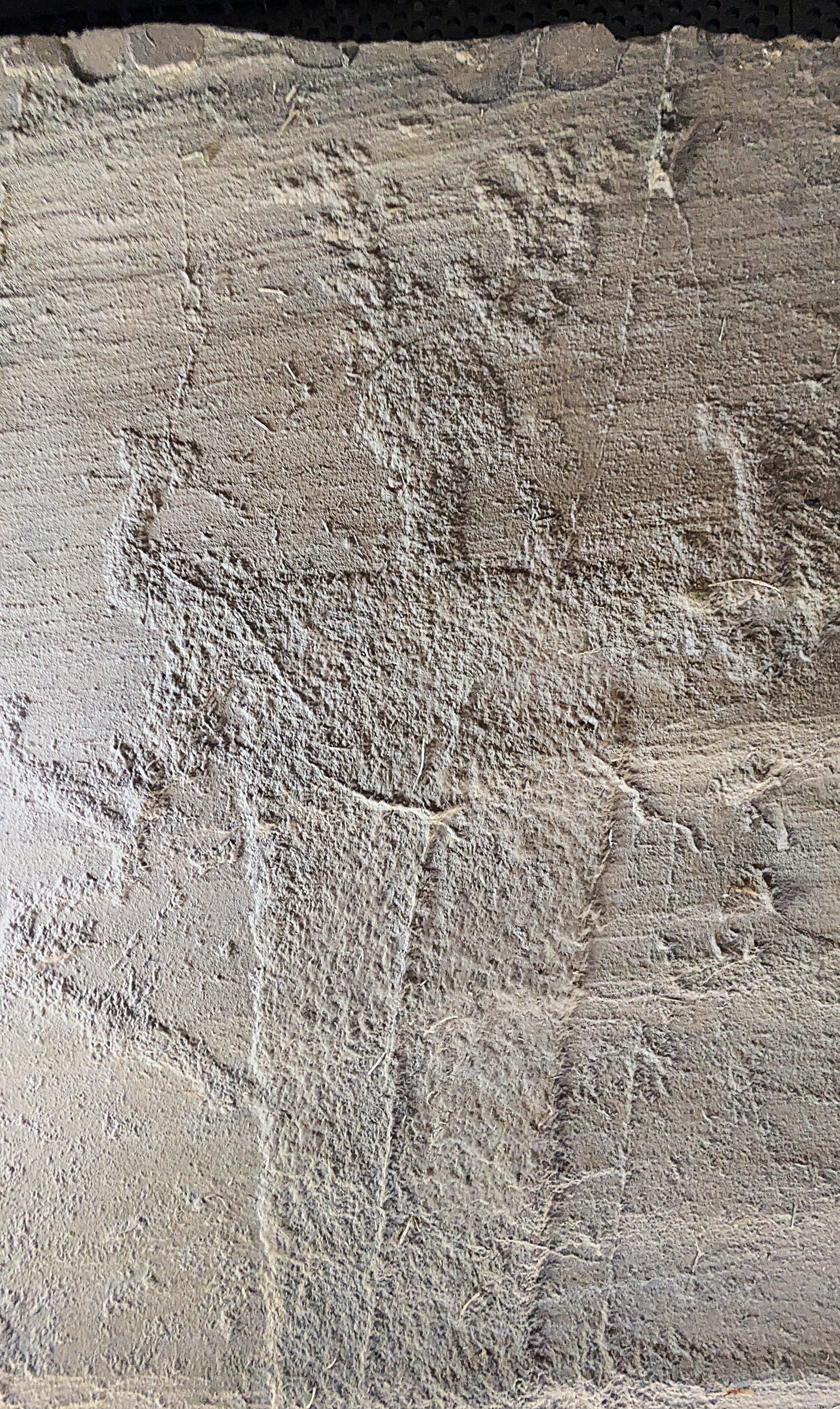
One of the most iconic engravings within the Valcamonica – the therianthrope, located within the Naquane National Park – image is a latex cast that is currently housed in the site information centre
For more than three decades, Angelo has been at the forefront of archaeological research into the remarkable engraved rock art surrounding the mountain village of Paspardo, situated on the eastern slopes of Valcamonica. Working through the Cooperativa Archeologica Le Orme dell'Uomo in collaboration with the Catholic University of the Sacred Heart, Angelo has transformed understanding of one of the most densely engraved landscapes in Europe. His research has extended well beyond the documentation of individual panels, instead examining the chronological development of the valley's rock art, its relationship to the surrounding landscape, and the cultural significance of the engraved imagery from the Copper Age through to the Iron Age. Through systematic field survey, excavation, conservation and digital recording, his team has identified numerous previously unknown engraved panels, substantially expanding the known corpus of rock art within the village municipality.
Among the principal study areas investigated by Angelo and his colleagues are Dos Sulif, Vite, In Valle, Castello, Dos Costapeta and Le Scale, each preserving distinctive concentrations of prehistoric engravings. These sites contain an extraordinary range of imagery, including topographic or 'map' motifs, weapons, agricultural scenes, anthropomorphic figures, animals, ceremonial processions and elaborate duelling scenes characteristic of the Iron Age. Angelo has demonstrated that many of these engraved compositions represent successive phases of activity extending over several millennia, reflecting changing social, religious and political traditions. Particularly influential has been his identification of the so-called "Master of Paspardo", an individual engraver or artistic workshop responsible for a recognisable style of dynamic warrior figures characterised by exaggerated arm movements, carefully proportioned bodies and highly standardised compositions (Figure 5). This concept has provided important insights into artistic individuality and the possible existence of specialist engravers within later prehistoric Camunian society.
Angelo's contribution has extended well beyond traditional recording techniques. His projects have incorporated an array of new technology, establishing new standards for the documentation of open-air rock art. Equally important has been his emphasis on landscape archaeology, recognising that the engraved rocks were deliberately positioned along ancient pathways, overlooking agricultural terraces, water sources and prominent viewpoints. Through annual international field schools based at Paspardo, Angelo has also trained generations of archaeologists and students in the recording, interpretation and conservation of prehistoric rock art, ensuring that Valcamonica remains one of the world's leading centres for rock art research. His work has significantly reshaped our understanding of the chronology, symbolism and cultural landscapes of the Valcamonica and continues to influence rock art studies throughout Europe and beyond.
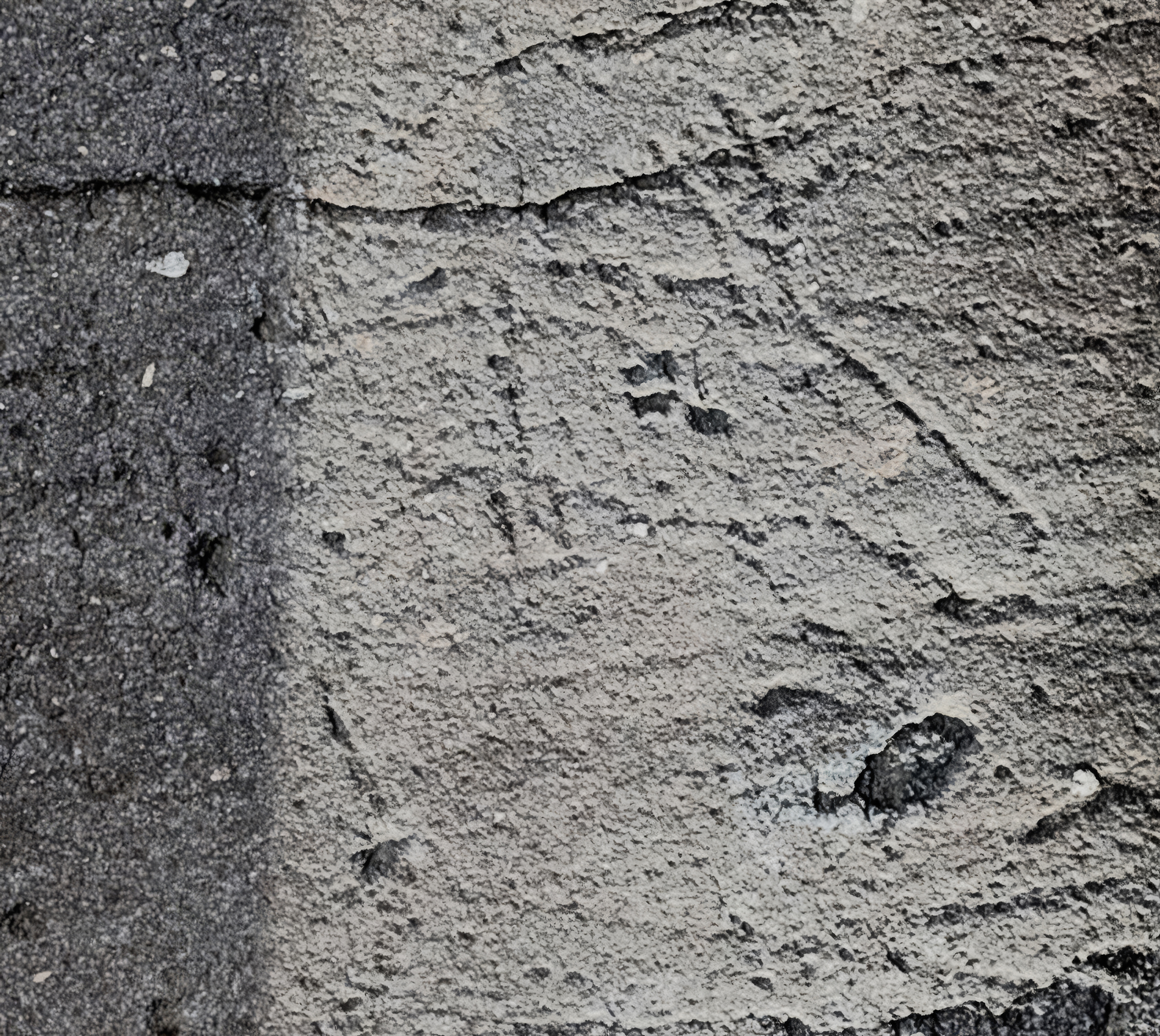
One of the engraved cervids that occupies the northern panels with the Luine rock art park
More recently, Dr Dario Sigari has become one of the leading figures in Valcamonica research, representing a new generation of scholars employing interdisciplinary approaches to investigate the engraved landscape. His research integrates archaeology, geomorphology, digital photogrammetry, GIS analysis and landscape archaeology to explore how early prehistoric communities selected and repeatedly used particular rock outcrops over thousands of years. Dario has also contributed significantly to renewed investigations of the valley's earliest engravings, particularly the Late Upper Palaeolithic and Mesolithic figures from sites such as Luine (Figure 6). His work demonstrates that the placement of engraved rocks was closely connected to changing environmental conditions, glacial landforms and patterns of prehistoric movement through the Alpine landscape.
Alongside Angelo and Dario, Dr Andrea Arcà has made substantial methodological contributions to the documentation and interpretation of Alpine rock art. Working closely with Fossati and the cooperative Le Orme dell'Uomo, Arcà has helped develop modern recording techniques that combine traditional archaeological observation with high-resolution photography, digital tracing, three-dimensional modelling and GIS-based spatial analysis. These methods have greatly improved the accuracy of recording, allowing archaeologists to identify previously overlooked engravings and better understand the complex sequences of superimposition that characterise many Valcamonica panels. Arcà's work has also contributed significantly to the conservation and management of open-air rock art, ensuring that recording standards meet both scientific and heritage management objectives.
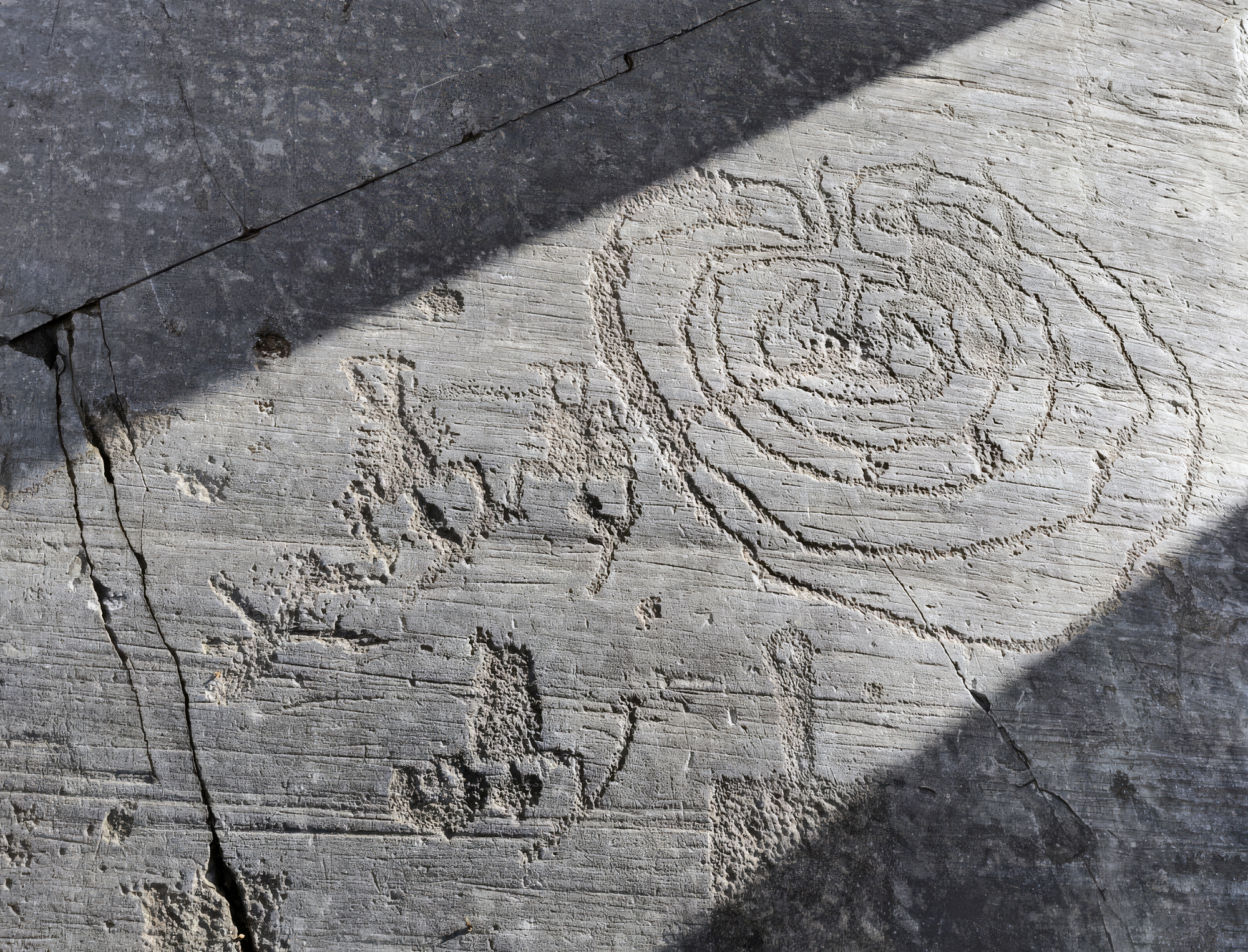
One of the sections of Rock No. 1 that was recently recorded by Andrea. Image enhancement using a angled mirror to illuminate the smooth rock surface
Recently, Arcà has made a substantial contribution to the study of Valcamonica's rock art with his documentation of the celebrated Rock No. 1 (NAQ1), known as the Great Rock of Naquane, one of Europe's most important prehistoric, engraved monuments (Figure 7 & Figure 8). Building on the pioneering work of Emmanuel Anati and later Angelo Fossati, Arcà undertook a complete re-recording of the panel using traditional contact tracing, high-resolution vector graphics, photogrammetry and bespoke database software, enabling more than 2,000 engraved figures and their complex superimposition sequences to be analysed with unprecedented precision. His recent monograph, La Grande Roccia delle Aquane (2025), represents the culmination of this work, integrating archaeological recording, digital visualisation, landscape interpretation and an online virtual archive. The publication sets a new benchmark for the documentation of complex engraved rock art and demonstrates how twenty-first-century recording technologies can enhance both archaeological interpretation and public accessibility while preserving one of Valcamonica's most iconic prehistoric monuments.
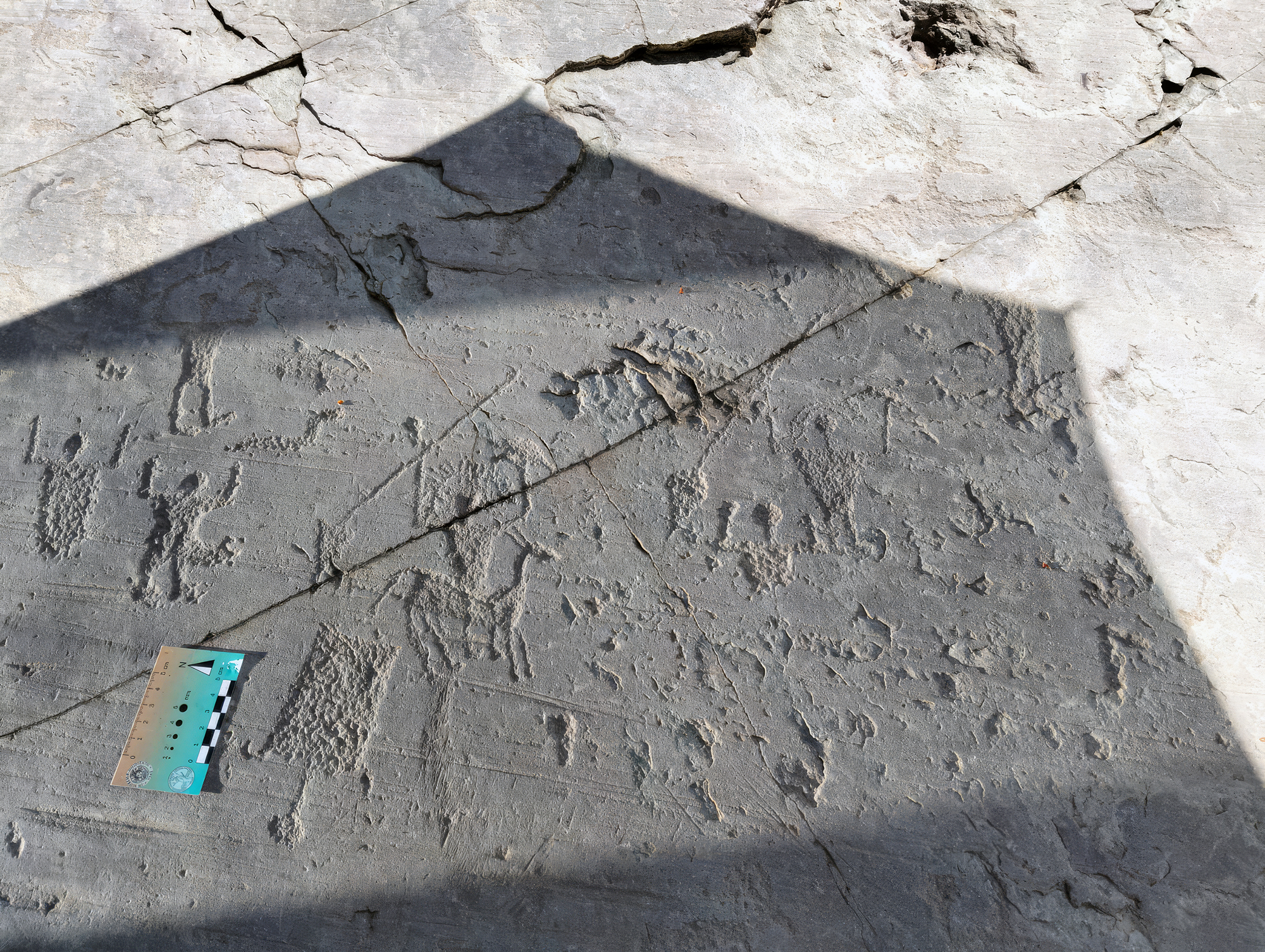
Combined warrior and domestic elements in Naquane, using mirror illumination techniques
Today, research in Valcamonica continues to evolve through international collaboration, integrating archaeology with digital technologies, palaeoenvironmental reconstruction, conservation science and landscape analysis. Ongoing recording programmes continue to identify previously unknown engravings, while advances in photogrammetry, laser scanning and artificial intelligence are providing unprecedented opportunities to analyse, preserve and interpret the valley's remarkable prehistoric archive. Building upon the pioneering work of Anati and the subsequent contributions of Angelo, Andrea, Dario and many other scholars, Valcamonica remains the benchmark against which prehistoric, engraved rock art throughout Europe is often compared, continuing to shape both archaeological theory and the wider understanding of Europe's prehistoric past.
The first site we visited was within the town boundary of Capo di Ponti. The Cemmo Boulders (Massi di Cemmo), situated at the northern end of Capo di Ponte, represent one of the most important ceremonial monuments of Copper Age Europe (Figure 9). In geological terms, the boulders are situated beneath a steep rock cliff and almost certainly originated as rockfalls from the cliff face. Following their detachment, they came to rest in their present positions, where they now form the focus of the engraved monument complex.
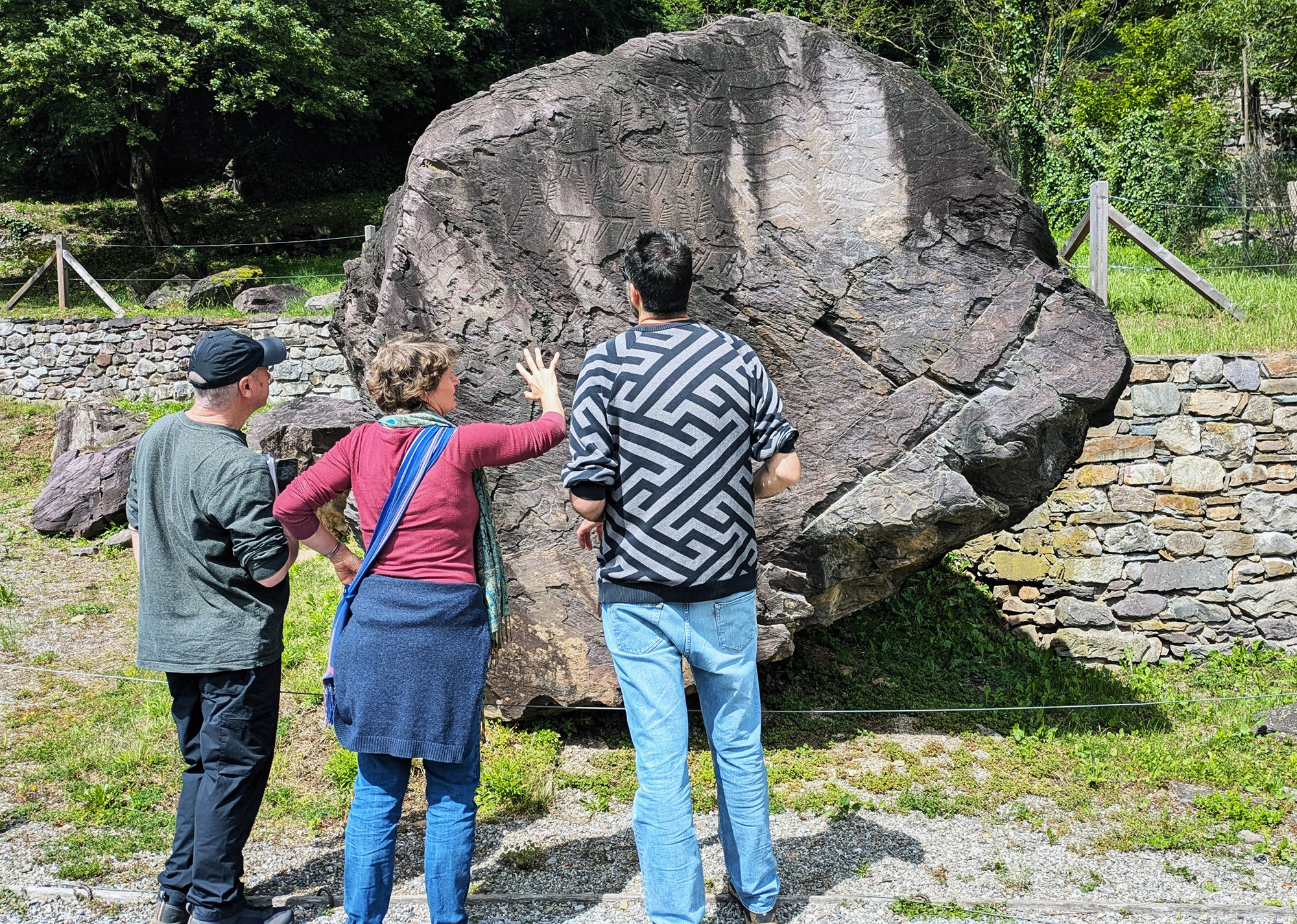
Viewing the magnificent Copper Age engravings at Cemmo, Capo di Ponte
These two enormous glacial erratic boulders were the first engraved rocks to be scientifically recognised in Valcamonica, having been brought to scholarly attention in 1909 by the geographer Walther Laeng. Their discovery marked the beginning of systematic research into what is now acknowledged as one of the world's greatest concentrations of prehistoric rock art. Subsequent archaeological investigations have demonstrated that the boulders formed the focal point of a much larger ceremonial sanctuary that developed over several millennia, transforming our understanding of the social and religious life of prehistoric communities in the central Alps.
The engraved faces of the two boulders contain more than 250 figures, most of which were created during the Copper Age (c. 2900–2500 BCE). The imagery includes finely pecked red deer, ibex, anthropomorphic figures, ceremonial daggers, axes, halberds, ploughing scenes, wagons and geometric motifs (Figure 10 & Figure 11). Among the most celebrated compositions are two ploughing scenes in which teams of oxen draw an ard (plough) across the ground. These have long been interpreted as symbolic rather than simply agricultural representations, probably associated with fertility rituals and the ceremonial renewal of cultivated land. The more adventurous philosophers amongst us could suggest that such a metaphor could represent sexual relations between male and female member of the community. The repeated depiction of prestige weapons, particularly Copper Age daggers and halberds, also reflects the emergence of warrior elites and increasingly stratified societies during the third millennium BCE.
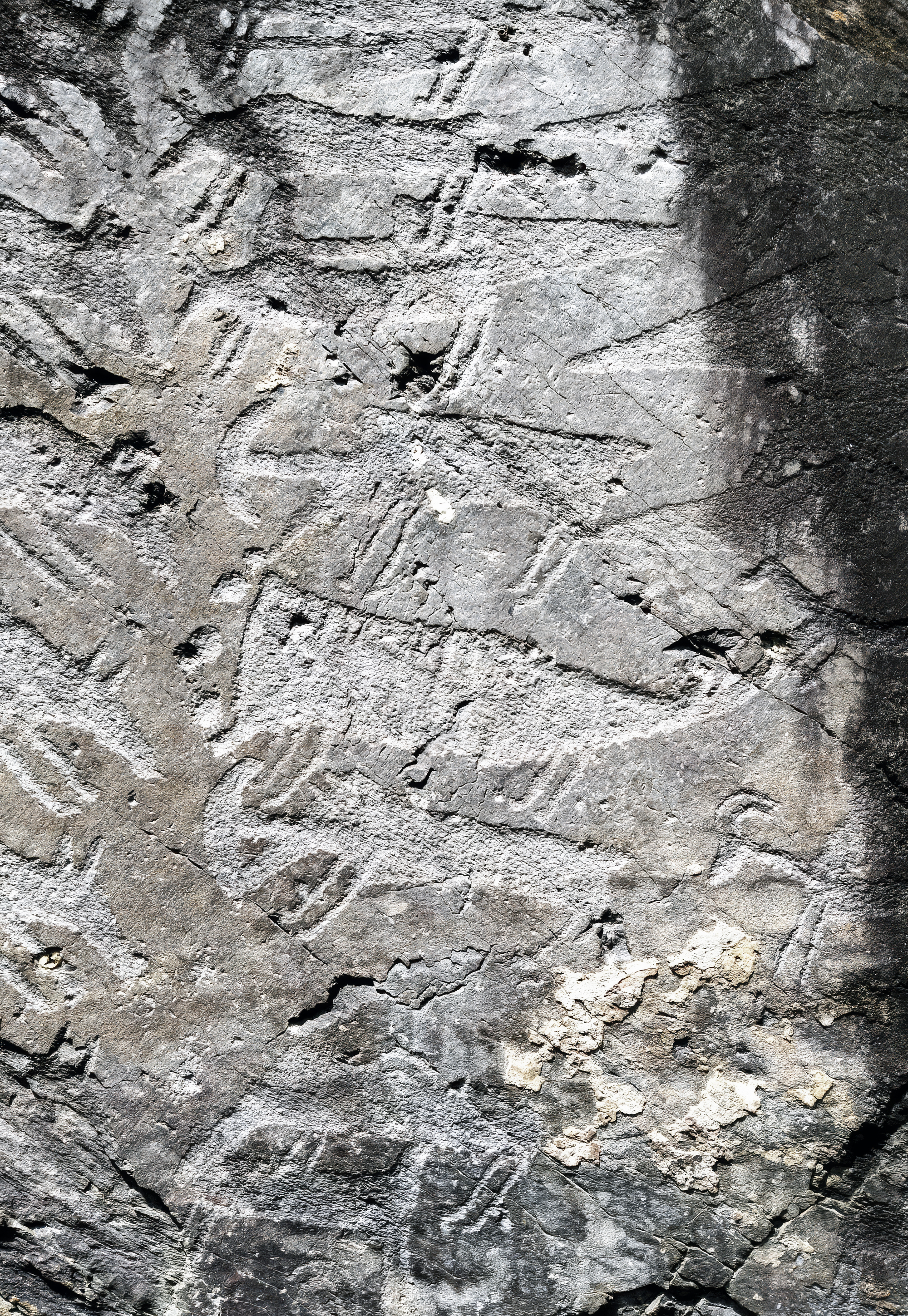
Finely executed symmetrical engravings on the Cemmo Boulders, including a running ibex
Recent excavations directed by Raffaella Poggiani Keller have revealed that the Cemmo Boulders stood at the heart of an extensive open-air sanctuary rather than as isolated monuments. Excavation uncovered evidence for earlier Mesolithic occupation, Neolithic activity and, most importantly, a carefully planned Copper Age ceremonial complex. East of the engraved boulders archaeologists identified a northeast to southwest alignment of engraved standing stones (stelae), together with stone settings, ditches and ritual deposits. The sanctuary appears to have remained an important ceremonial place for many centuries before being remodelled during the Late Bronze Age and continuing in use throughout the Iron Age and into the Roman period. Such long-term continuity demonstrates the enduring significance of this sacred landscape within the cultural memory of Valcamonica.
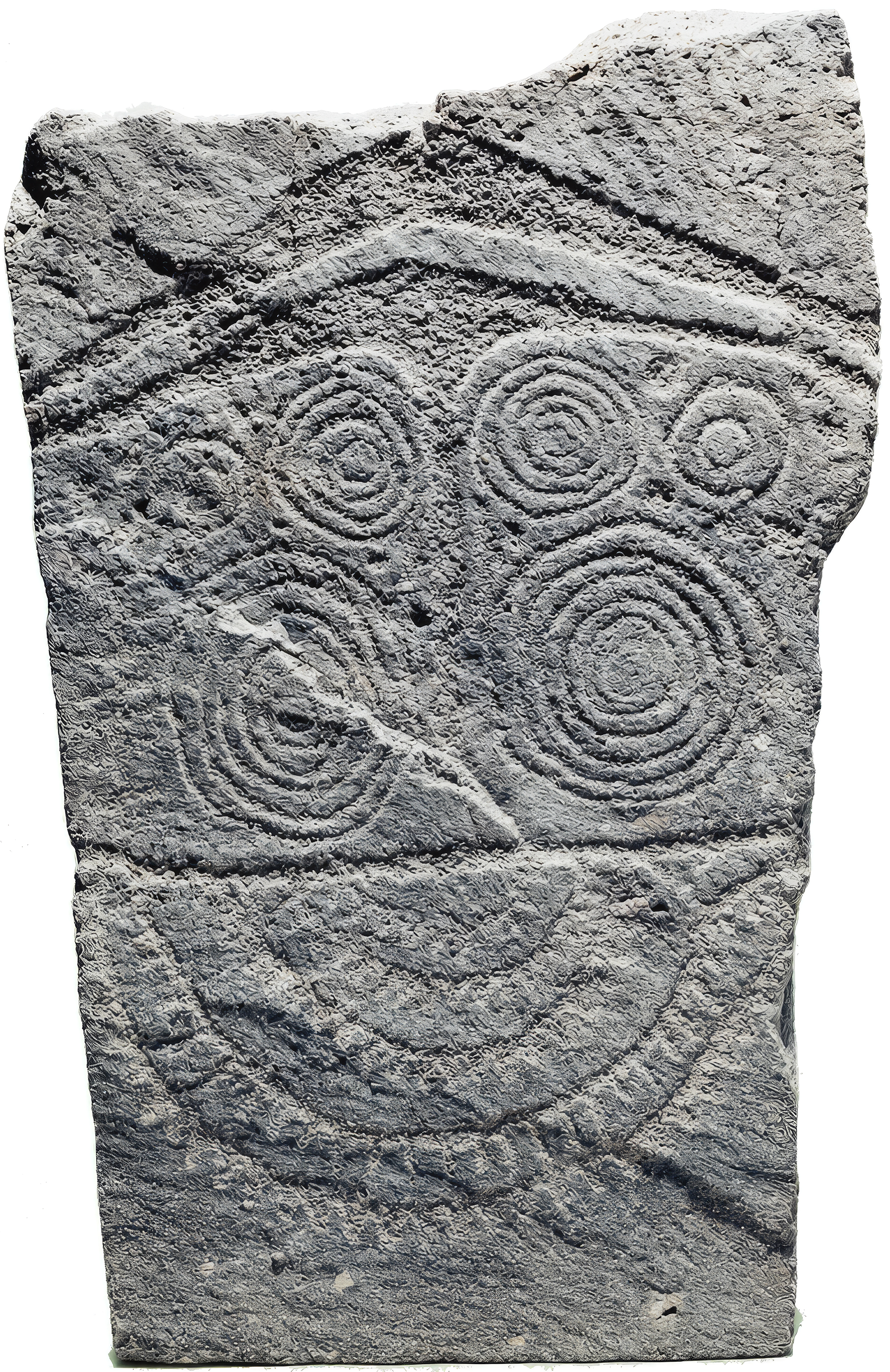
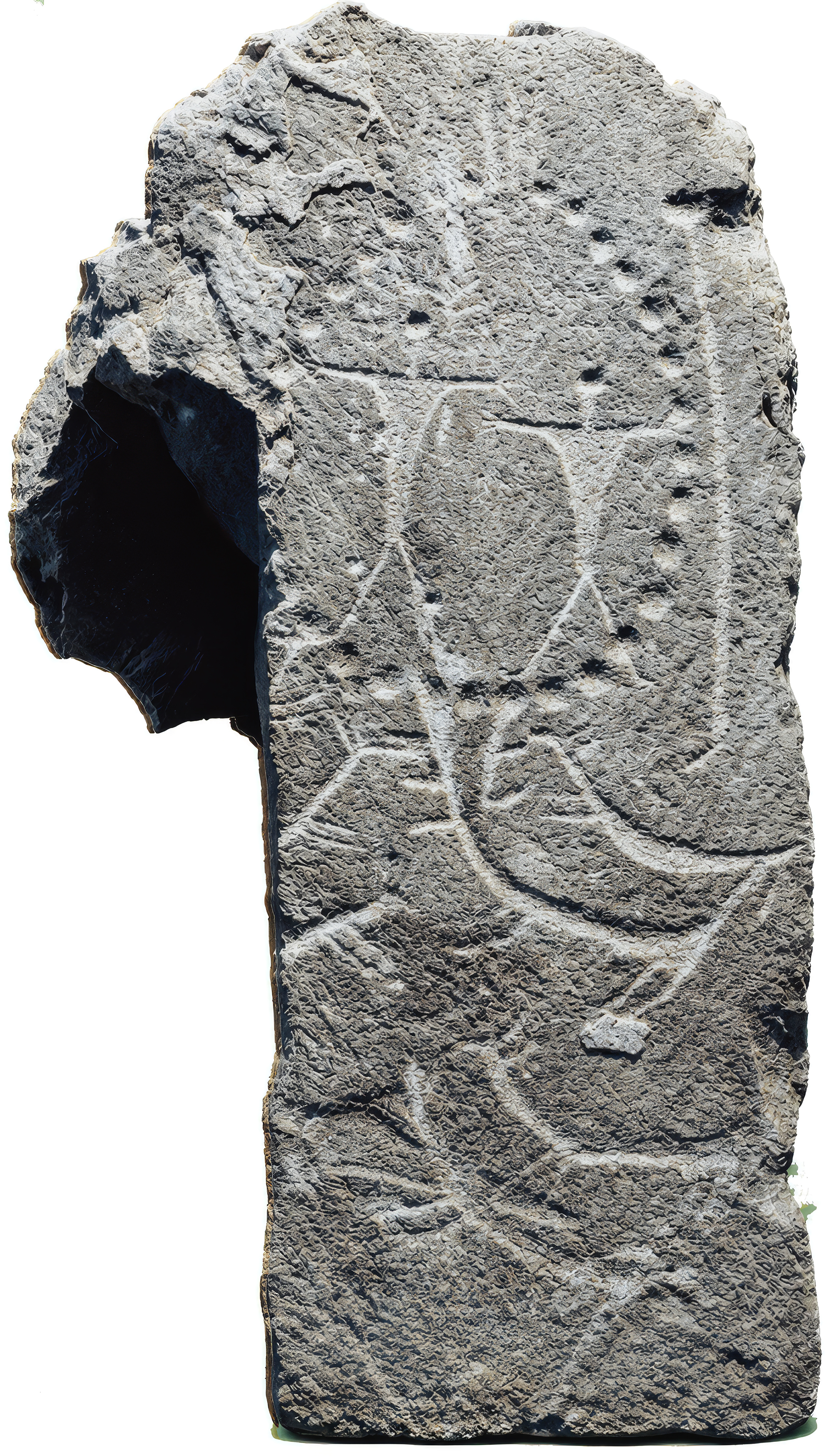
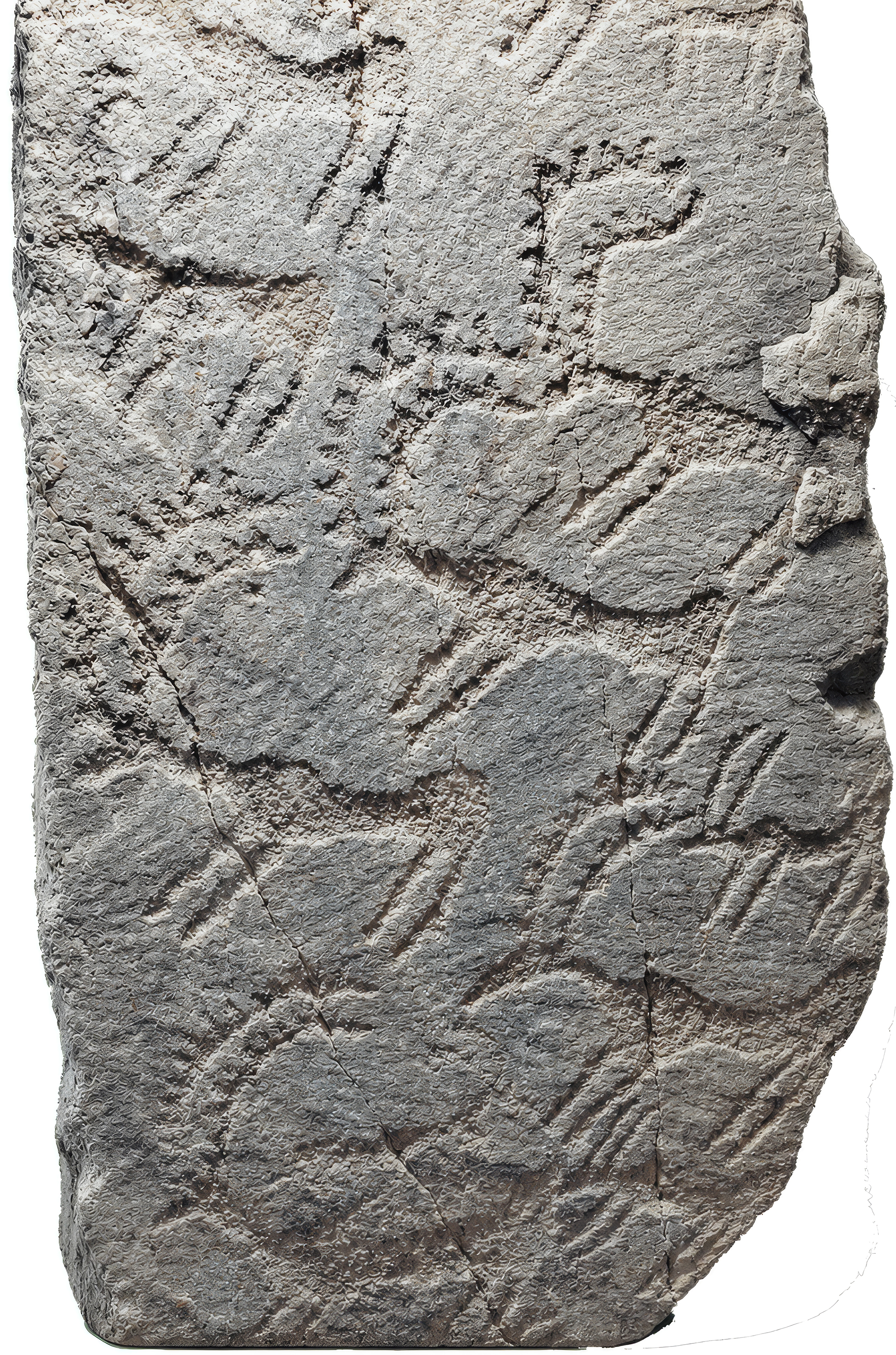
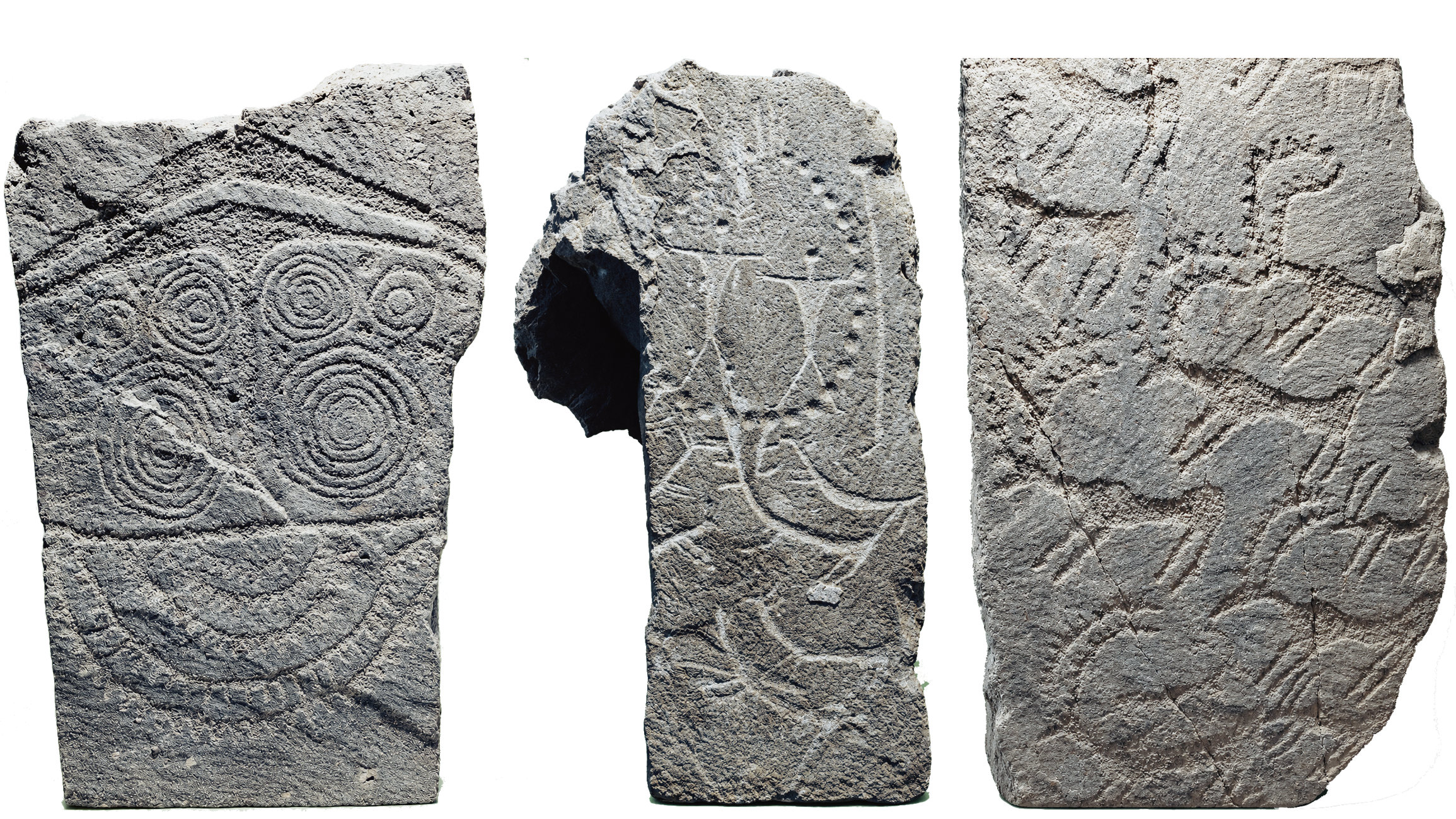
One of the most remarkable discoveries at Cemmo has been the engraved [statue] stelae, or standing stones, erected within the sanctuary. More than twenty monoliths and fragments have so far been recovered, several of them still standing in their original positions. These carefully shaped sandstone monuments display iconographic programmes closely related to those engraved on the surrounding boulders, including weapons, anthropomorphic figures, animals, solar symbols and geometric motifs. Unlike the natural rock surfaces that dominate much of Valcamonica, these monuments were deliberately quarried, shaped, engraved and erected, representing one of the earliest traditions of monumental stone sculpture in northern Italy. Their placement within formal alignments suggests that they formed part of carefully choreographed ceremonial spaces where ritual activities and social gatherings took place.
Finely executed symmetrical engravings on the Cemmo Boulders, including a running ibex
The Cemmo stelae belong to a wider tradition of Copper Age engraved standing stones distributed throughout Valcamonica and neighbouring Valtellina, including important ceremonial centres at Ossimo, Borno and Asinino-Anvòia. Stylistic studies indicate that many monuments were repeatedly re engraved over several generations, reflecting changing beliefs while maintaining continuity with earlier traditions. The engraved imagery records a society undergoing profound transformation, as farming communities became increasingly hierarchical, metallurgy flourished and symbols of power, warfare and ritual assumed growing importance. Together, the Cemmo Boulders and their associated stelae represent one of the finest preserved ceremonial landscapes of prehistoric Europe, providing an unparalleled insight into the ideological world of Alpine Copper Age communities. Ongoing excavation, conservation and digital recording continue to refine our understanding of this exceptional sanctuary, confirming its importance not only within Valcamonica but within the wider context of European prehistoric monumental art. Visitors to the Cemmo Boulders should also visit the MUPRE-National Museum of Prehistory della Valle Camonica (Figure 12, Figure 13, & Figure 14).
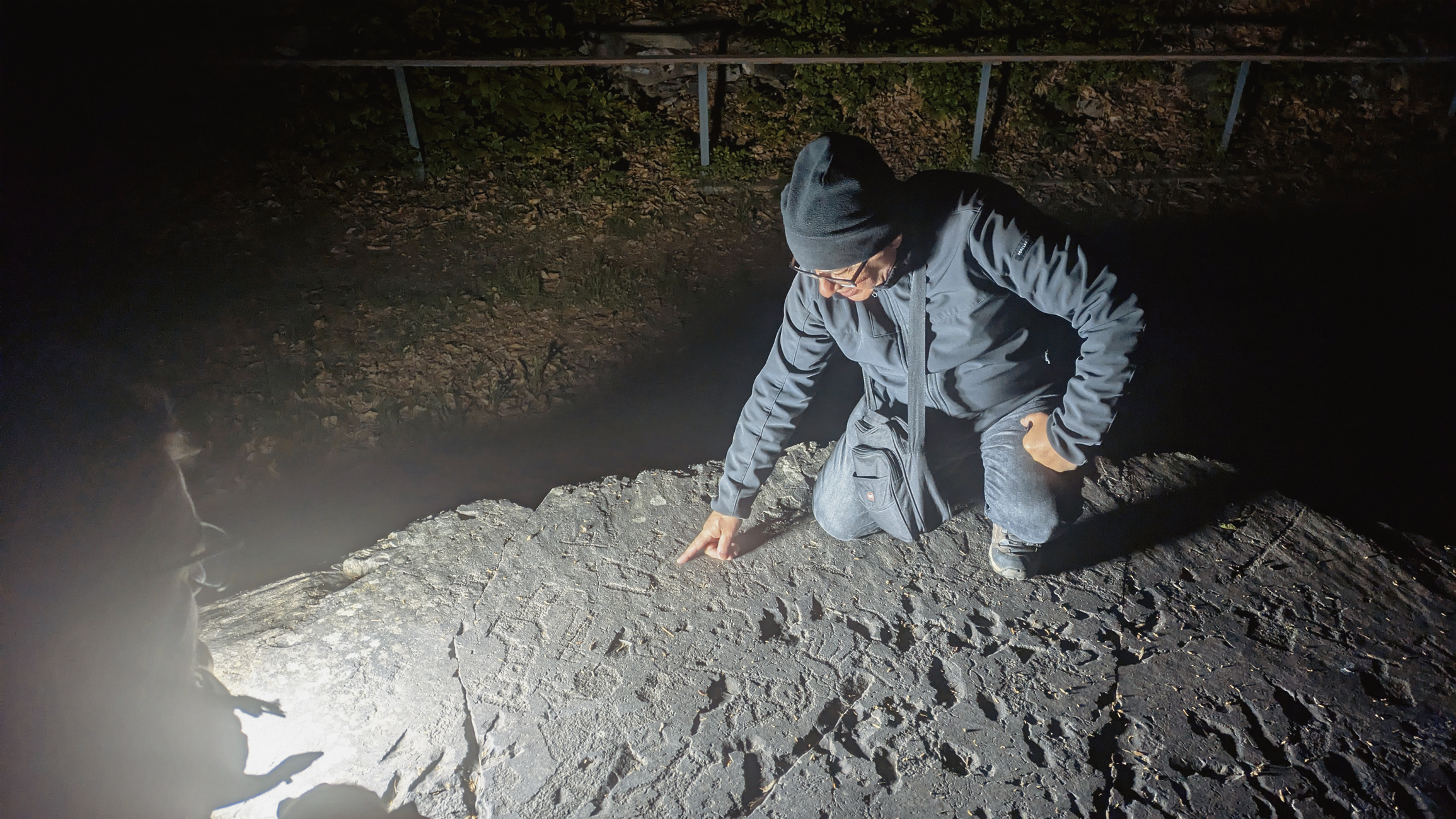
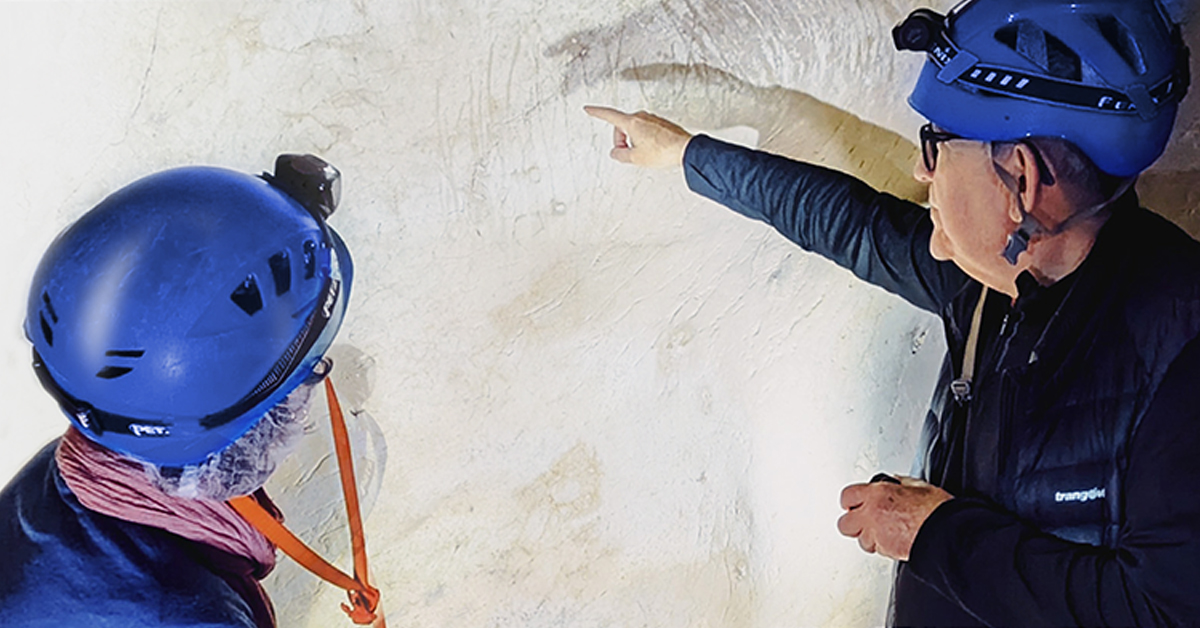
Angelo highlighting the engraved imagery on a panel on the eastern side of the valley
Following Angelo's birthday meal on the Saturday evening, we made our way to several engraved rock art panels on the eastern side of the valley, close to the village of Paspardo. This area contains one of the most significant concentrations of engraved rock art within Valcamonica and has long been recognised for the richness and complexity of its prehistoric imagery. As one might imagine, an evening of fine Italian wine followed by a walk across uneven, rocky terrain is not always the ideal combination. Nevertheless, the team was in for a number of pleasant surprises.
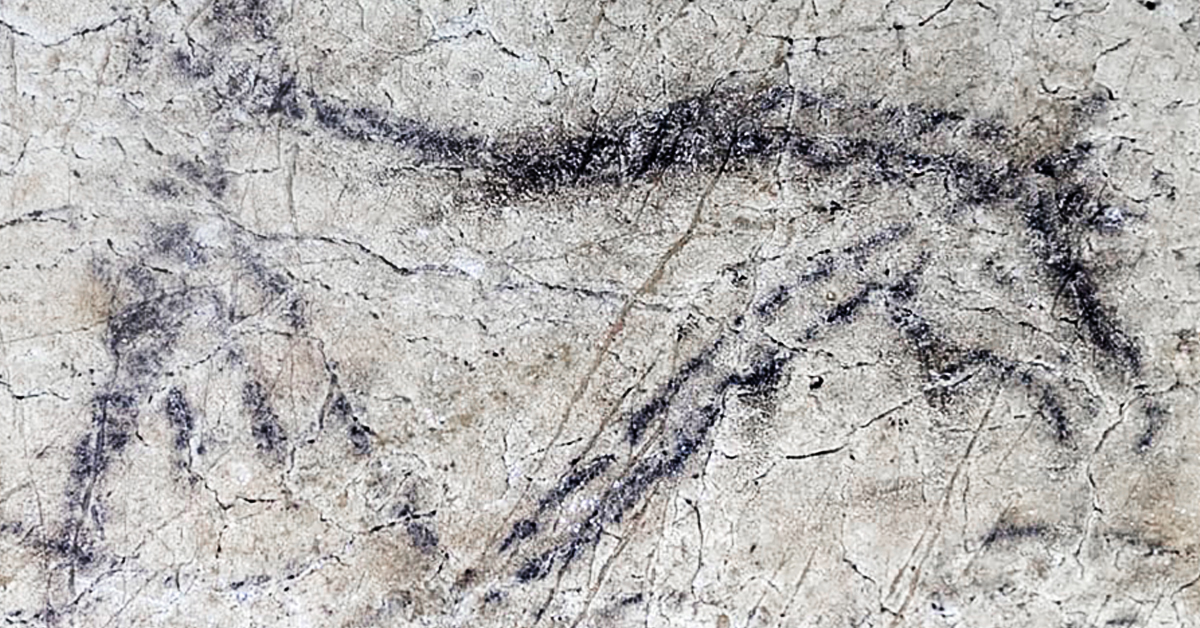
The nocturnal visit at Dos Sottolajolo provided the perfect opportunity to demonstrate one of the most effective methods for recording engraved rock art. Using powerful lamps positioned at low angles across the rock surfaces, oblique lighting accentuated the engraved grooves by casting subtle shadows within them (Figure 15 & Figure 16). This technique dramatically enhances the visibility of motifs that are often barely discernible in daylight and remains one of the most successful photographic methods for documenting engraved rock art anywhere in the world.
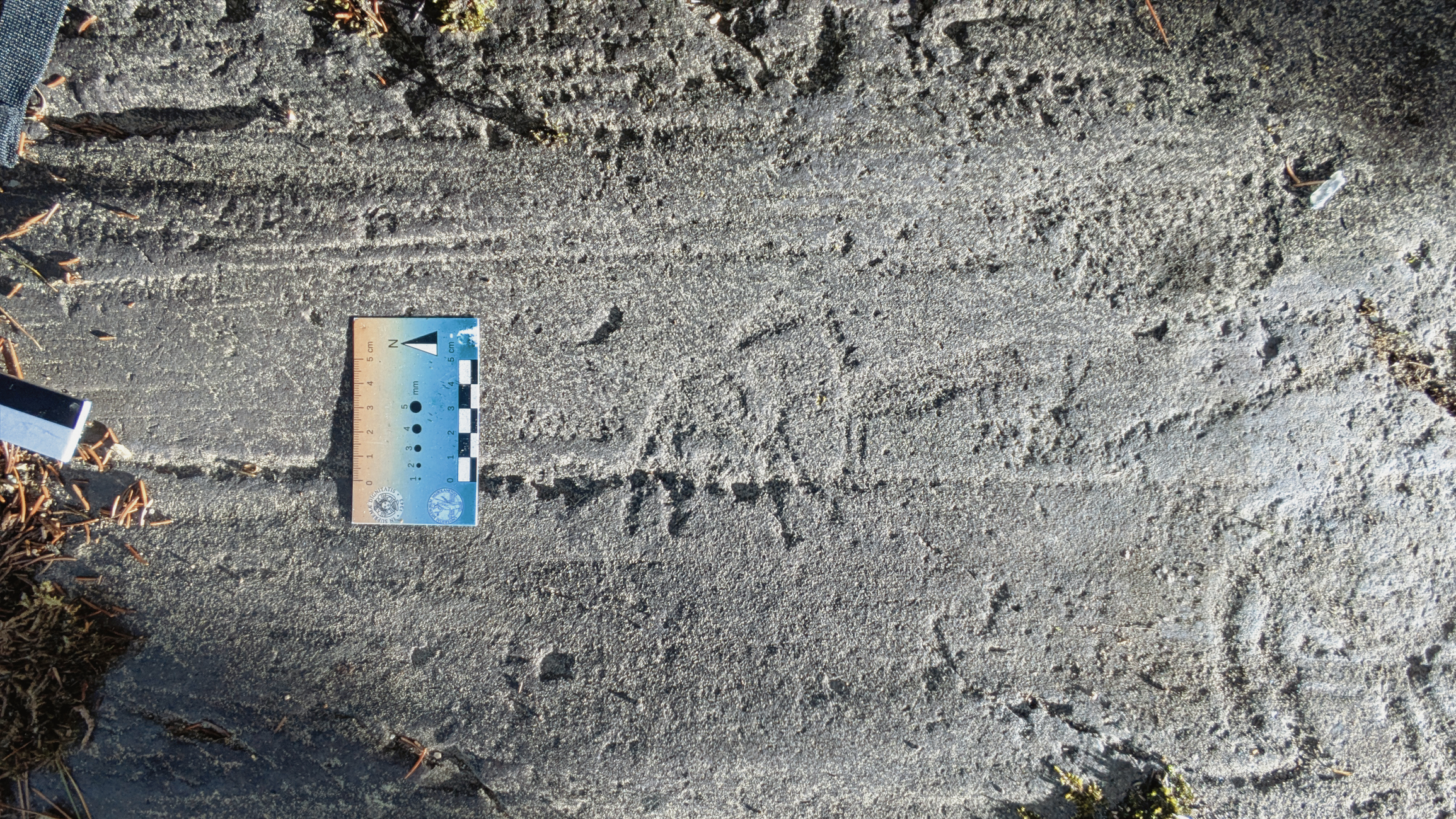
The faint pecked lines that reveal the images that cannot bee seen in direct sunlight
Night-time recording using oblique artificial lighting has within the history of research has formed an essential component of the field methodology employed during previous surveys. The technique involves illuminating the rock surfaces with powerful LED lamps positioned at very low angles to the engraved panels, thereby creating dark shadows of the incised grooves while leaving the surrounding rock surface comparatively lit. This process significantly enhances the visibility of figures and motifs that were otherwise difficult or impossible to discern under normal daylight conditions, particularly on the highly polished glacially abraded sandstone and fine-grained pelitic surfaces characteristic of the valley. This method proves especially valuable where centuries of weathering, biological growth and surface patination had reduced the contrast and pecking definition between the engraved figures and the natural bedrock.
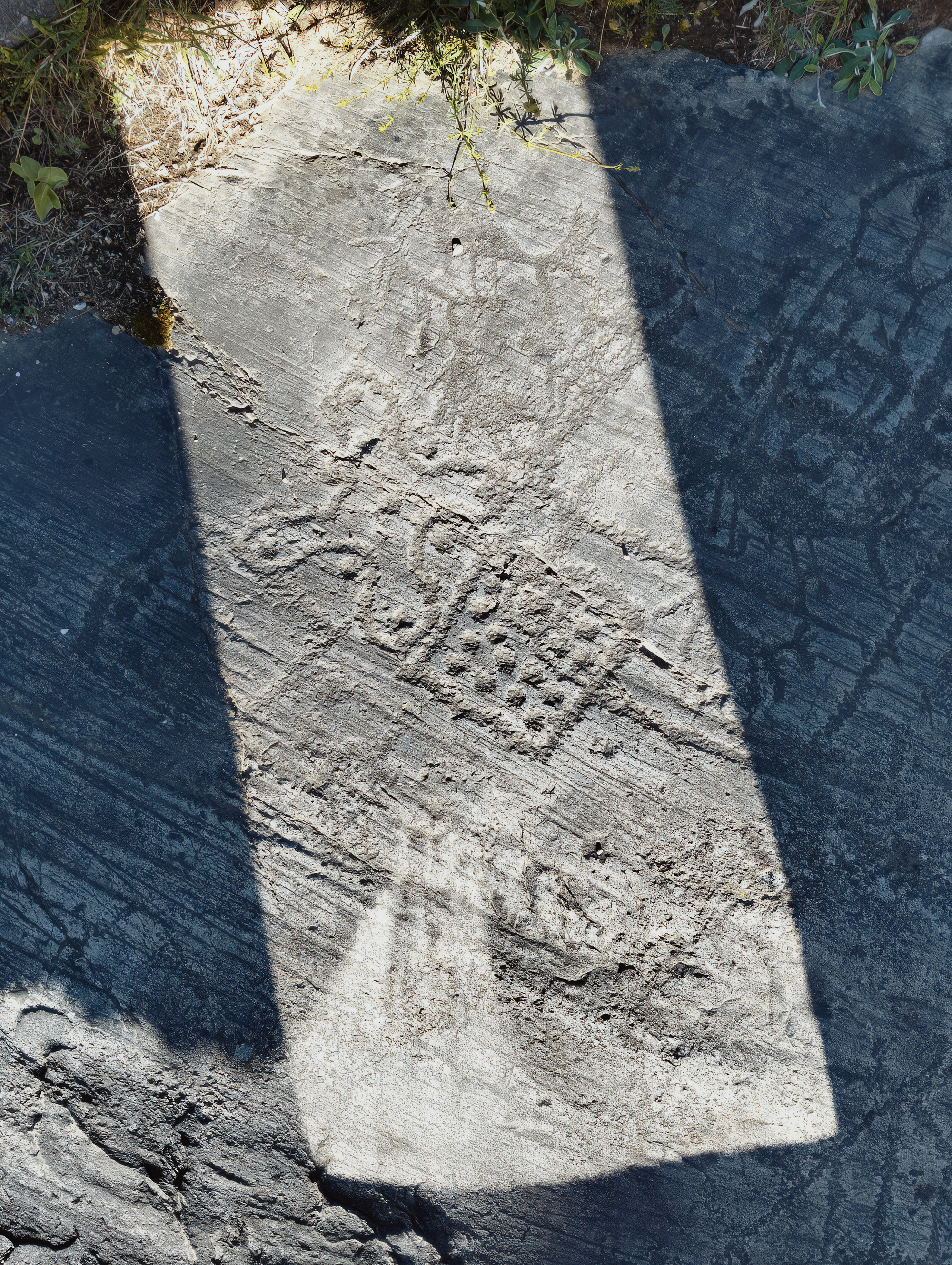
The use of angled sunlight via a mirror onto an engraved rock art surface at Bedolina
By systematically altering the angle of the light source, individual engravings can be examined from multiple directions, allowing the identification of superimposed figures, tool marks, weathering characteristics and subtle variations in engraving depth. The technique was particularly effective on the extensive panels where densely packed compositions comprising anthropomorphic figures, weapons, topographic motifs, animals and geometric designs often overlap one another. Many lightly pecked or partially eroded motifs become visible only under carefully controlled oblique lighting, revealing previously unrecognised details of the engraved compositions.
The application of oblique lighting is usually integrated with high-resolution digital photography and photogrammetric recording to create an accurate and permanent archive of each panel. Images captured under varying lighting directions are compared during post-fieldwork analysis, enabling the production of more reliable interpretative tracings and the identification of complex episodes of engraving. In several instances, the technique has assisted in distinguishing prehistoric engravings from more recent graffiti and natural geological features, thereby improving the accuracy of motif classification. Combined with modern digital recording techniques, night-time oblique lighting remains one of the most effective and non-invasive methods for documenting the exceptionally rich rock art landscapes of the Valcamonica. Away from the night-time surveys, oblique lighting techniques can also be employed successfully during daylight hours. To achieve this, Angelo and his team have, on numerous occasions, used a large mirror to reflect and direct sunlight across the rock surface at a very low angle (Figure 17). This creates the same shadowing effect as artificial lighting at night, accentuating the engraved grooves while leaving the surrounding surface comparatively lit. As a result, panels that appear flat, featureless and devoid of engravings under direct sunlight are transformed, revealing motifs and details that would otherwise remain virtually invisible. This simple yet highly effective technique has proved invaluable for the photographic documentation and interpretation of the engraved rock art of Valcamonica.
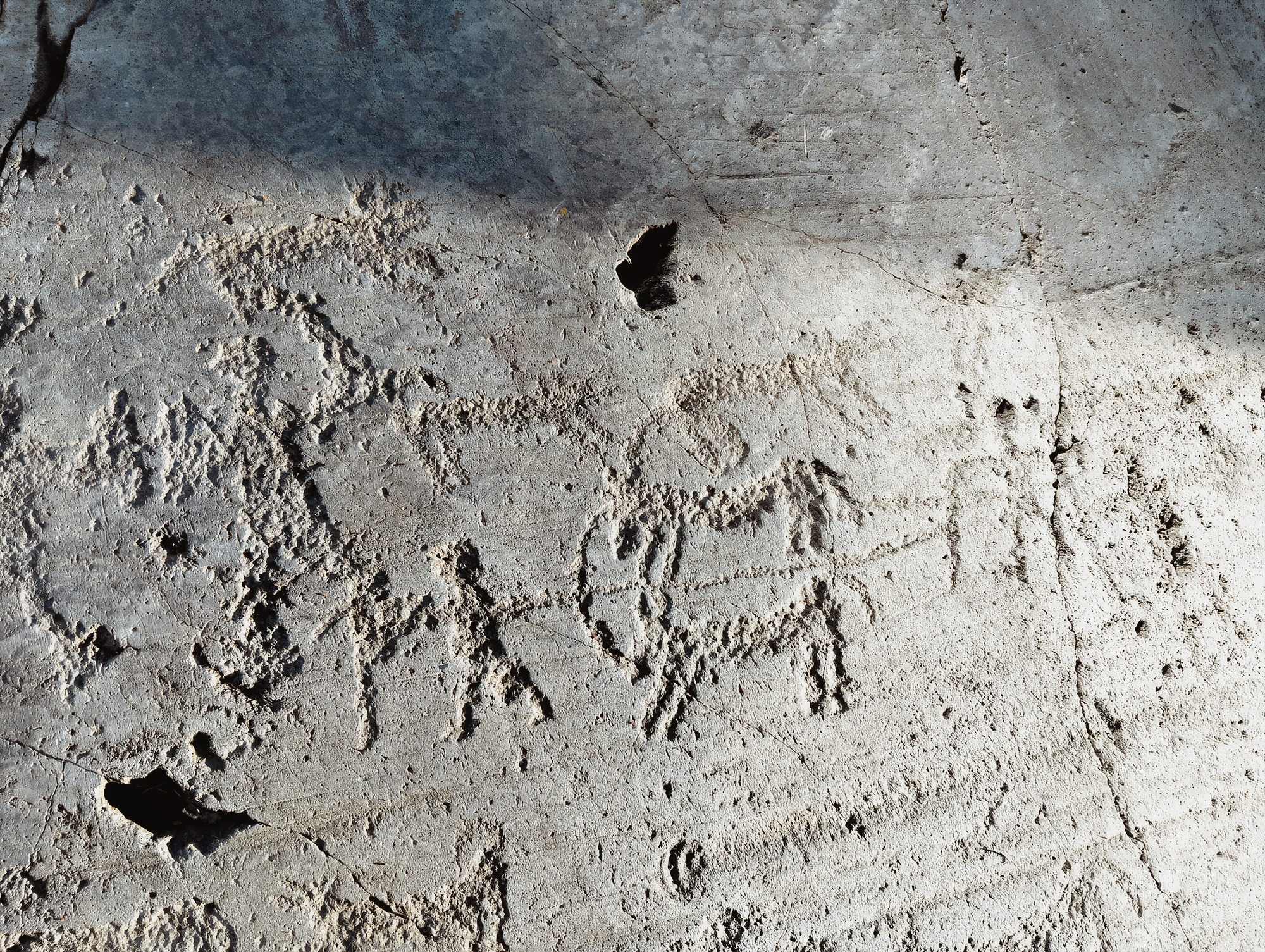
A ploughing scene from Seradina
The earliest known engravings are attributed to Late Upper Palaeolithic hunter-gatherers and consist primarily of large wild animals, including elk and red deer, executed in a naturalistic style. Following a long chronological gap, engraving activity increased dramatically during the Neolithic and Copper Age, when images of agricultural life, ploughing scenes (Figure 18), domestic animals, ceremonial weapons and anthropomorphic figures first appeared (Figure 19). During the Bronze Age and, especially, the Iron Age, rock engraving flourished, producing an extraordinary diversity of imagery that includes warriors, duelling figures, hunters, horsemen (Figure 20), timber-framed buildings, wagons, animals, footprints, weapons, cupmarks and geometric motifs. Many compositions reveal complex narratives and offer unique insights into the beliefs, rituals and everyday lives of the Camunni people who inhabited the valley before the Roman conquest.
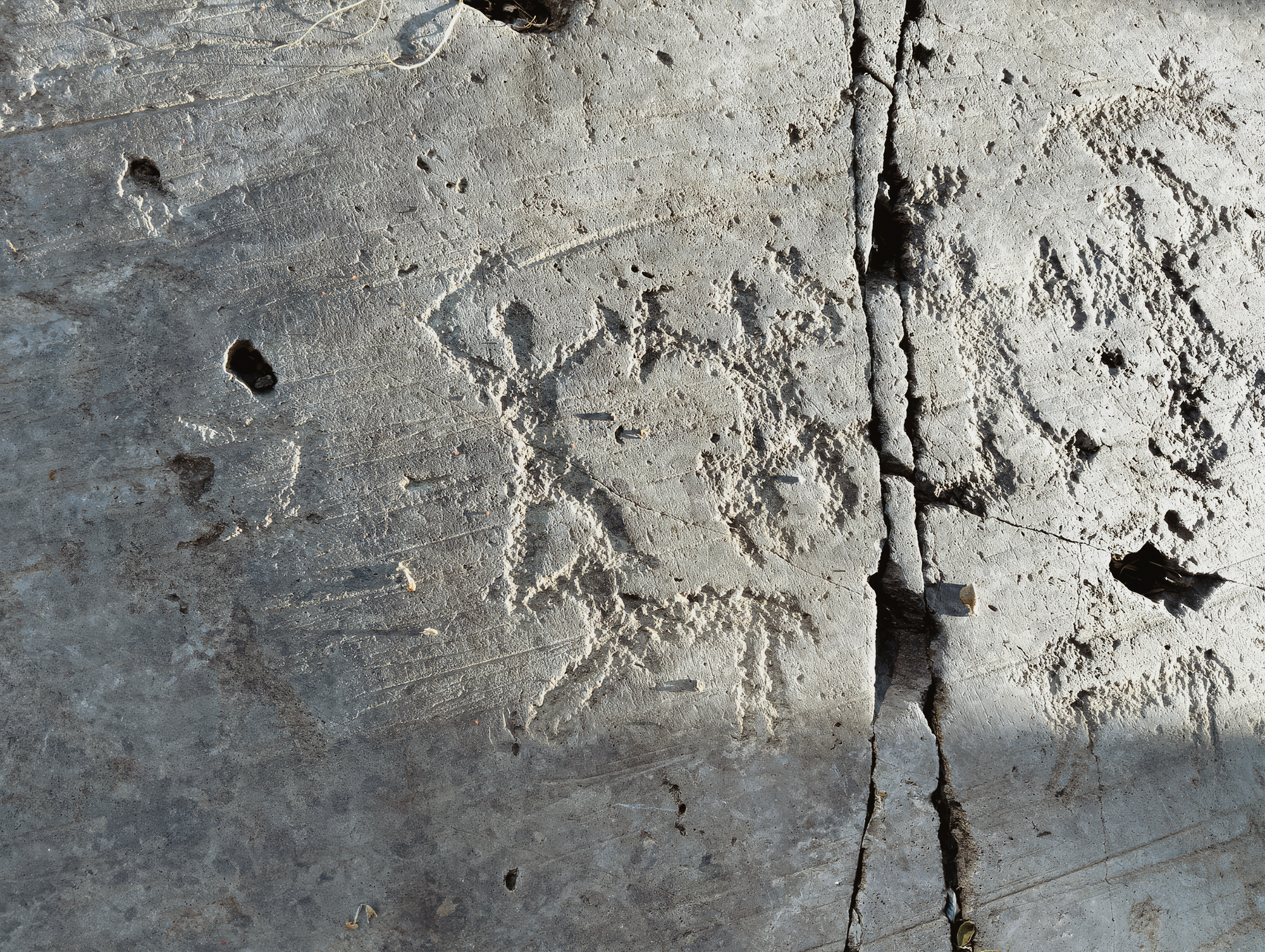
Dueling and weaponry, a common theme within the Valcamonica
Among the most remarkable engravings of an Upper Palaeolithic date are the naturalistic cervid engravings at Luine. The engravings include red deer (Cervus elaphus), now widely regarded as belonging to the Upper Palaeolithic, probably the Late Epigravettian, dating to the closing millennia of the Last Glacial Maximum. Unlike the later schematic engravings that characterise much of Valcamonica's prehistoric rock art, these animals are rendered with remarkable anatomical accuracy and a keen understanding of animal movement. The cervids are depicted in profile with elongated bodies, finely proportioned limbs and carefully modelled heads. Rather than being simple outlines, the engravings demonstrate a confident use of deeply incised lines that capture the muscular form and elegance of living animals. Their artistic execution places them firmly within the broader tradition of European Upper Palaeolithic naturalistic art. One particularly striking cervid is depicted with its head and neck turned sharply backwards in a rearward glance, creating a vivid impression of movement and awareness. This posture may represent an alert or apprehensive animal scanning its surroundings, perhaps responding to the presence of a stalking hunter or another unseen threat. The dynamic composition demonstrates the engraver's acute observation of animal behaviour and adds a remarkable sense of realism to the image.
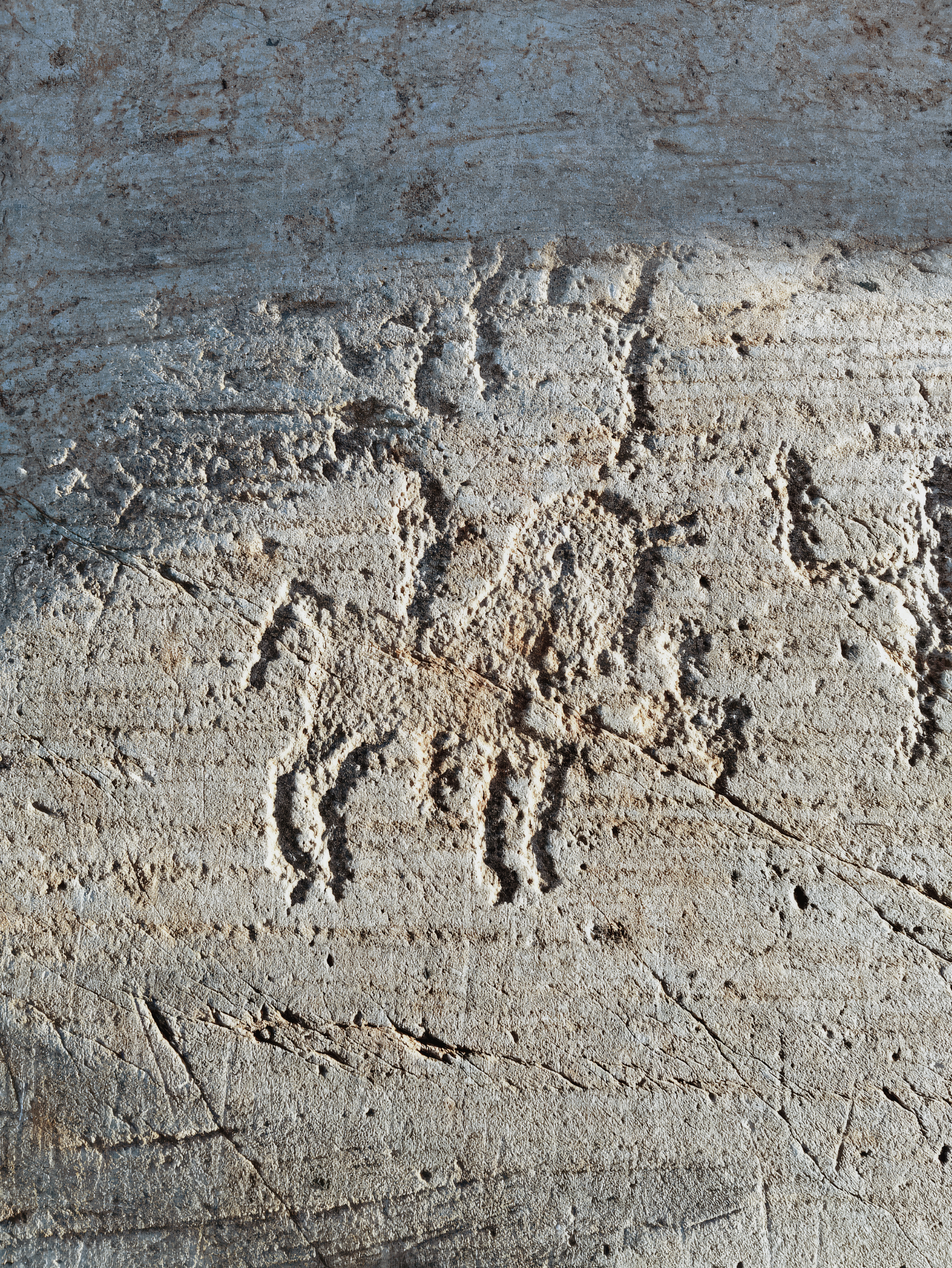
An Etruscan horse and rider, probably 6th century, located within Naquane National Park
Dario Sigari's detailed reassessment of the Luine engravings has demonstrated that these deer were created on glacially polished sandstone surfaces whose natural morphology was deliberately selected by the engravers. Geological analysis has shown that many linear features previously interpreted as engravings are in fact glacial striations, allowing the genuinely naturalistic figures to be distinguished with much greater confidence. Through high resolution photogrammetry, microscopic examination and careful study of engraving techniques, Dario has confirmed that the deer figures represent a coherent and technologically sophisticated phase of artistic activity that predates the better-known later Holocene engravings of Valcamonica. Their distribution, orientation and relationship to the surrounding landscape indicate that these were not isolated images but formed part of a carefully structured use of the valley during the closing stages of the LGM.
One of Dario's most important contributions has been to place the Luine deer within their wider environmental and archaeological context. Rather than viewing the engravings as isolated works of art, he argues that they formed part of a network of Upper Palaeolithic activity extending across the central Camonica Valley, linked visually with contemporary occupation areas and movement corridors exploited by hunter gatherers following large herbivores after the retreat of the Alpine glaciers. Viewshed analysis suggests that the engraved rocks occupied prominent positions overlooking natural routes through the valley, reinforcing the idea that landscape selection played a fundamental role in the placement of the imagery. In this interpretation, the magnificent deer of Luine represent not only artistic masterpieces but also enduring markers embedded within a culturally significant Late Glacial landscape, reflecting the close relationship between people, animals and place at the end of the Upper Palaeolithic.
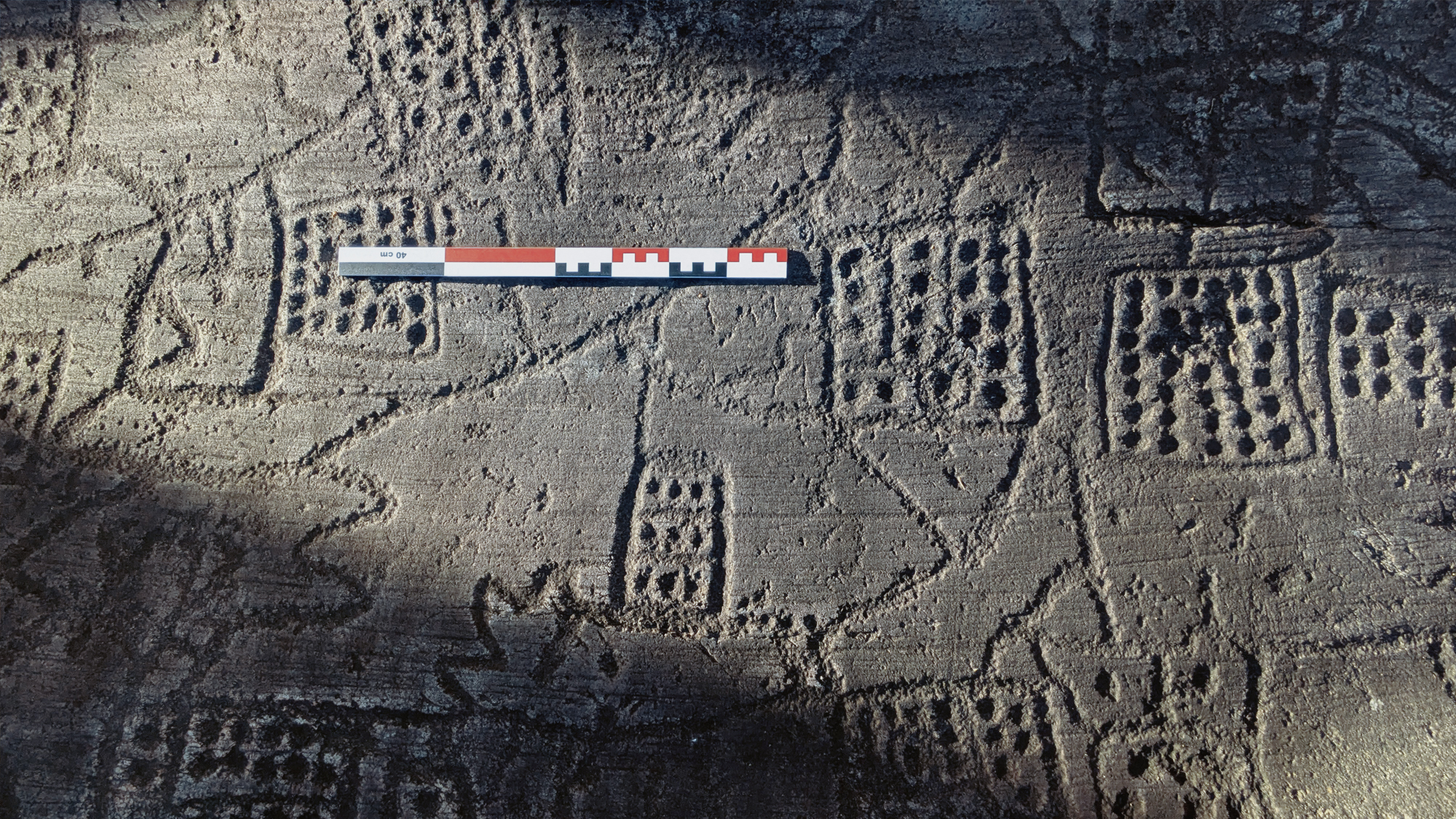
Panel section images of the famous Bedolina map showing elements of daily life in an alpine village, c. 2500 - 3000 years ago
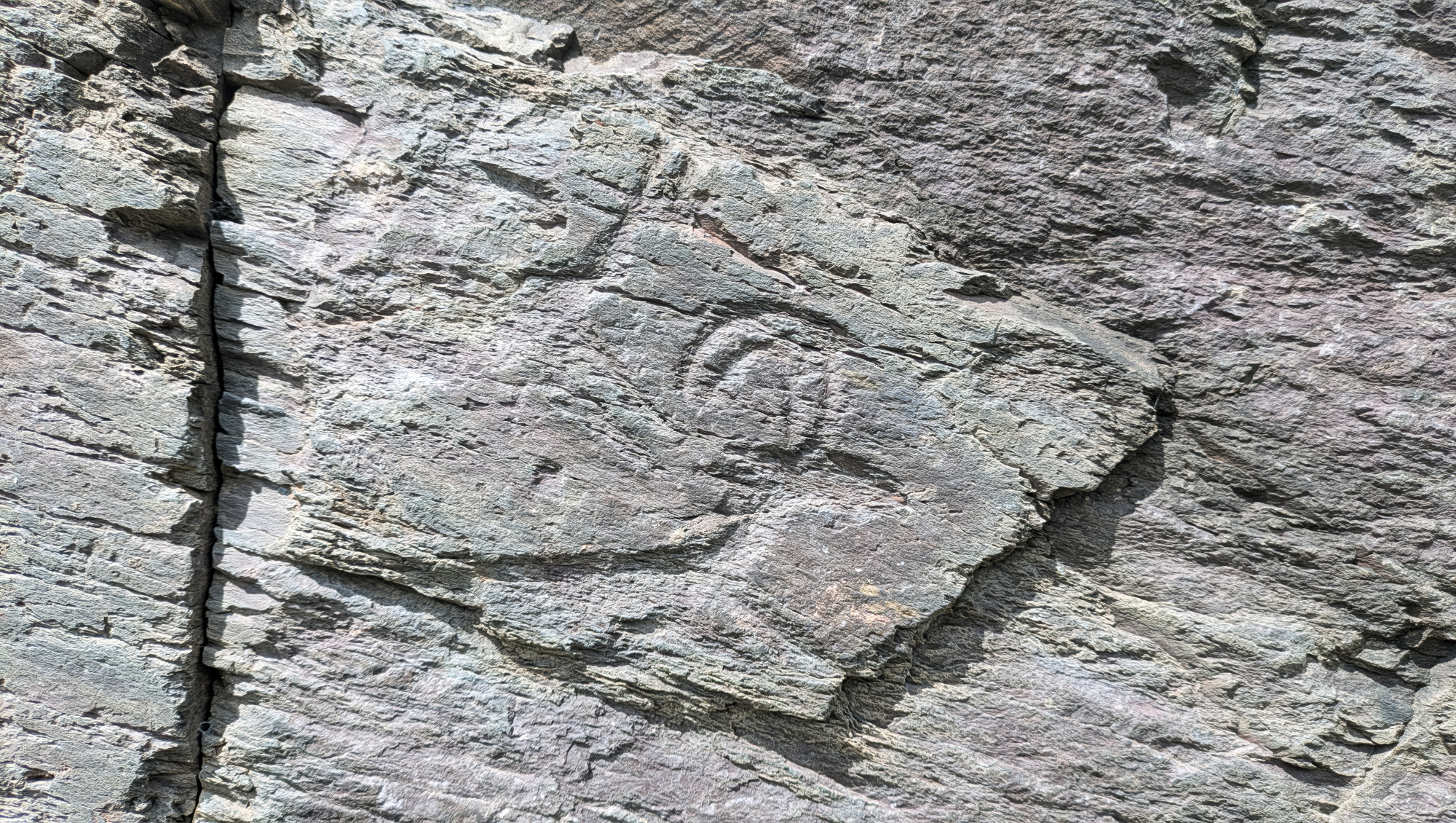
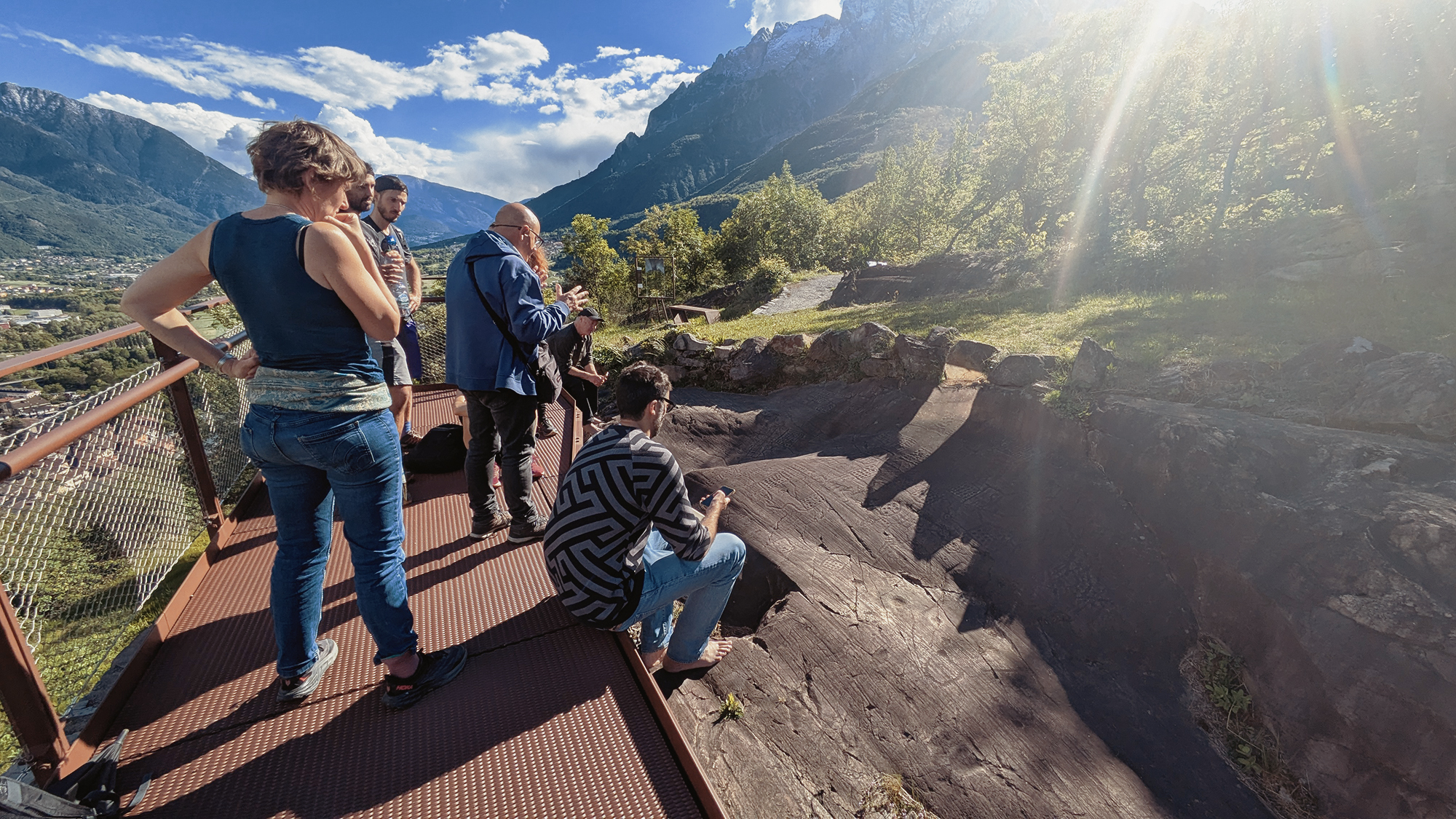
The excellent state of preservation of many panels allows individual peck marks and engraving techniques to be examined in remarkable detail. Equally famous is Bedolina, located near Capo di Ponte, which contains one of the world's best known prehistoric 'topographic' engravings. Often referred to as the Bedolina Map, this remarkable composition depicts a highly organised arrangement of fields, pathways, enclosures, ladders and settlements that many scholars interpret as a symbolic representation of an agricultural landscape rather than a literal map (Figure 21, Figure 22, & Figure 23,). Surrounding panels display warriors, animals, hunting scenes and geometric motifs, reflecting the increasingly complex social organisation of the Iron Age communities that occupied the valley. A few metres to the north is a small but intriguing engraved panel featuring a naturally formed bowl-shaped hollow alongside what is widely regarded as the only known prehistoric fish engraving in the Valcamonica rock art corpus (Figure 24). The fish is positioned just a few centimetres from the natural depression, which readily collects rainwater after periods of precipitation, creating a small pool. Although this hollow is entirely geological in origin, its close spatial association with the engraved fish is unlikely to be coincidental.
Panel section images of the famous Bedolina map showing elements of daily life in an alpine village, c. 2500 - 3000 years ago
The juxtaposition of these two elements may represent a deliberate attempt by the engraver to exploit a natural feature of the rock surface in order to enhance the image's meaning. The water-filled hollow would have provided an obvious visual metaphor for an aquatic environment, effectively creating a miniature habitat for the engraved fish. Such integration of natural rock morphology with anthropogenic imagery is a recurring characteristic of prehistoric rock art traditions across Europe, where fissures, hollows, ridges, and other geological features were often incorporated into compositions to reinforce symbolic and ritual behaviour.
It is therefore plausible to suggest that the fish and the adjacent natural basin together allude to an area of the valley associated with fishing or the exploitation of freshwater resources. Rather than depicting a literal fish in isolation, the composition may have served as a symbolic reference to productive fishing grounds, seasonal subsistence activities, or the broader importance of rivers and streams within the prehistoric landscape. While this interpretation remains speculative, the intimate relationship between the engraved motif and the naturally water-retaining hollow strongly suggests that the artist intentionally incorporated the geological feature into the overall design, creating a meaningful association between the image, water, and the exploitation of aquatic resources.
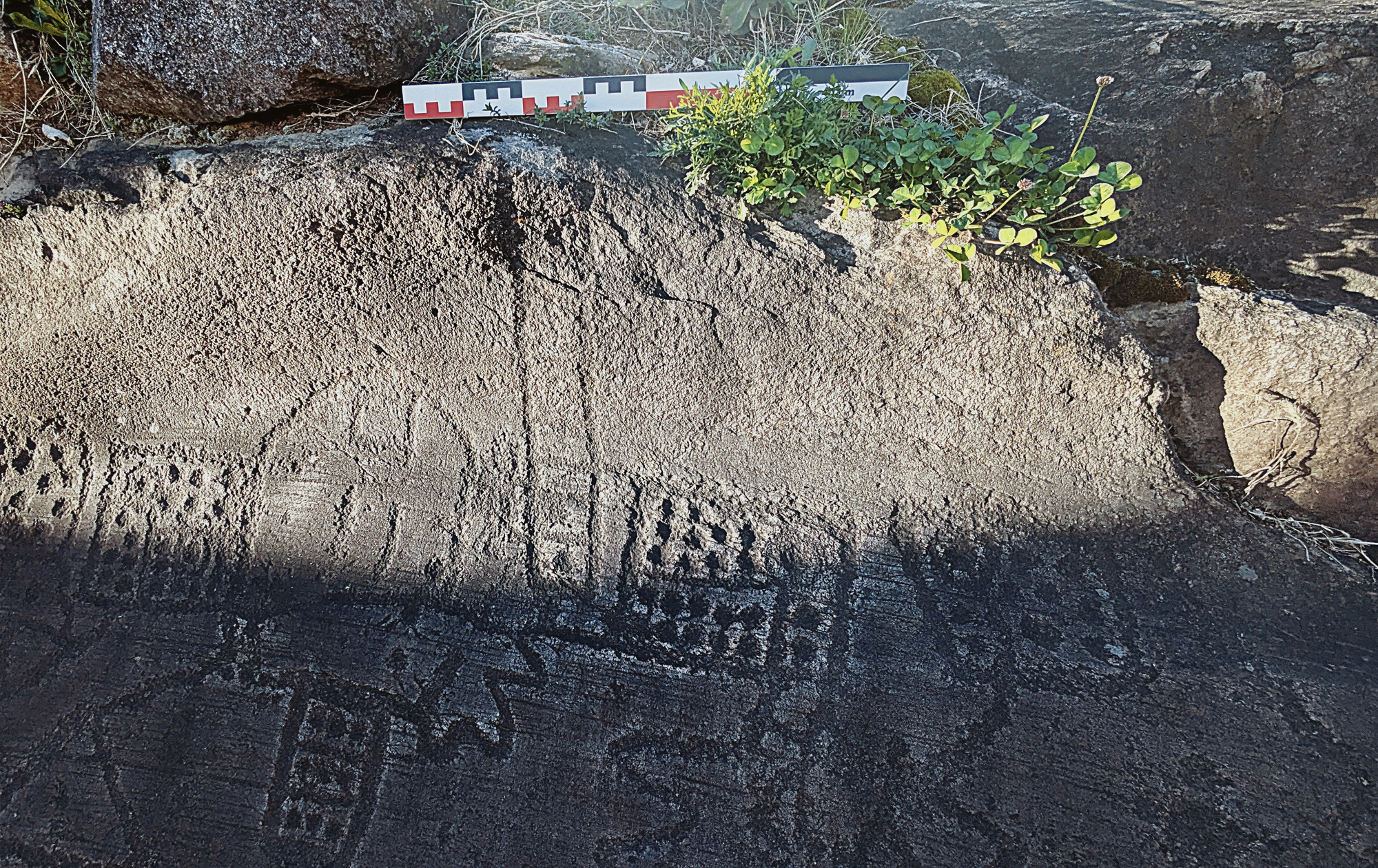
Panel section images of the famous Bedolina map showing elements of daily life in an alpine village, c. 2500 - 3000 years ago
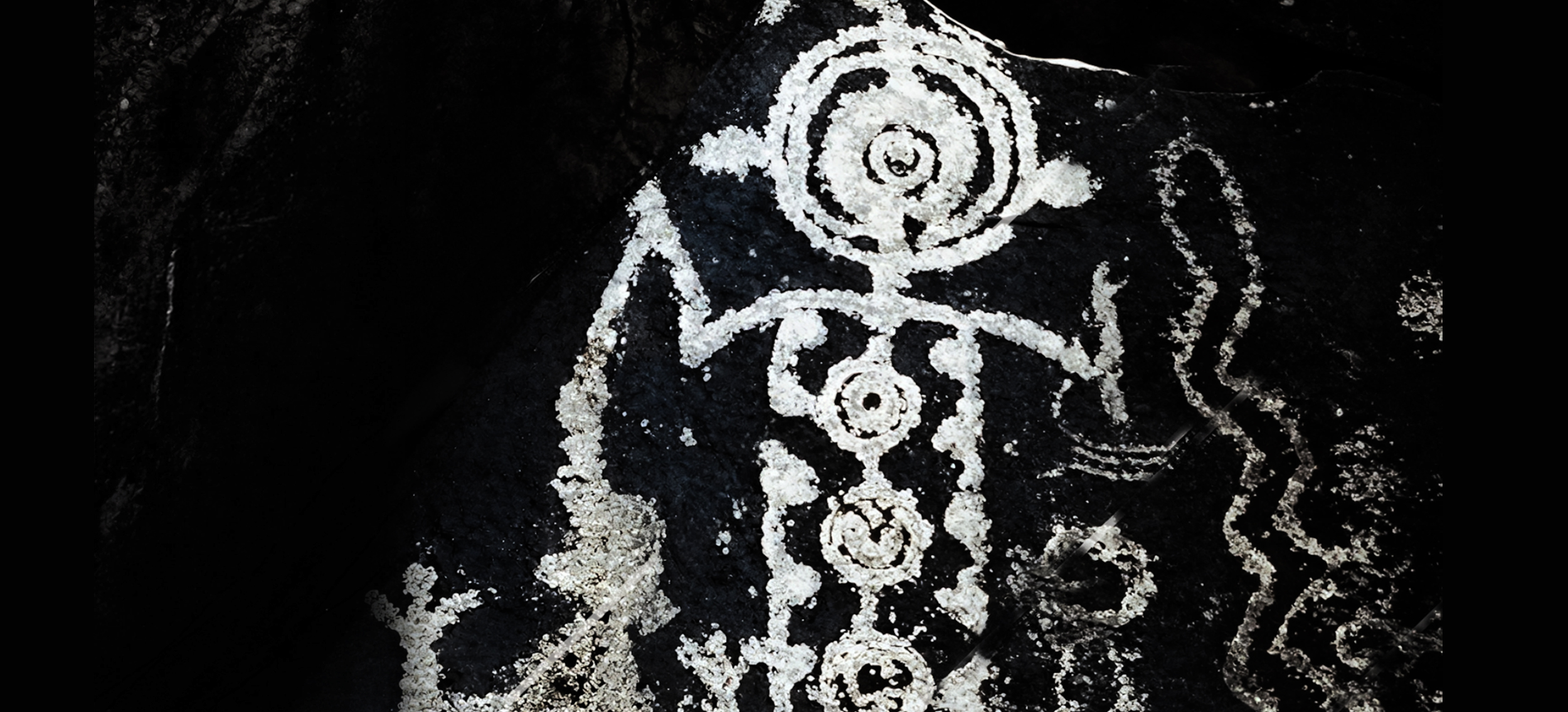
The extensive Naquane National Park of Rock Engravings (Parco Nazionale delle Incisioni Rupestri di Naquane) was established in 1955 as Italy's first archaeological park dedicated specifically to rock art. Covering more than thirty hectares of woodland, the park contains over one hundred engraved rock surfaces preserving many thousands of figures. Here visitors encounter some of the most iconic imagery of Valcamonica, including armed warriors, duelists, hunters, horse riders, ritual scenes and the famous 'Camunian Rose', a geometric motif that has become the modern symbol of the Lombardy Region (Figure 25). The concentration, preservation and diversity of motifs make Naquane one of the finest open air rock art museums in Europe.
A short distance to the south lies Foppe di Nadro, one of the valley's richest concentrations of prehistoric engravings. The site contains numerous decorated sandstone outcrops, many densely covered with Iron Age imagery depicting weapons, hunting scenes, ritual processions, animals, footprints and highly stylised anthropomorphic figures. Recent recording programmes using digital photogrammetry, laser scanning and detailed tracing techniques have revealed previously unknown engravings beneath weathered surfaces, demonstrating that the archaeological potential of Valcamonica continues to grow. Foppe di Nadro also illustrates the cumulative nature of rock art production, with individual panels repeatedly revisited and re engraved over many centuries, creating complex palimpsests that document the long cultural history of the valley.
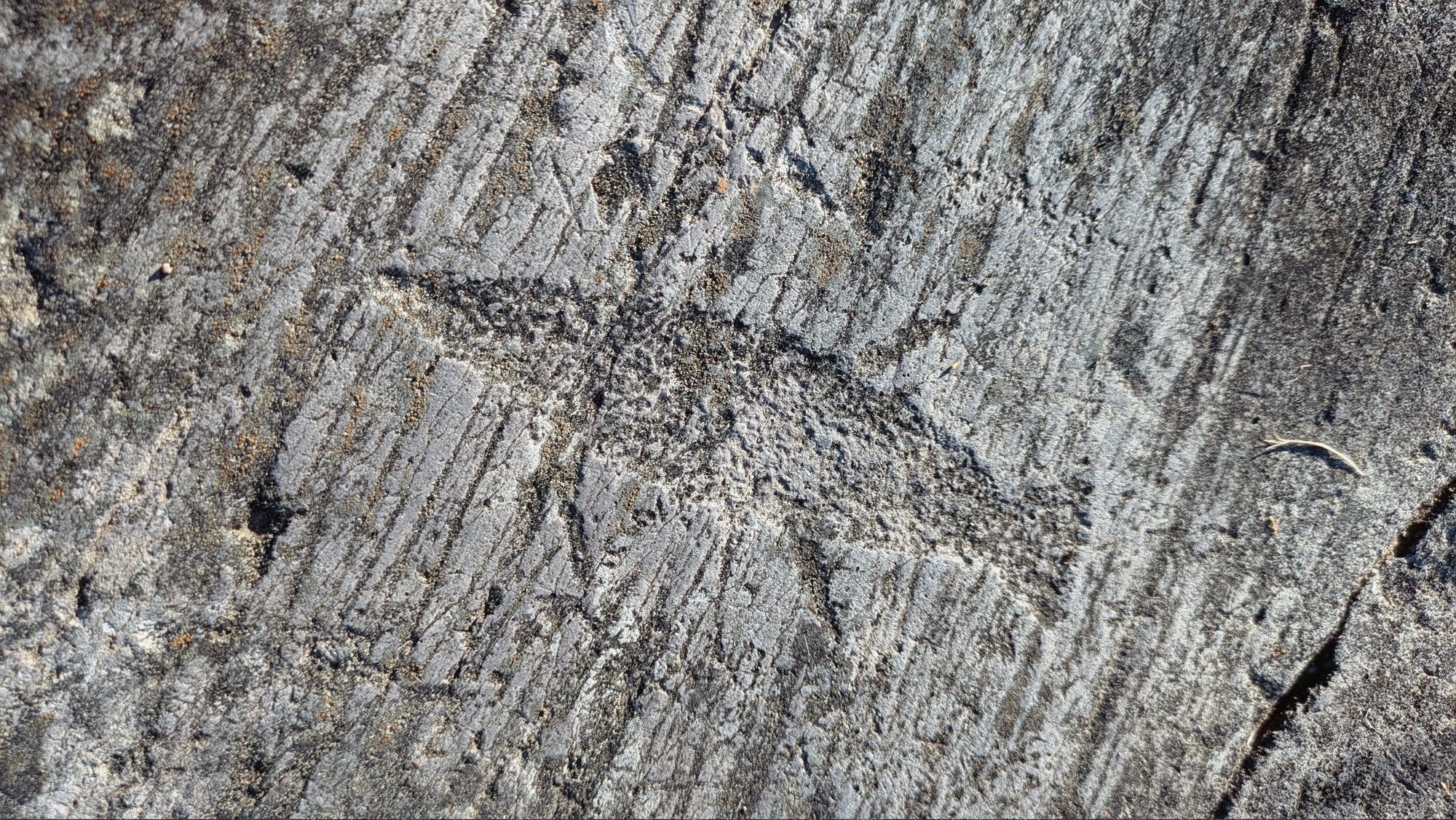
The fish engraving that is located close to the Bedolina 1 site
Taken together, the engraved landscapes of Luine, Bedolina, Naquane and Foppe di Nadro provide an exceptional record of human thought, belief and social development extending across several millennia. Rather than representing isolated works of art, these engravings formed an integral part of the cultural landscape, where prominent rock outcrops overlooking the valley became places of memory, ritual and communication. Today, ongoing archaeological research, conservation and digital recording continue to reveal new aspects of this extraordinary World Heritage landscape, ensuring that Valcamonica remains one of Europe's foremost centres for the study of prehistoric rock art.
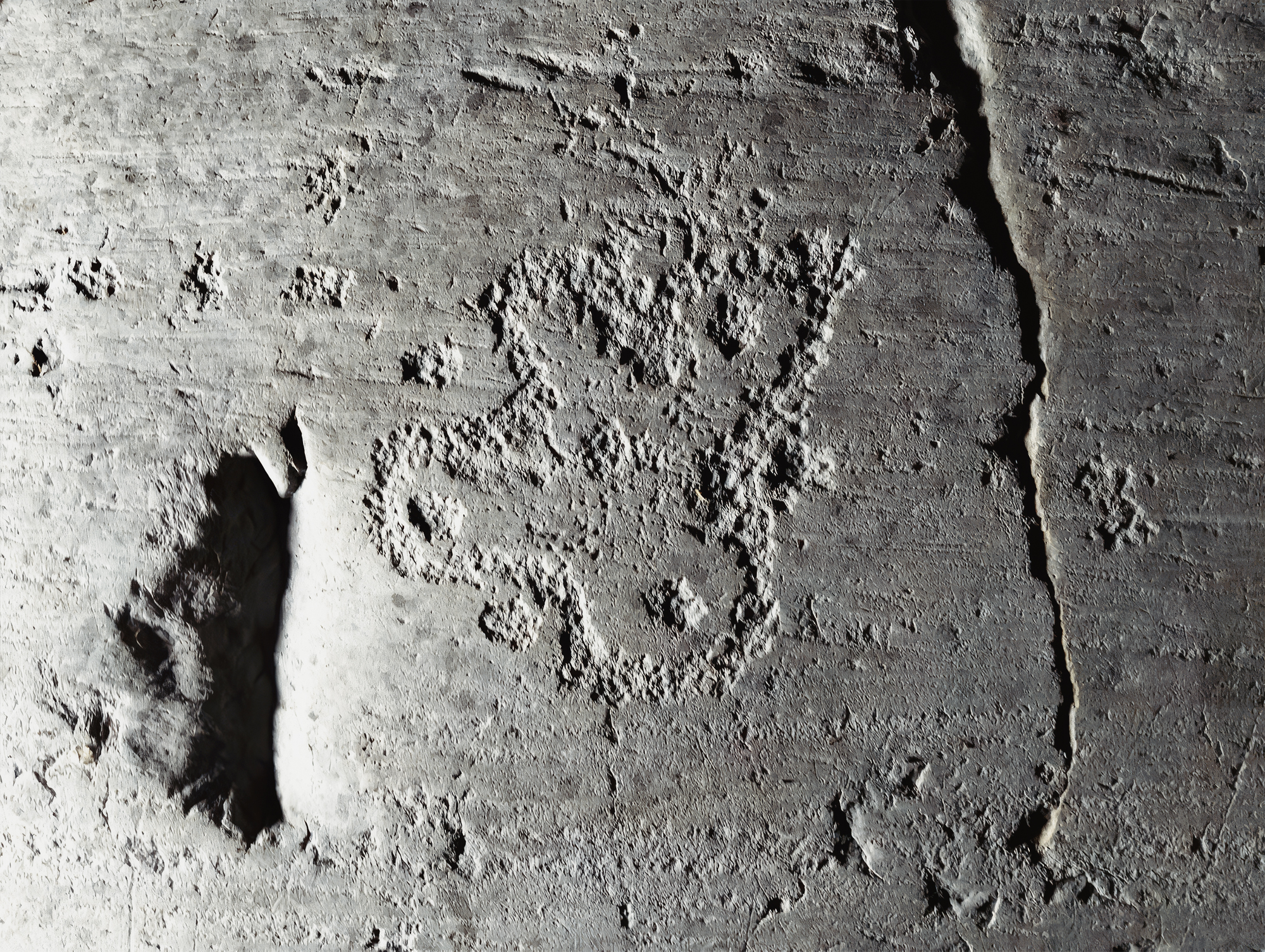
he Camunian Rose, an engraved motif that may have been developed into a Bronze Age ‘swastika’, a now-considered negative symbol that was adopted in recent historical times
- Arcà, A. (2004). The topographic engravings of Alpine rock-art: Fields, settlements, and agricultural landscapes. In C. Chippindale & G. Nash (eds.), The figured landscapes of rock-art: Looking at pictures in place (pp. 318–350). Cambridge, Cambridge University Press.
- Arcà, A. (2005). Archeologia rupestre in Valcamonica: Dos Cüi, un caso di studio. Rivista di Scienze Preistoriche, 40, 323–384.
- Arcà, A. (2025). La Grande Roccia delle Aquane, Valcamonica archeo-rupestre. CCSP-Camunnian Centre for Prehistoric Studies.
- Arcà, A. & Fossati, A. (1995). Sui Sentieri Dell’arte Rupestre: Le rocce incise delle Alpi: Storia, ricerche, escursioni. Torino: Edizioni Cda.
- Anati, E. (1964). Camonica Valley: A depiction of village life in the Alps to the birth of Christ as revealed by thousands of newly found rock carvings. London: Jonathan Cape.
- Fossati, A. (2008). Following Arianna’s thread: Symbolic figures at female rock-art sites in Naquane and In Valle, Valcamonica, Italy. In G. H. Nash & G. Children (eds.), The archaeology of semiotics and the social order of things (pp. 31–44). Oxford: British Archaeological Reports, International Series 1833.
- Fossati, A. (2011). l’utilizzo delle accidentalita’ naturali delle rocce nell’arte rupestre della Valcamonica. Bullettin d’etudes prehistoriques et archeologiques Alpines (Aoste), 22, 245–260.
- Marretta, A. (2006). Scoperta di due nuove rocce con ‘composizioni topografiche’ nel Parco Archeologico Comunale di Seradina-Bedolina (pp. 30–40). B.C. Notizie, Notiziario del Centro Camuno di Studi Preistorici: Capo di Ponti.
- Nash, G. H. (2010). Towards a philosophy of dwelling: A comparative analysis between timber-framed traditions of the Iron Age and the Medieval periods. In A. Fossati (Ed.), La Castagna della Valcamonica: Della valorizzaxione delle colture allo sviluppo della cultura (pp. 53–63). Paspardo: La Cooperativa Archeologia Le Orme dell'Uomo.
- Nash, G.H. (2012). Replicating Cultural Landscapes: Interpreting rock-art in the Valcamonica, Lombardy, Italy. Landscapes, 22(2), 1-19.
- Savardi, E. (2004). Le raffigurazioni di capanna a Foppe di Nadro: Tipologia e distribuzione. In A. Marretta (ed.), Foppe di Nadro Sconosciuta: Dalla cartogafia GPS alle analisi più recenti (pp. 81–93). Morphosis: Monza.
- Sigari, D., 2022. Palaeolithic rock art of the Italian peninsula. Capo di Ponte. Edizioni del Centro.
- Sigari, D. & Fossati, A. (2023). Le figure incise del Pleistocene finale-inizio Olocene in Valcamonica. Rivista di Scienze Preistoriche, 73, 41–70.
- Tognoni, E. (1992). La Roccia 57 del Parco Nazionale di Naquane e le rappresentazioni di capanne nell’arte rupestre camuna. Tesi di Laurea. Milano: Università degli Studi di Milano.