

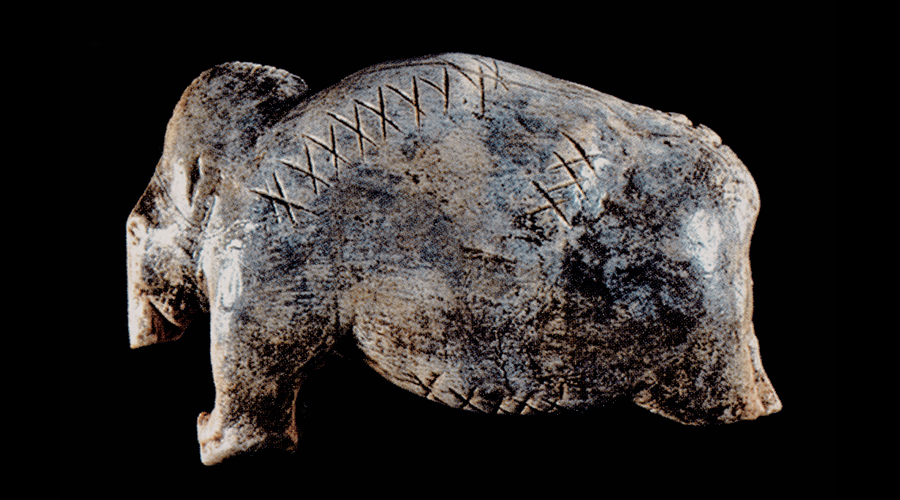
A 40,000-year-old mammoth figurine from Vogelherd Cave in Germany could hold clues to the origins of written language. The mammoth figurine, carved in ivory by a Stone Age artist, is one of the oldest known pieces of art on earth.
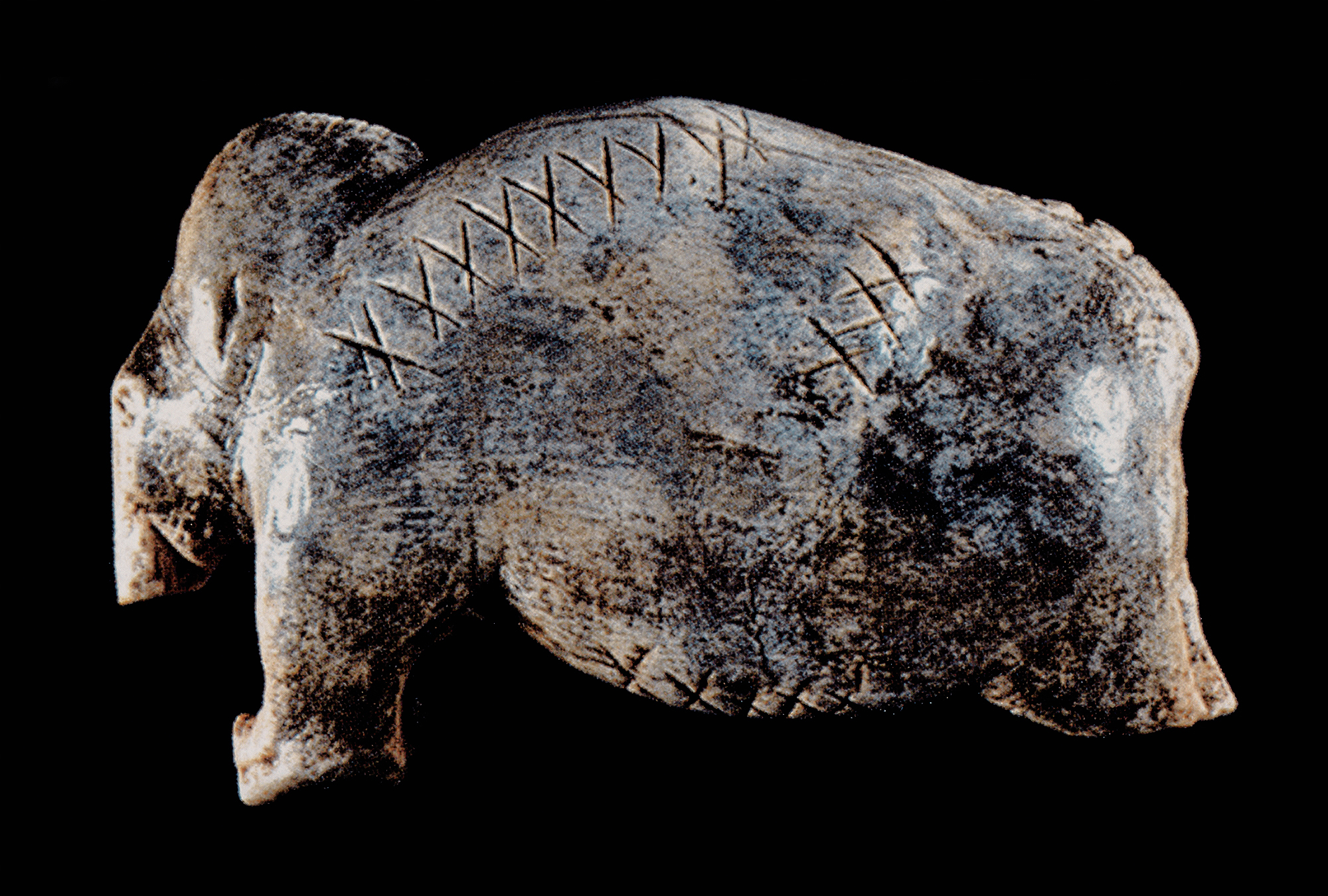
The sculpture belongs to the Aurignacian period, the most ancient culture of the Upper Palaeolithic, between 35,000 and 28,000 years ago. The culture of the first modern humans in Europe was named after the Aurignac site in Haute-Garonne, France, where it was first identified by Édouard Lartet in 1860.
As with most of the animal sculptures found at Vogelherd, the legs of this mammoth have been shortened. The body is covered with engraved crosses. It is these crosses that are the subject of recent analysis, which includes hundreds of other objects found in the same region, revealing that the markings may have meant something specific to their ancient creators.
Analysing over 3,000 markings on 260 objects including the Vogelherd Cave mammoth figurine, researchers determined the pattern markings to be statistically as complex as proto-cuneiform. The proto-cuneiform script was a system of proto-writing that emerged in Mesopotamia ca. 3350-3200 BC (during the Uruk period), eventually developing into the early cuneiform script used in the region's Early Dynastic I period.
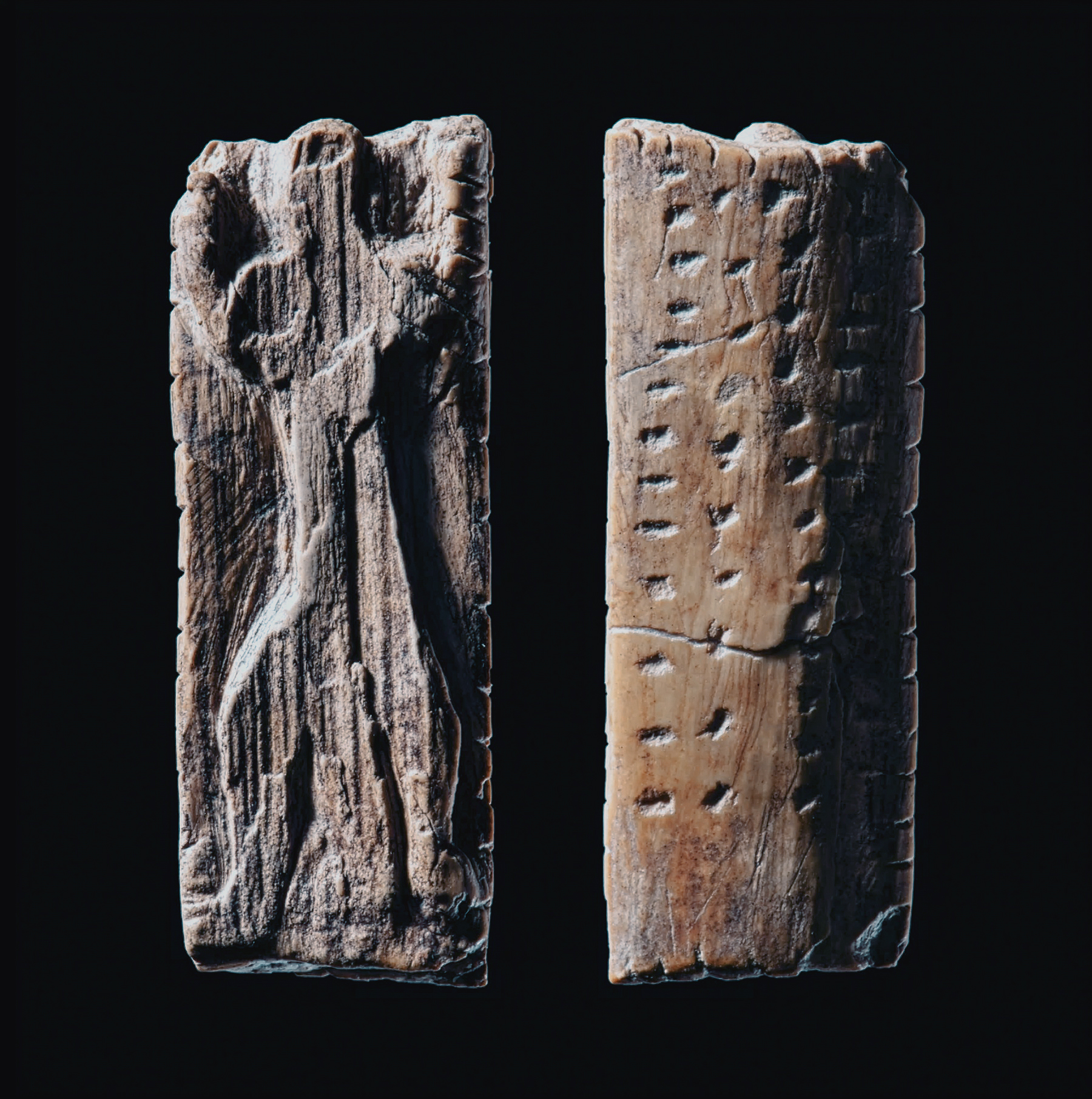
The findings of the research, were published in PNAS and could highlight why ancient humans made art and the purpose the art served. "We would argue that these sign sequences go beyond decoration that was aesthetically pleasing to particular individuals. Namely, our statistical results show that these signs were applied selectively and conventionally," said linguist Christian Bentz of Saarland University in Germany, lead author of the published research. For example, crosses were found only on tools and animal figurines, but not on human figurines.
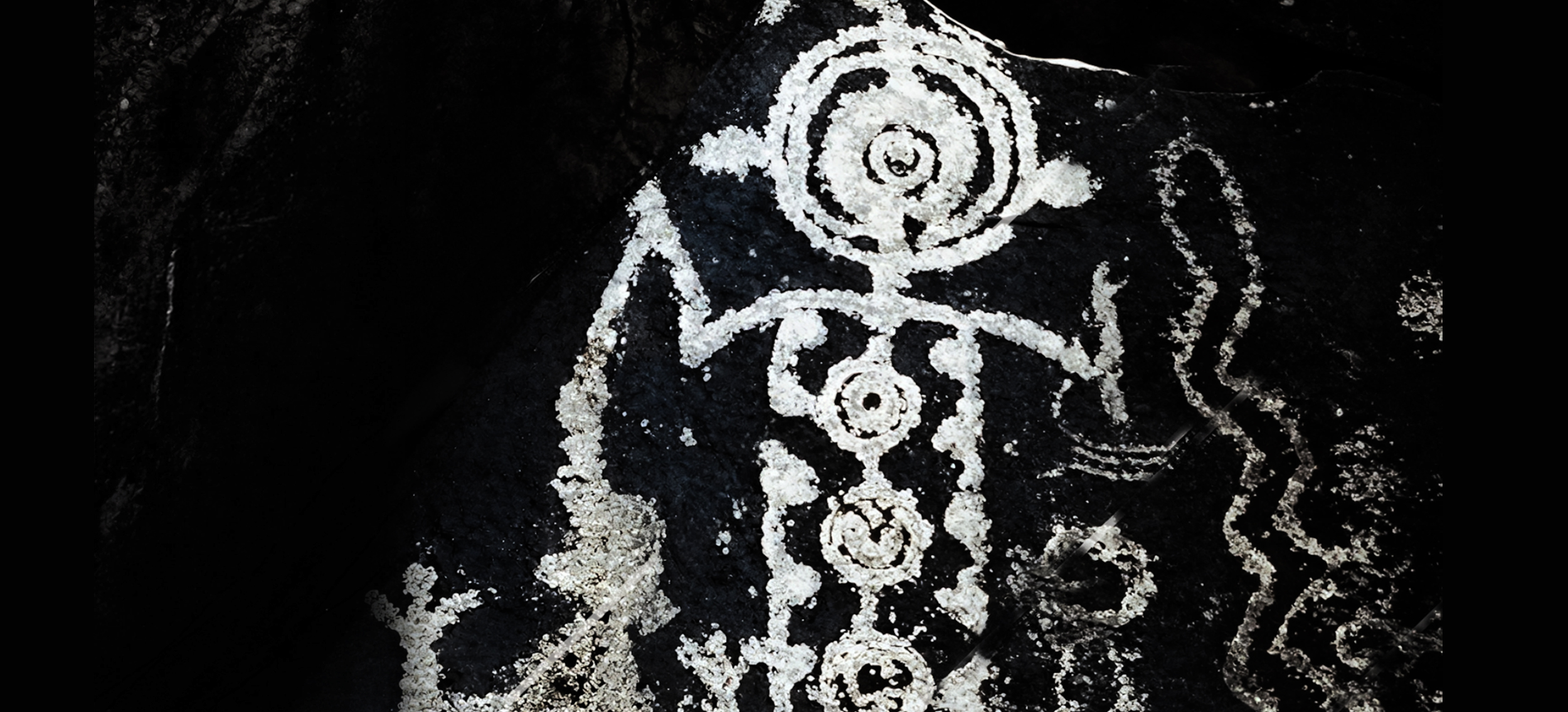
Genevieve von Petzinger, who complied 'Geometric Signs & Symbols in Rock Art - Why Should We Care about the Geometric Signs?', as part of the Bradshaw Foundation website, is a paleoanthropologist who studies the origins of writing, she commented: This type of work can be "challenging," in part because such ancient markings are practically impossible to interpret. But looking for patterns in the symbols, such as intentionality and repetition, "are two excellent approaches for at least trying to confirm that these marks were meaningful beyond being decorative doodles."
The researchers carried out analysis of more than 200 artifacts that bore these signs, dating from about 43,000 to 34,000 years ago, from four cave sites in southwestern Germany. The Adorant figurine, for example, came from Geissenklösterle Cave in Germany's Baden-Württemberg state, and measuring around 1-1/2 inches (38 mm) by half an inch (14 mm).
"The convention to carve certain sign types only into surfaces of certain artifacts must have been handed down over many generations, otherwise we would not find these statistical patterns in the data," Bentz said.
The goal of the researchers was not to determine the meaning of the signs, which still have not been deciphered.
Sculptures of the Ice Age - Exploring the Deeper History of Art
Replica Sculptures of the Ice Age











Bradshaw Foundation
7 July 2026