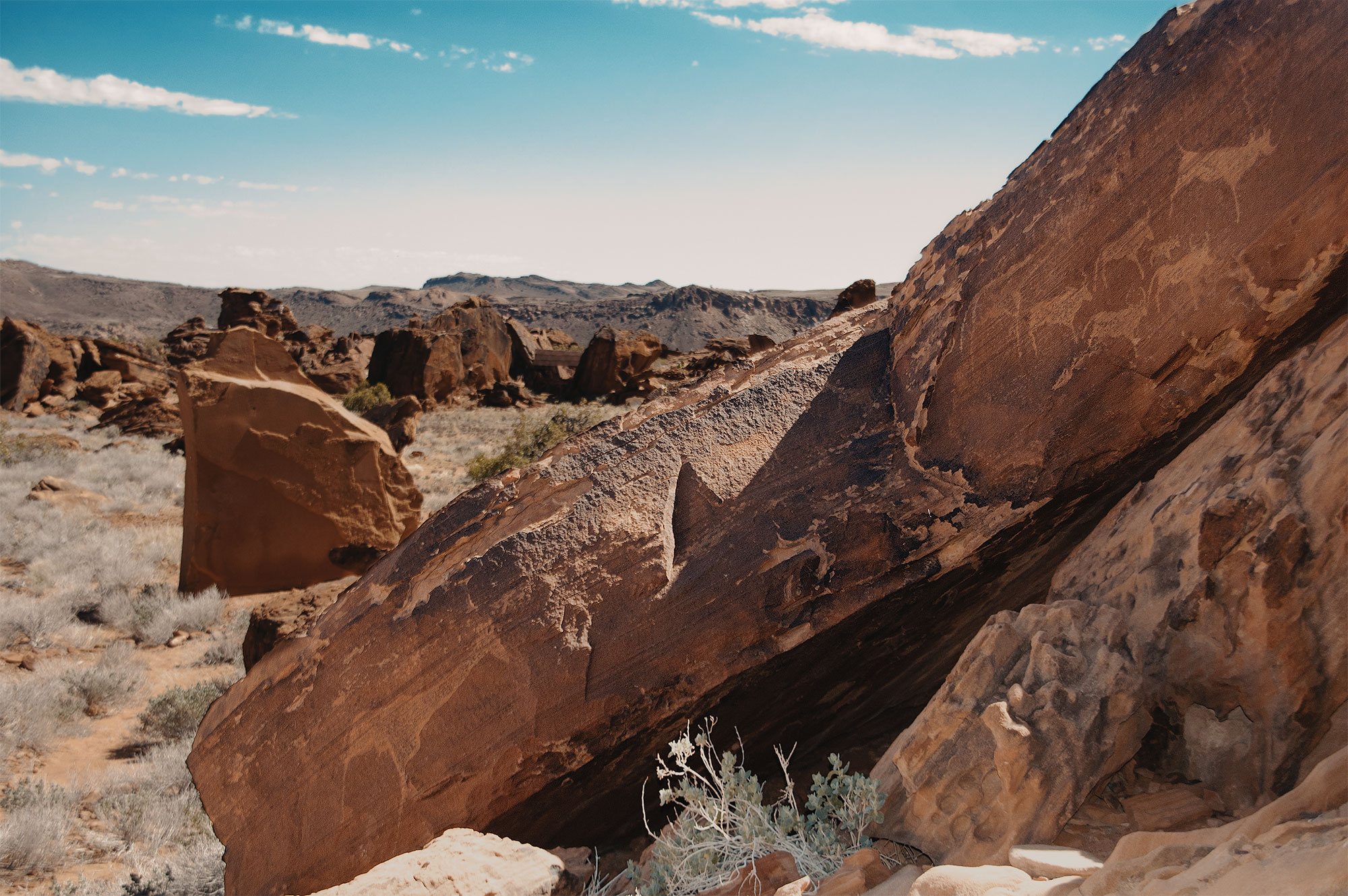
Painting and engraving traditions in Africa developed over the last 30,000 years into a highly sophisticated way of expressing complex beliefs about the supernatural world. The painted stones from Apollo 11 in Namibia date to roughly 27,500 years. However, there are no dates between Apollo 11 and the next oldest - around 10,000 years. It is estimated that the great majority of animal and human figures in southern African rock art were made within the last 7,000 years. The date for the art at Twyfelfontein is estimated to be around 5,000 years ago according to John Kinahan ('Spirit Rocks: the ancient art of /Ui-//aes' 2011) and the World Heritage dossier.
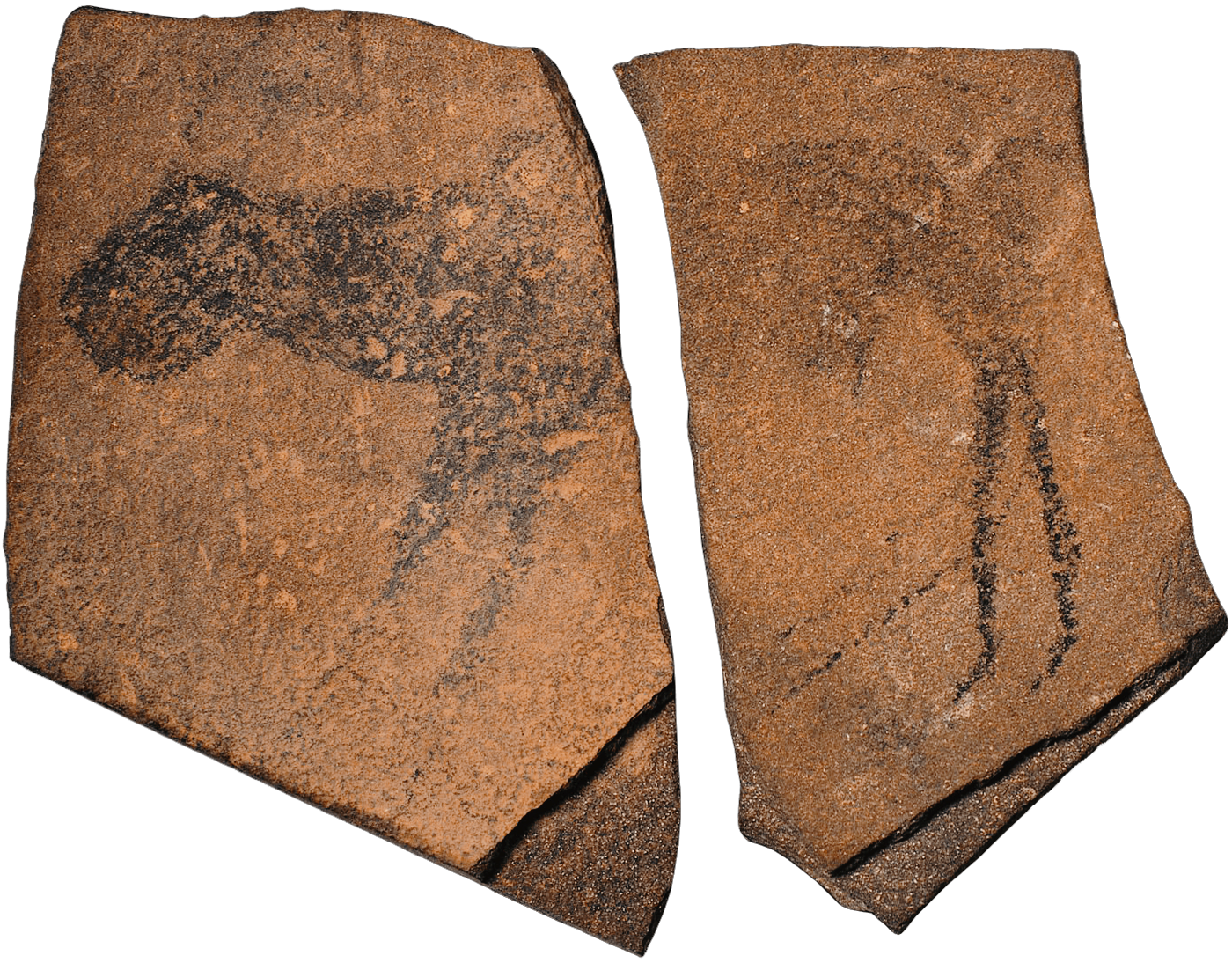
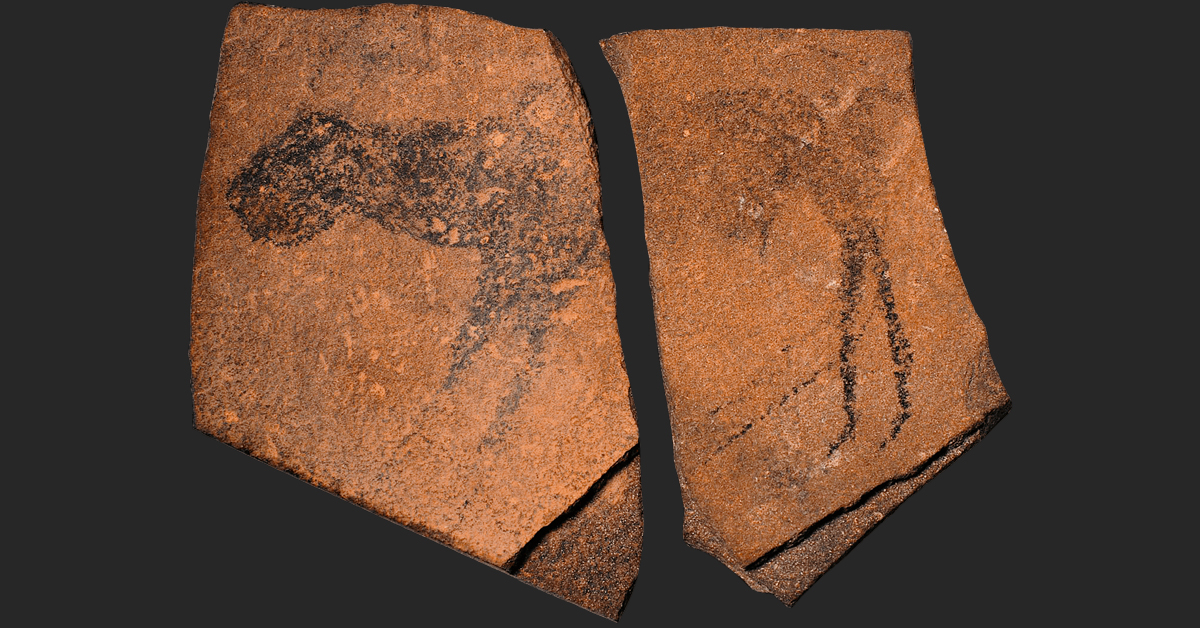
Seven grey-brown quartzite slabs, each smaller than an adult hand, were found with images drawn in charcoal and ochre during excavations in the cave in 1969 by German archaeologist W.E. Wendt. The discovery occurred at the time of the Apollo 11 mission to the moon, and the shelter was given the same name to celebrate the momentous event. The stones, buried on the floor of the cave by layers of sediment and debris, were of a different rock from the cave walls and had been brought into the site by the people living there. Red and white paintings on the walls are in a different style and technique from those on the small slabs and are likely to be younger.
The painted stones were found in an archaeological layer with Middle Stone Age artefact. Three samples of charcoal and ostrich eggshell found in the same layer were radiocarbon dated to between 27,500 and 25,500 years BP (Wendt 1976). More recent excavations have confirmed the dating of this layer and its Middle Stone Age associations.
One of the decorated tablets had been broken before burial and the two pieces underwent different patination, as the image shows, before being recovered in separate excavation seasons. Drawn in charcoal, it resembles a feline, but with human hind legs. Images on other slabs could include a zebra because it has stripes (but the legs are unusually long), and a possible rhinoceros.
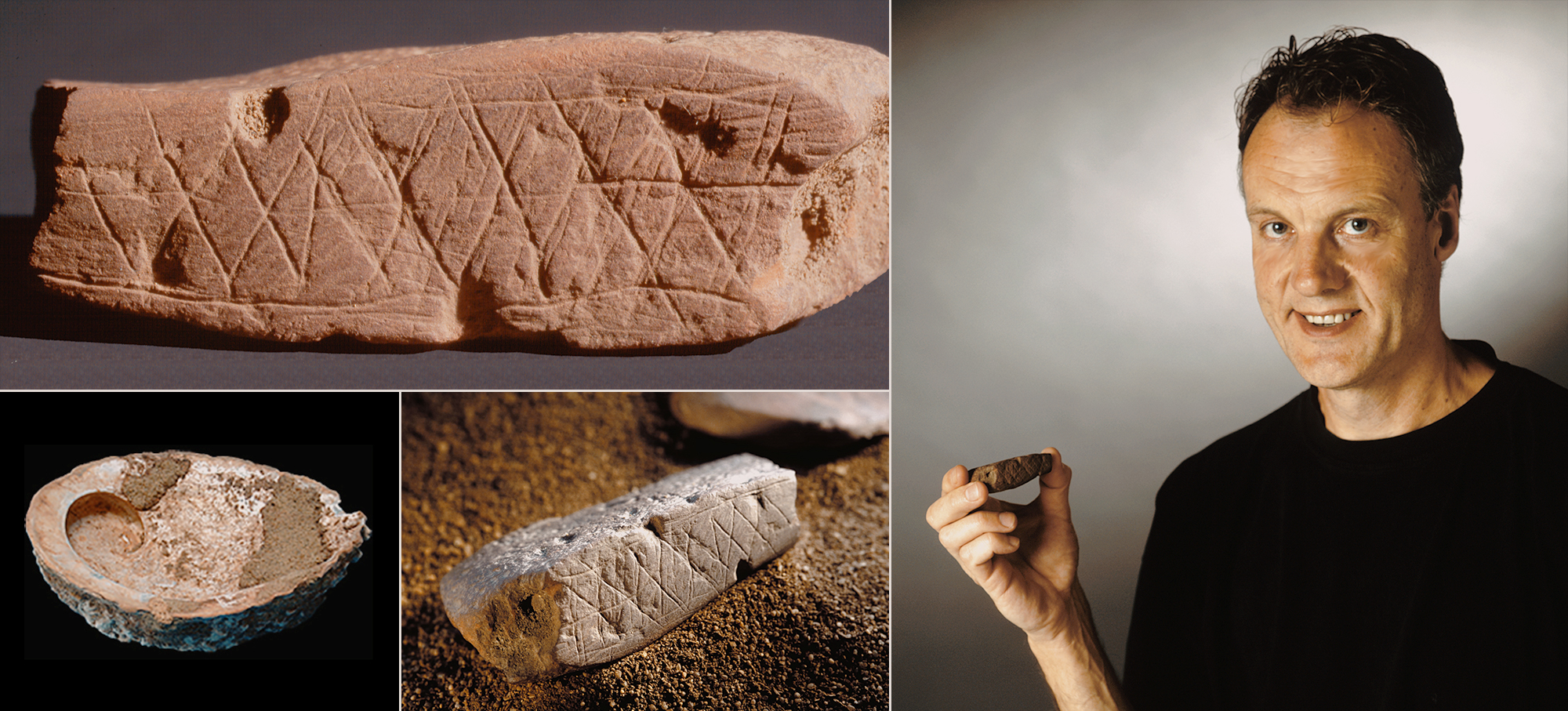
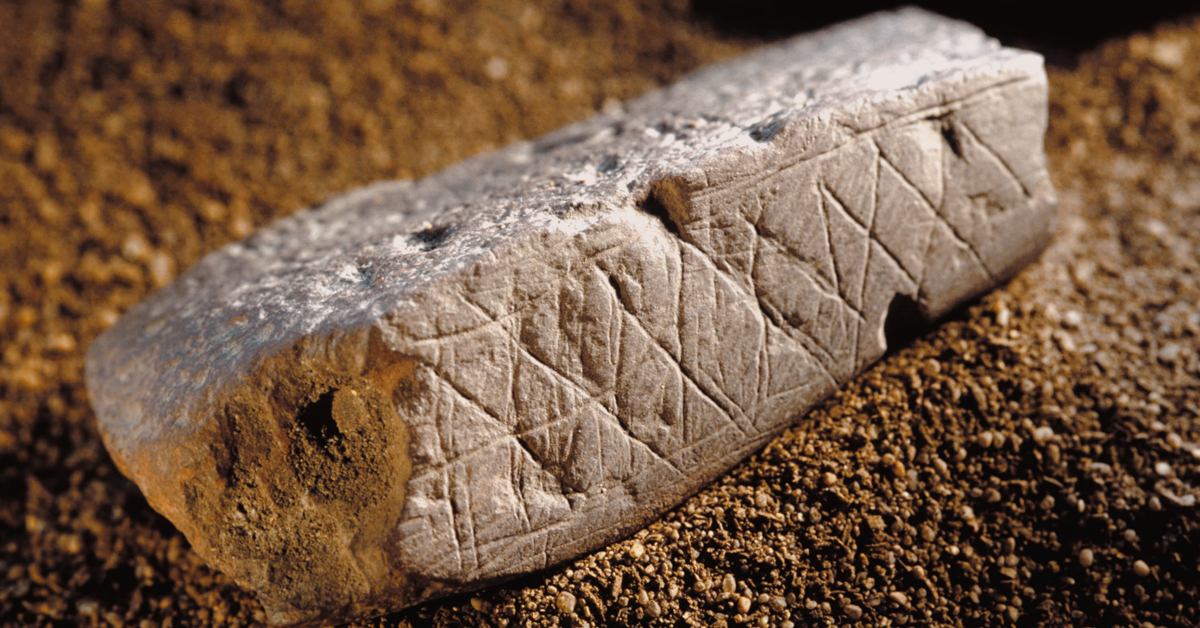
This has been supported by further discoveries by Chris Henshilwood in 2008. He and his team have uncovered what they believe is a 100,000-year-old paint workshop in Blombos Cave. The discovery indicates that, in terms of art, our ancestors had a basic knowledge of chemistry as well as the ability to plan.
The recovery of these toolkits adds evidence for early technological and behavioral developments. It demonstrates their deliberate planning, production, and curation of a pigmented compound and the use of containers. The research team found two sea snail shells - abalone shells - that probably served as containers to store a red concoction of ochre, bone and charcoal. Pigment residue on one of the bones suggests it was used for stirring and transferring the mixture out of the shell. There is evidence that this mixture had been heated; perhaps liquefied bone marrow was used as a paste. Urine or water was also probably added to make it more fluid.
→ Discover more about the Rock Art of Namibia
→ Discover more about the Rock Art of Africa
→ The White Lady of Brandberg / Daureb Mountain
→ Rock Art Network Colloquium - Namibia 2017
→ The Rock Art of Twyfelfontein /Ui- //aes, Namibia
→ The Damara People
→ Reflecting Back: 40 Years Since ‘A Survey of the Rock Art in the Natal Drakensberg’ Project (1978-1981)
→ Animals in Rock Art
→ Bradshaw Foundation
→ Rock Art Network