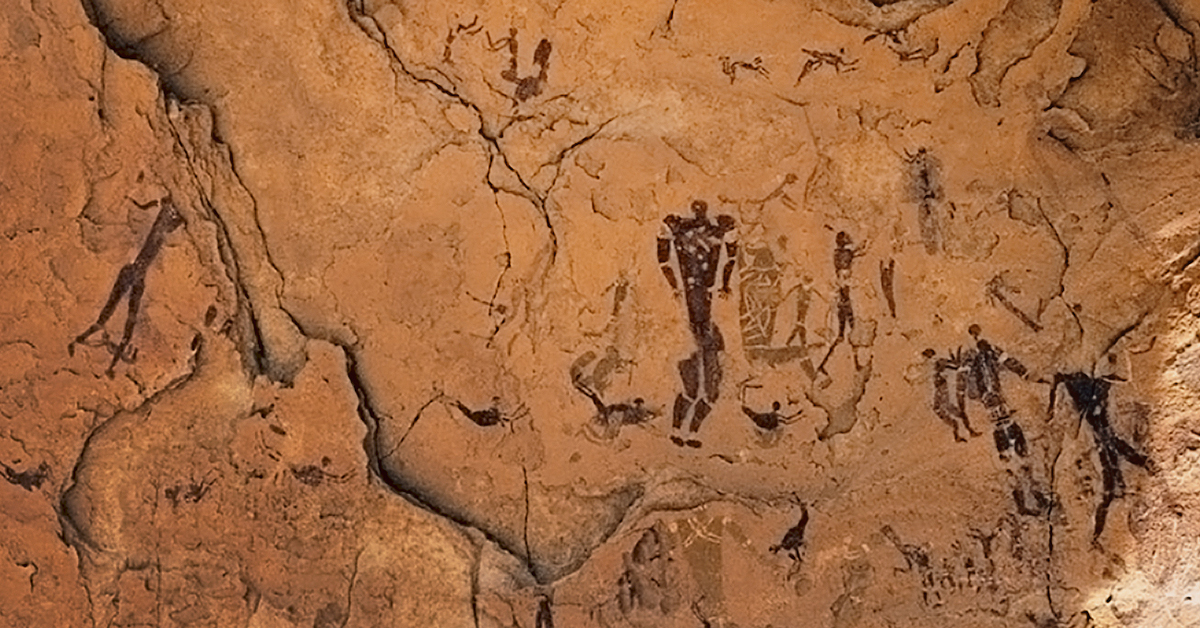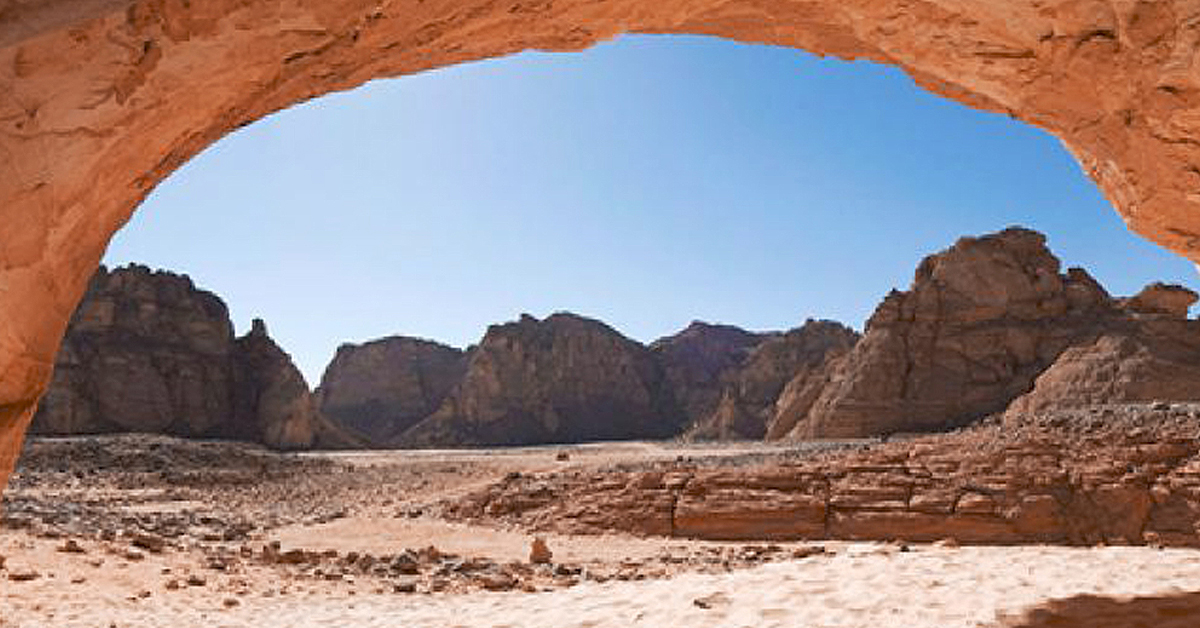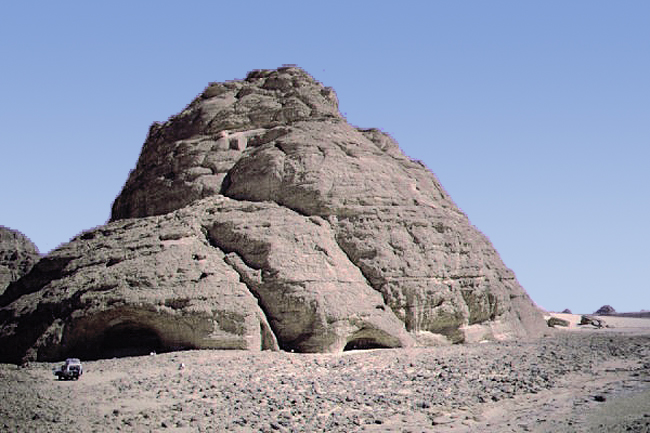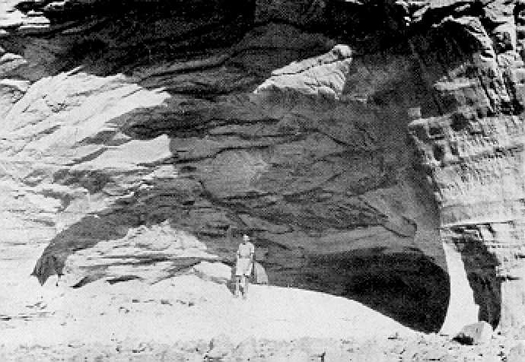
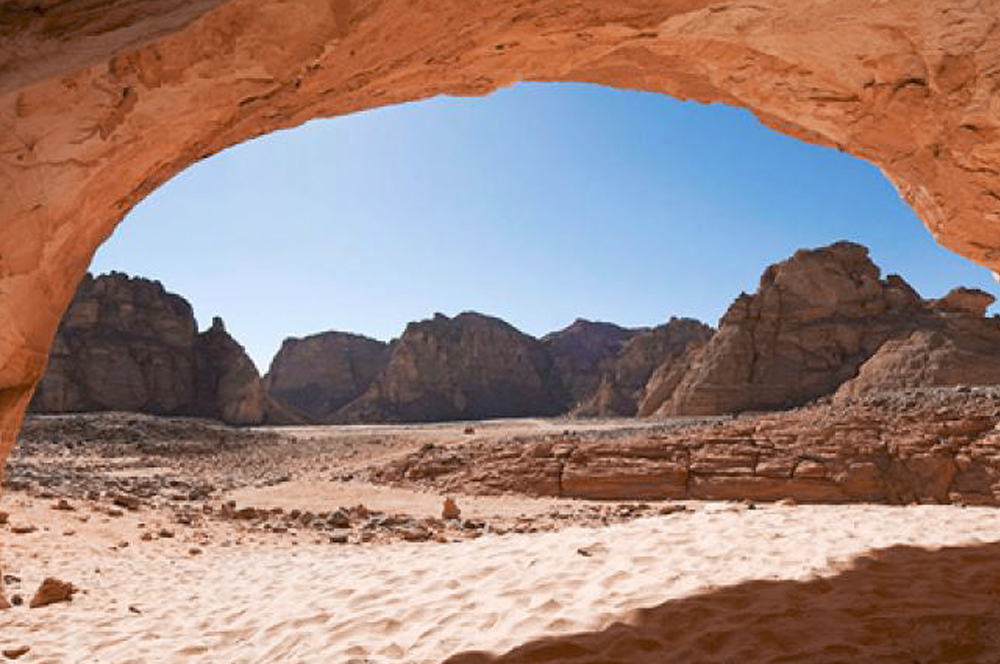
The remote Cave of Swimmers is located at Wadi Sura in the mountainous Gilf Kebir plateau of the Sahara, in southwest Egypt near the Libyan border. Its name translates as "the Great Barrier".
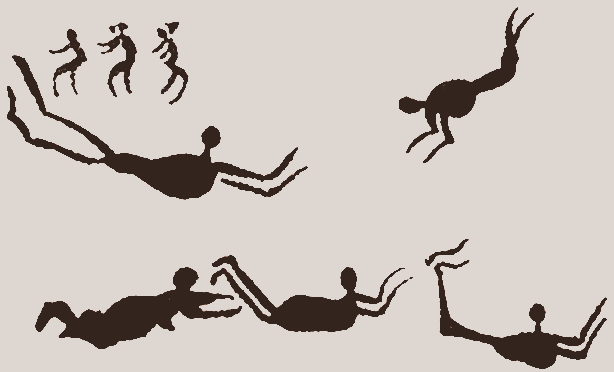
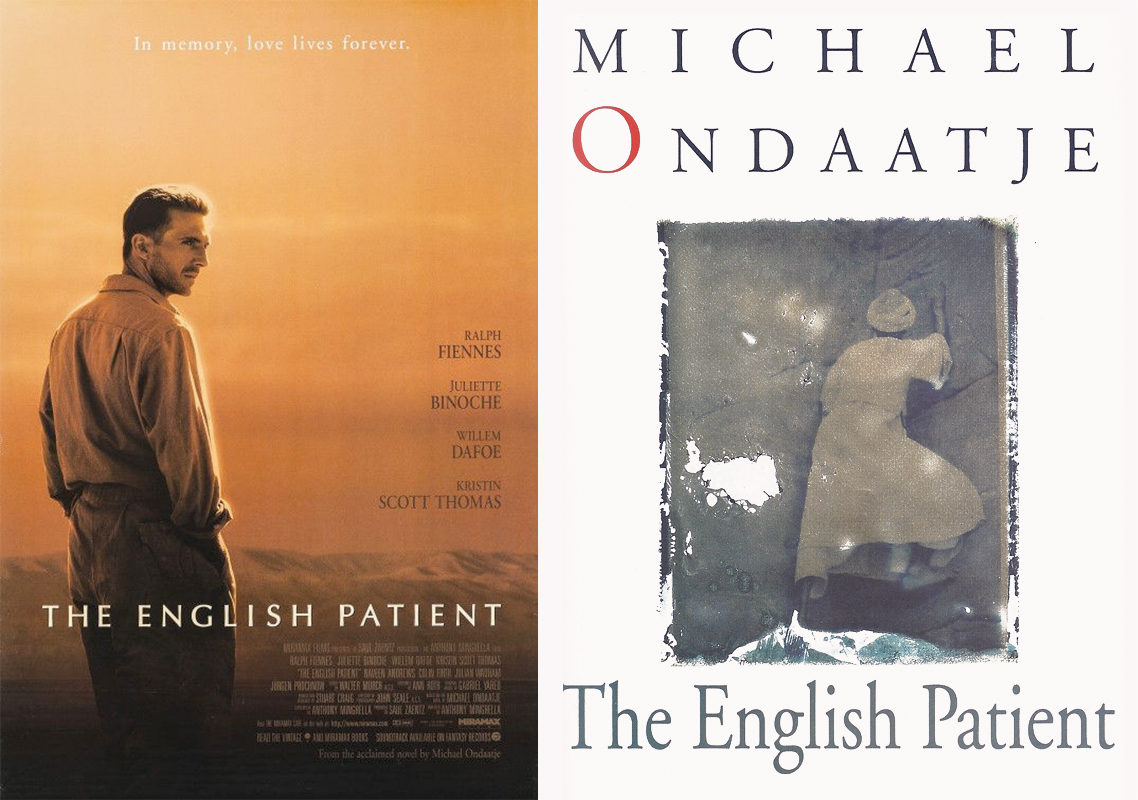
Wadi Sora itself is a sheltered inlet within a promontory of the main plateau. The main painted caves were discovered by the Hungarian explorer László Almásy in October 1933 during the Frobenius expedition. They contain the diminuitive but defined 'swimming' figures, as portrayed in Michael Ondaatje's Novel 'The English Patient' and the Oscar Academy Award winning film adaptation by the late Anthony Minghella, starring Ralph Fiennes and Kristin Scott Thomas.
The paintings are estimated to have been created during the Neolithic 8,000 years ago. The area surrounding Wadi Sora is rich in rock art sites, including the 'Giraffe rock' site discovered by Patrick A. Clayton in 1931. 'Cave C' [after Hans Rhotert's cataloguing] has numerous figures. 'Cave D' contains an extended panel of cattle, female figures and a group of archers. 'Cave F', in an underhang of a large solitary rock, contains several paintings and engravings of human figures and giraffes. Many of the area's rock sites, however, remain unexplored, and to date very little archaeological research has been carried out.
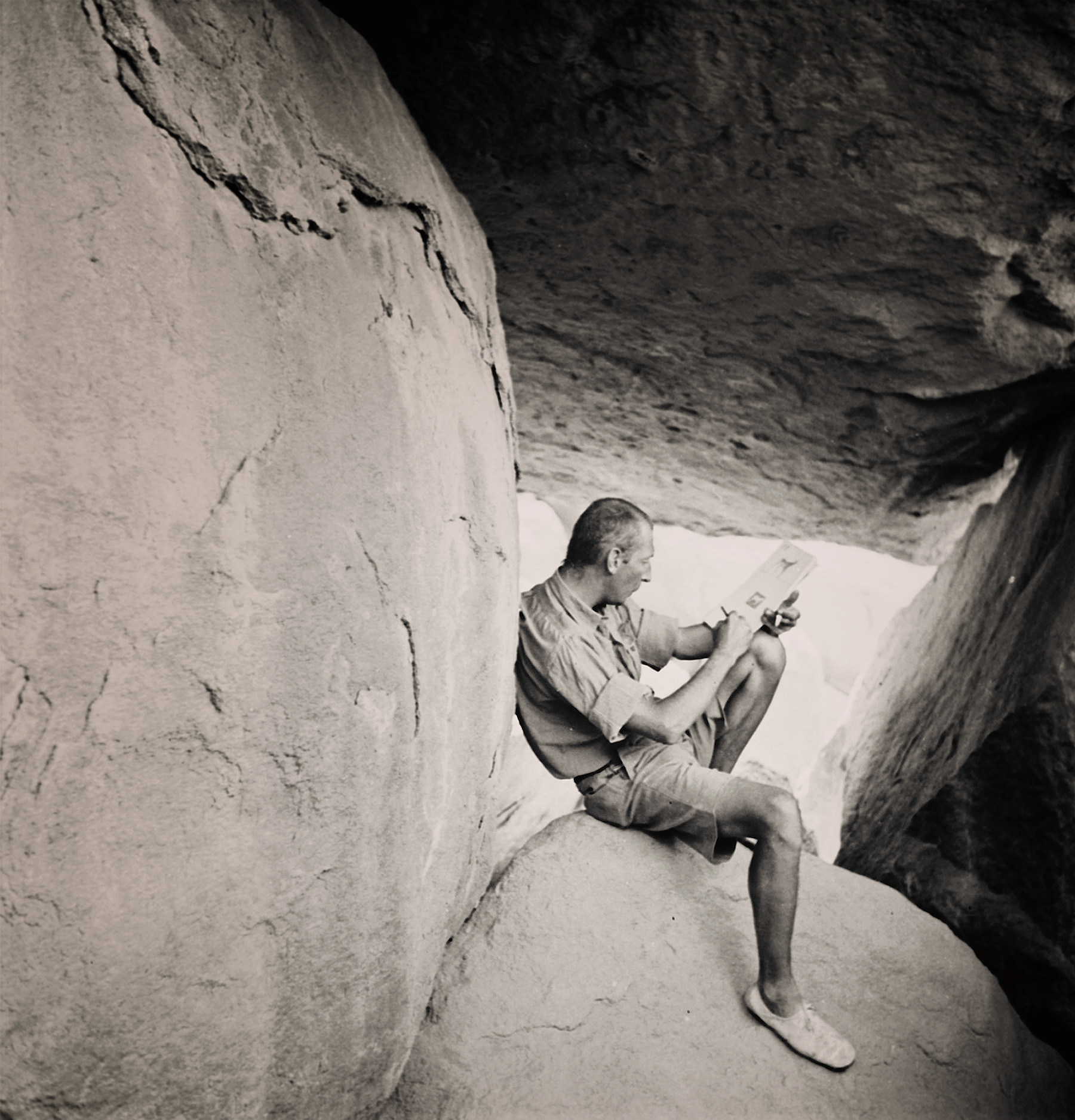
In the late 1920's and early 1930's the Libyan Desert saw greater and more innovative exploration; this vast area of the Sahara was being mapped by a small number of explorers, such as Ralph Bagnold, Douglas Newbold, Kennedy Shaw, and the aforementioned László Almásy and Patrick A. Clayton. Bagnold and Almásy were the first to venture into the desert in motor cars; Almásy made the first motor car expedition from Cairo to Khartoum in 1926, then traversed the hitherto unexplored section of the Darb el Arbain from Selima to Kharga in 1929, and Bagnold successfully conquered the 'Sand Sea' in 1930. Clayton, with the Desert Survey, explored further westward with systematic mapping of the Western Desert, and Newbold and Shaw, in one of the last great camel journeys, surveyed much of the desert in northern Sudan.
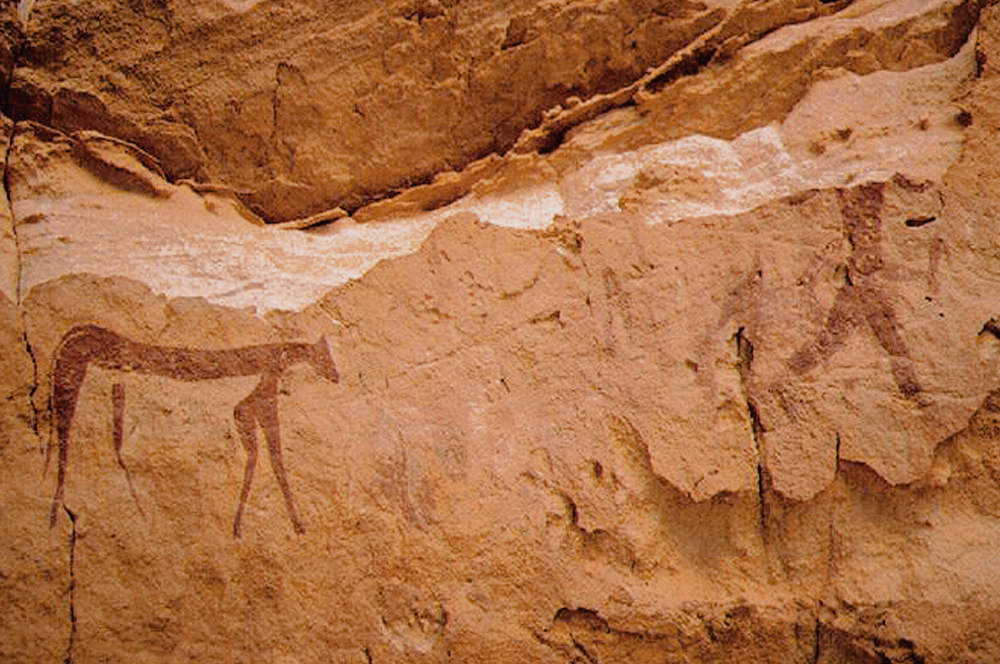
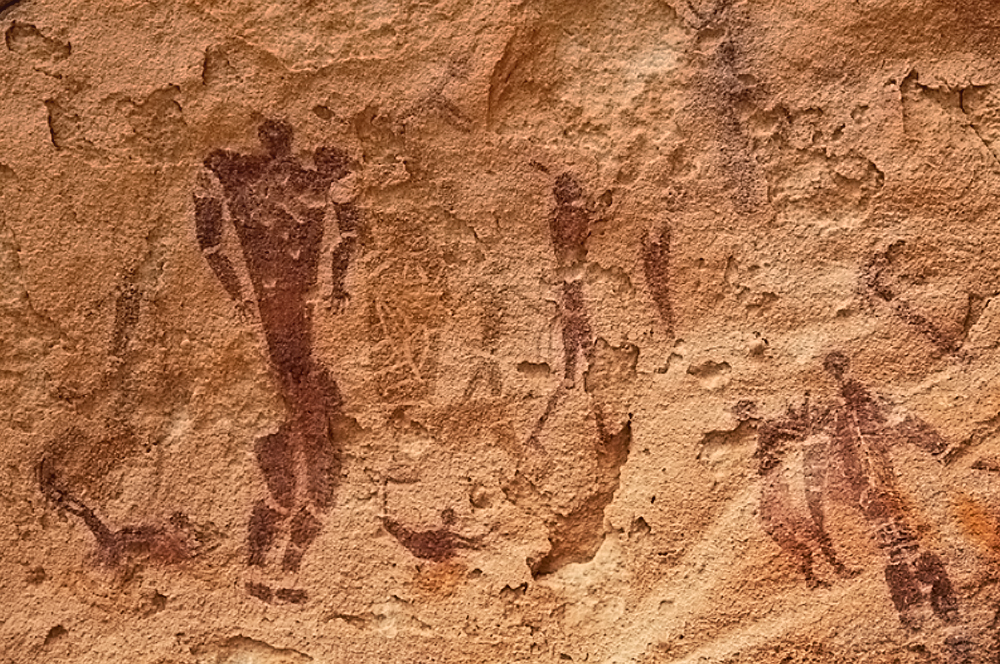
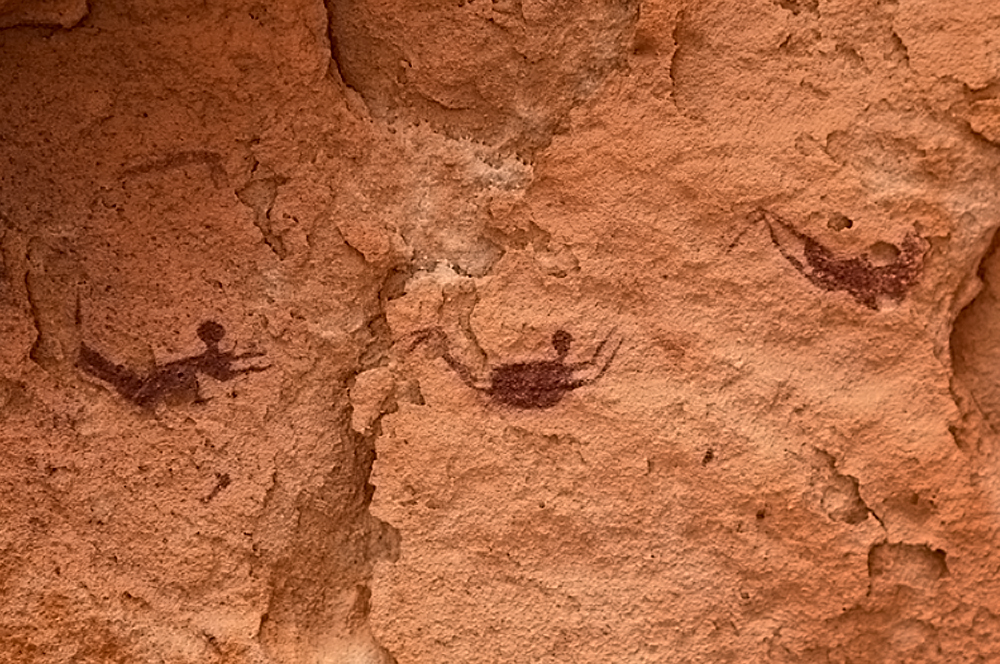
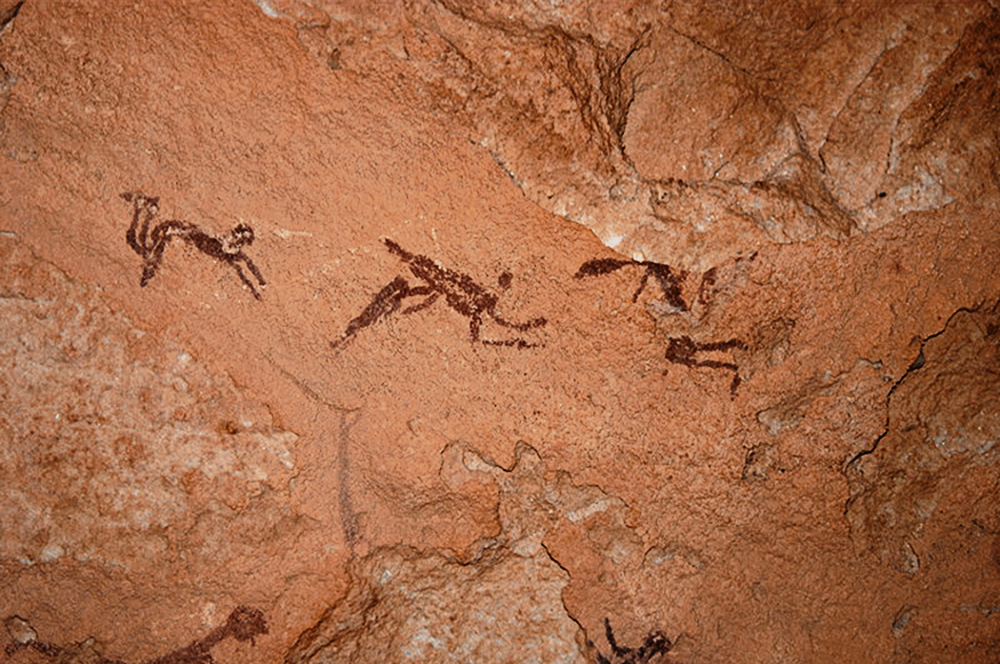
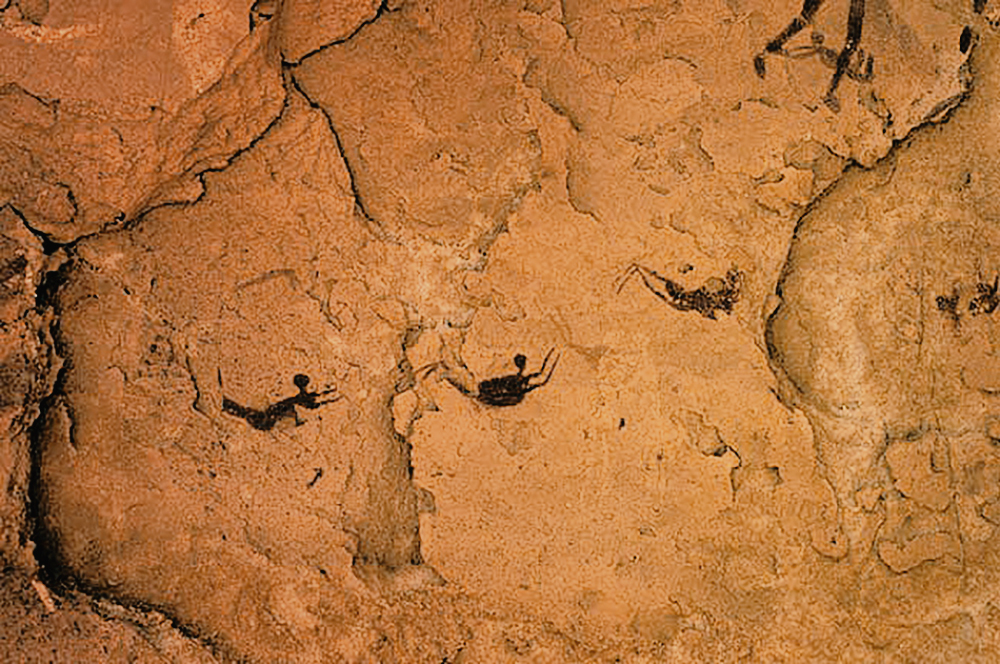
An online article 'The "wonderful rubbish" of the Gilf Kebir desert' published by the University of Cambridge [Past Horizons] reveals the work of artist Elisabeth Pauli, who in 1933, meticulously recorded the 6,000 year old paintings in the Cave of Swimmers in Gilf Kebir, an area on the border of Egypt and Libya.
Her expedition to record and paint the prehistoric images coincided with other now-famous adventurers and researchers - the Hungarian aviator and desert explorer László Almásy, the renowned German ethnographer Leo Frobenius, and his colleague Hans Rhotert. It was Almásy whose exploration of North Africa provided the inspiration for the main character in Michael Ondaatje’s prize-winning novel The English Patient, made into a film by Anthony Minghella.
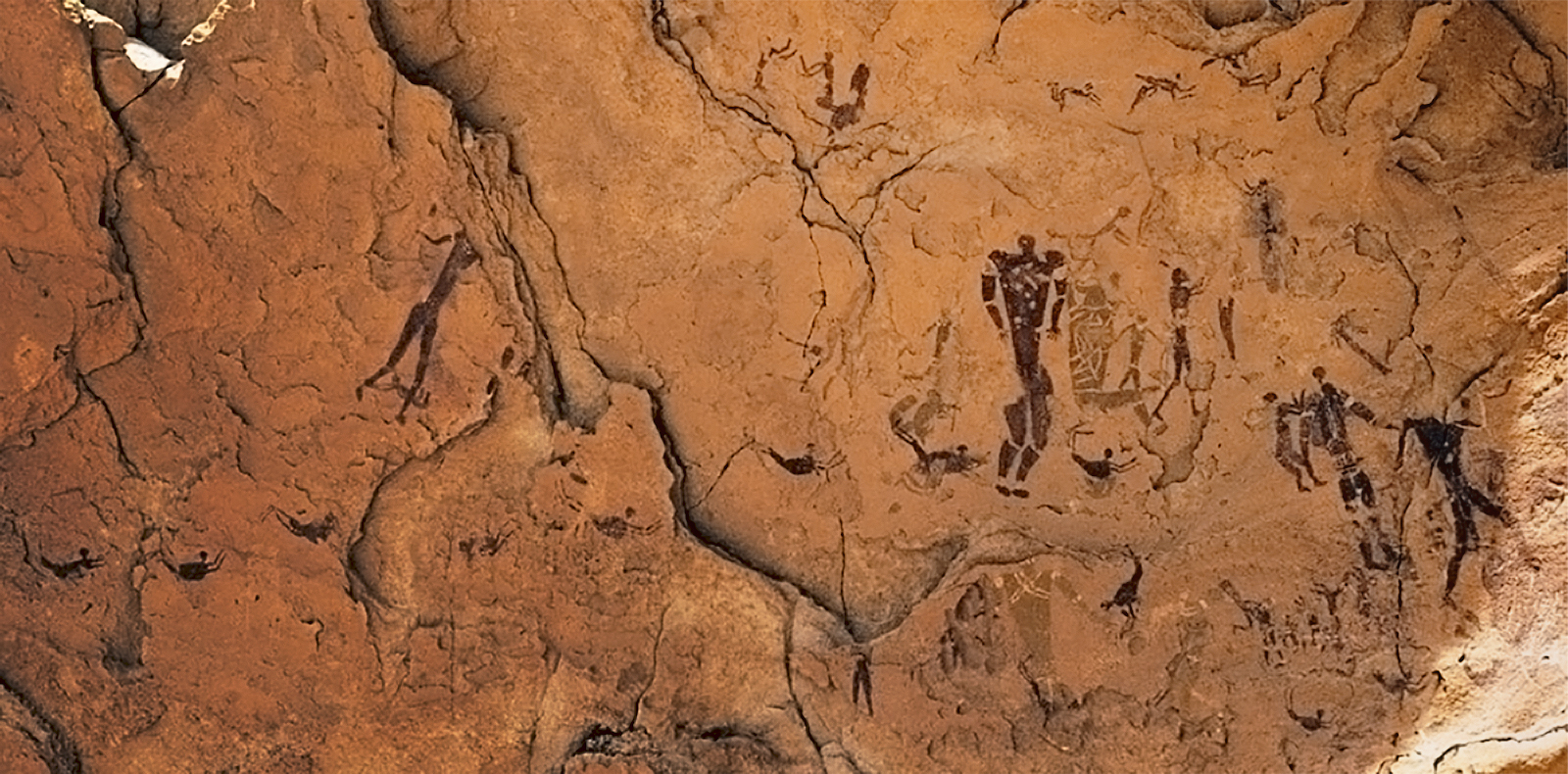
As with the artistic work carried out by Katharina Lommel in the Kimberley region in 1955, Elisabeth Pauli painted in situ, and evidence of this has now been found by Dr Giulio Lucarini, currently a researcher at Cambridge University; the discovery of some of Pauli's original materials in the Cave of Swimmers. The Goethe Institute exhibition is displaying photographs of the tubes of watercolours Pauli used, and the thumb tacks that held the paper on which she recorded what she saw.
Dr Giulio Lucarini and Professor Barbara Barich are part of the team leading the preservation project in the Gilf Kebir, run by the Italian-Egyptian Cooperation Programme, supported and promoted by the Italian Ministry for Foreign Affairs and the Italian Development Cooperation. Archaeologists and restorers are attempting to stabilise an area of cave art that was becoming increasingly eroded. This involved clearing the floor of debris caused by tourism - it was then that they discovered the original artist's materials.
The colours she used were caput mortuum, ultramarine, Chinese white, brown ochre and raw umber. These are the predominant colours of the rock and the figures which were made using mainly red and yellow ochre and white kaolin.
The preservation project will encourage extensive and long-term educational programmes that teach local communities, and especially new generations, about their unique heritage and inform guides and other groups about the importance of artworks in the Gilf Kebir.
→ University of Cambridge. The "wonderful rubbish" of the Gilf Kebir desert. Past Horizons. June 17, 2014, from http://www.pasthorizonspr.com/index.php/archives/06/2014/the-wonderful-rubbish-of-the-gilf-kebir-desert
→ Reports on the research of rock art and pottery in the Gilf Kebir region
→ Discover more about the Rock Art of Africa
→ Discover more about the Rock Art of Namibia
→ The White Lady of Brandberg / Daureb Mountain
→ Rock Art Network Colloquium - Namibia 2017
→ The Rock Art of Twyfelfontein /Ui- //aes, Namibia
→ The Damara People
→ Reflecting Back: 40 Years Since ‘A Survey of the Rock Art in the Natal Drakensberg’ Project (1978-1981)
→ Animals in Rock Art
→ Bradshaw Foundation
→ Rock Art Network